
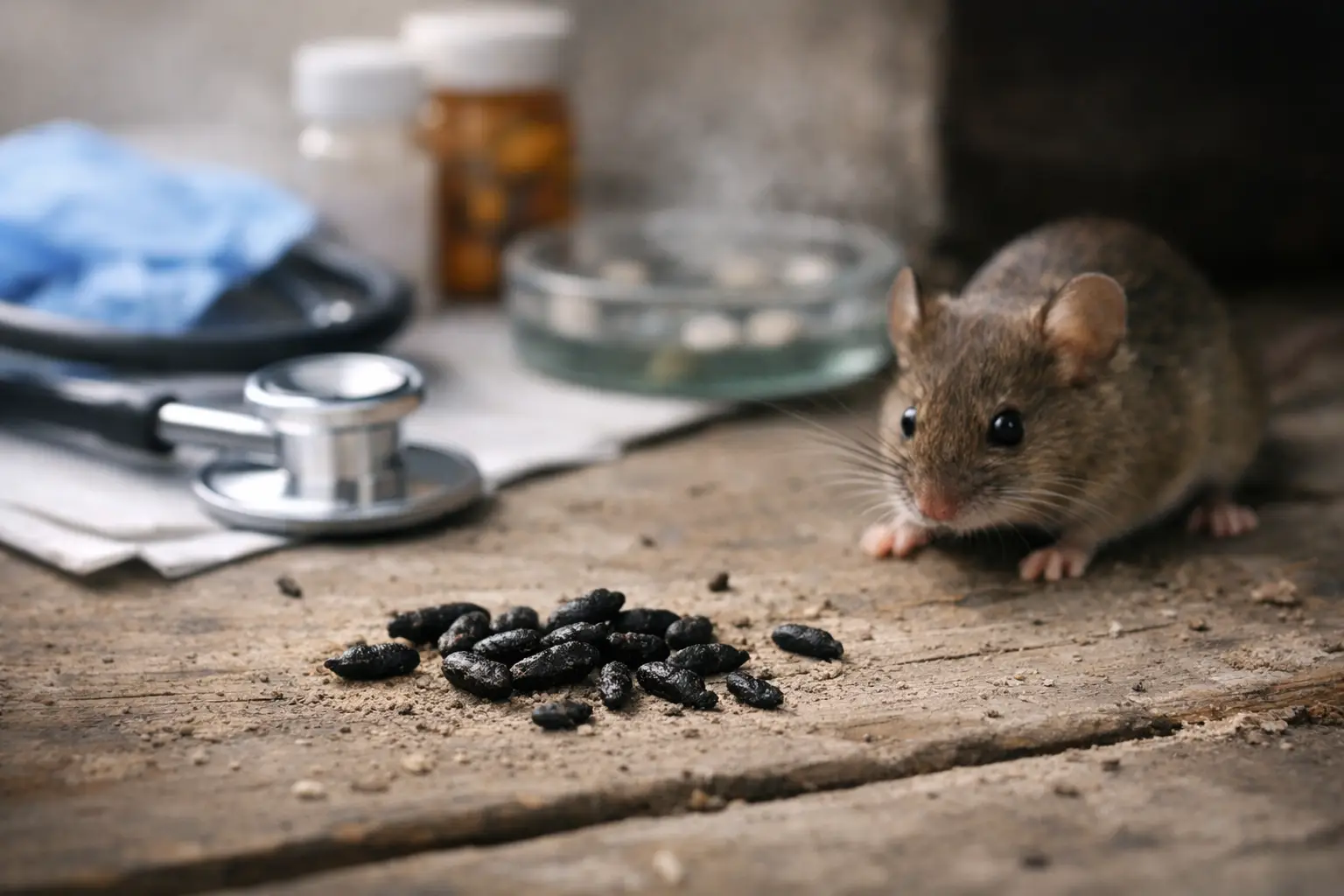
A few dark pellets in a kitchen cupboard or along a skirting board might not look dramatic, but the mouse droppings health risk starts long before you spot a live rodent. Droppings are often the clearest sign that mice have been moving through food storage areas, loft spaces, wall voids and work surfaces, leaving behind contamination that can affect both hygiene and health.
For households, that means worry about children, pets and food preparation areas. For landlords and businesses, it also means liability, reputation and the need to act quickly. The good news is that not every sighting turns into a serious medical issue. The bad news is that droppings should never be brushed off as harmless.
Why mouse droppings are a health risk
Mouse droppings are not just unpleasant to find. They can contain bacteria, viruses and other harmful organisms, and they are usually part of a wider pattern of contamination that includes urine, nesting material and greasy smear marks along routes mice use regularly.
The main risk comes from contact with contaminated surfaces, food packaging, food preparation areas and airborne dust created during improper cleaning. If droppings are swept, brushed or vacuumed while dry, tiny particles can be disturbed and inhaled. That is one reason professional advice is always to clean carefully rather than rushing in with a dustpan.
Mice also do not limit themselves to one part of a property. In homes they move between lofts, cupboards, under-sink spaces and kitchens. In commercial settings they can pass through stock rooms, suspended ceilings, staff kitchens and bin storage areas. A few droppings in one place can point to a much wider problem.
What diseases and contamination can mouse droppings cause?
When people search for mouse droppings health risk, they are usually asking a simple question: can this make me ill? The answer is yes, although the level of risk depends on the amount of contamination, how long it has been there, and whether anyone has handled it unsafely.
Rodents are associated with the spread of illnesses such as salmonella and leptospirosis, and they can contaminate food and surfaces through droppings and urine. In some cases, the issue is less about a single disease and more about general exposure to unhygienic conditions. If mice have been crossing food storage shelves, worktops or utensils, there is a realistic risk that harmful bacteria have been left behind.
There is also an indirect effect. Mouse activity can worsen indoor hygiene, trigger unpleasant odours and introduce parasites such as fleas or mites from nesting sites. For people with asthma or allergies, particles from droppings and urine can aggravate symptoms, especially in enclosed or poorly ventilated areas.
That said, risk is not identical in every situation. One fresh dropping found near a back door is different from heavy, repeated activity in a restaurant store room or family kitchen. Context matters, but every case deserves attention.
How to tell if droppings are fresh or part of an active infestation
Fresh mouse droppings are usually dark, soft and moist-looking. Older droppings become dry, dull and crumbly. Size matters too. Mouse droppings are typically small, pointed at the ends and shaped a bit like grains of rice.
If you keep finding new droppings each day, or if they appear near food cupboards, under appliances, in loft insulation or inside drawers, that strongly suggests active movement. Other warning signs include scratching sounds at night, gnaw marks on packaging or cables, shredded paper or fabric, and a strong musky smell.
For businesses, even a small number of droppings can be significant. In offices, shared kitchens and hospitality premises, one sign of rodent activity often means a deeper inspection is needed. Waiting to see if it gets worse is rarely the safest approach.
How to clean mouse droppings safely
The biggest mistake people make is cleaning too aggressively. Dry sweeping or vacuuming can spread contaminated dust, which increases exposure rather than removing the risk.
Start by ventilating the area if possible. Wear disposable gloves, and avoid direct contact with droppings or nesting materials. Spray the droppings and surrounding area with a disinfectant or a suitable cleaning solution and let it soak for several minutes. This helps prevent particles from becoming airborne.
Once soaked, use paper towels to lift and remove the droppings. Place all waste, including gloves and used towels, into a sealed bag before putting it in the bin. Then disinfect the area again, including nearby surfaces that mice may have crossed. Wash your hands thoroughly afterwards, even if you wore gloves.
Soft furnishings, stored items and insulation can be more complicated. If a loft, cupboard or commercial storage area has extensive contamination, basic surface cleaning may not be enough. In those cases, professional treatment and sanitation are often the safer choice.
When the mouse droppings health risk is higher
Some situations call for faster and more cautious action than others. If droppings are found near food, baby items, pet feeding areas or food business stock, the priority should be immediate containment and inspection. The same applies where vulnerable people are present, including young children, older adults and anyone with respiratory conditions or a weakened immune system.
Risk also rises when there is evidence of long-term rodent activity. Large quantities of droppings, repeated sightings, nests in lofts or wall voids, and contamination in hidden service spaces usually mean the infestation has had time to spread. In commercial premises, that can affect hygiene standards, staff confidence and compliance expectations.
Another higher-risk scenario is attempted DIY control that deals with the visible droppings but not the source. If entry points are left open and nesting areas remain undisturbed, new contamination will keep appearing.
Why professional treatment matters
Cleaning droppings addresses the symptom. It does not stop the mice. That distinction matters because rodent problems rarely stay still. Mice breed quickly, move through tight gaps and often stay hidden until the activity becomes much more obvious.
A professional pest control visit is about more than laying bait or traps. It should identify access points, assess the scale of infestation, locate nesting sites and help you understand why the problem started in the first place. In London properties, that could mean gaps around pipework, damaged air bricks, poorly sealed utility entries, cluttered storage areas or waste management problems.
For landlords and businesses, professional support also provides clarity. You need to know what has been found, what treatment is being used and what prevention steps are needed next. Fast response is especially important where tenants, customers or staff may be affected.
Golden Pest Control handles this kind of issue with the urgency it deserves, especially where rodent activity is affecting kitchens, shared buildings or commercial premises.
Preventing mouse droppings from coming back
Long-term prevention comes down to denying mice food, shelter and access. That means sealing entry points, improving storage, reducing clutter and managing waste properly. Mice can squeeze through very small gaps, so prevention needs to be detailed rather than superficial.
In homes, focus on food cupboards, under-sink pipe entries, utility rooms, loft hatches and gaps behind appliances. Keep dry foods in sealed containers, clear crumbs promptly and avoid leaving pet food out overnight. In blocks of flats, remember that one unit’s problem can easily spread through shared voids and service routes.
In commercial premises, prevention usually needs a more structured approach. Bin areas, delivery points, ceiling voids, plant rooms and staff food areas all need attention. Regular inspections help, but so does acting on small warning signs early. A few droppings found once are easier to deal with than a recurring infestation across multiple areas.
Should you worry immediately?
You should take mouse droppings seriously, but panic does not help. Not every exposure leads to illness, and not every sighting means a severe infestation. What matters is a prompt, sensible response.
If you have found droppings, clean them safely, avoid disturbing them while dry, and look for signs of wider activity. If there are repeated sightings, contamination near food areas, or signs that mice are still present, bring in professional help quickly. The longer rodents stay in a property, the harder they are to remove and the more cleaning, repair and disruption usually follows.
A clean-looking room is not always a clean room if mice have been moving through it. Acting early protects your property, your hygiene standards and the people using the space.
If you are unsure whether the problem is minor or already established, treat the droppings as a warning sign rather than a one-off nuisance. That one decision can save a great deal of trouble later.