
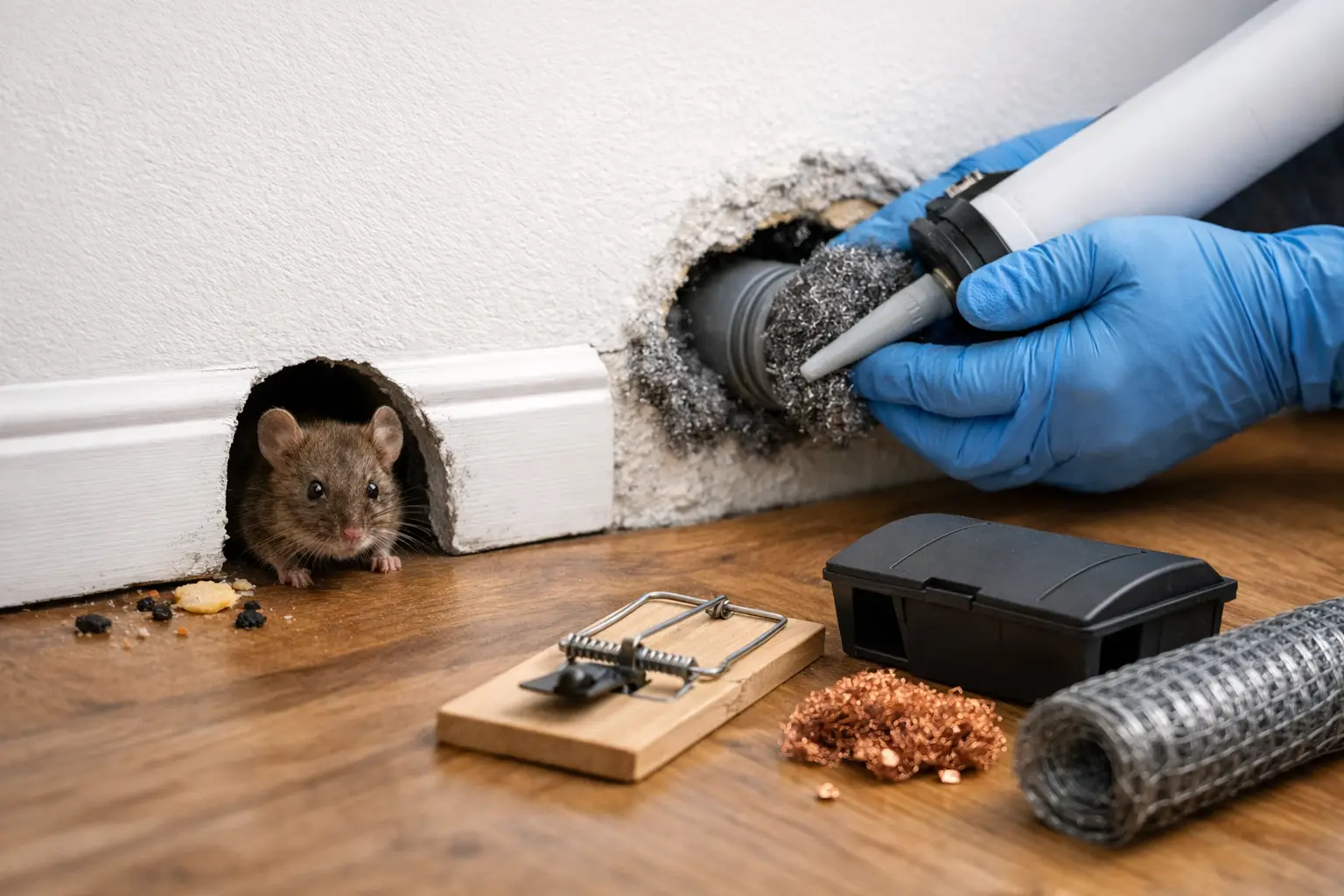
You usually notice rodents indoors after they have already settled in – scratching behind the wall at night, droppings under the sink, chewed food packaging in a cupboard. At that point, the best rodent proofing methods indoors are not about one quick fix. They are about closing access, removing what attracts them, and making the property difficult to use for shelter.
For homes and businesses alike, indoor rodent proofing works best when it is practical and thorough. Rats and mice do not need much space, and in busy buildings they take advantage of small gaps, cluttered storage, easy food access, and neglected service areas. If you only deal with one part of the problem, they often come back.
What makes indoor rodent proofing actually work
The most effective approach is simple in principle. You stop entry, limit food and water, reduce harbourage, and deal with any current activity quickly. That sounds straightforward, but the detail matters. A gap around a pipe, a damaged air brick cover, an overflowing bin area, or stock stored directly on the floor can be enough to keep an infestation going.
This is why indoor proofing is rarely one product or one task. It is a combination of building repair, better storage, cleaning routines, and targeted pest control where needed. In a London property, especially an older house, flat conversion, shop, or restaurant unit, there may be several weak points rather than one obvious cause.
Best rodent proofing methods indoors for long-term control
Seal access points with the right materials
If rodents can still get in, everything else becomes less reliable. Mice can squeeze through very small gaps, and rats exploit damaged drains, broken vents, service penetrations, and gaps below doors. Start with a full inspection around kitchens, utility rooms, risers, boiler cupboards, suspended ceilings, basements, and storage areas.
The best results usually come from sealing holes around pipework, cables, and waste outlets with durable materials. Metal mesh, rodent-resistant sealants, cement-based fillers, and properly fitted covers are usually more dependable than temporary foam alone. Expanding foam on its own is often chewed through, so it should not be treated as a stand-alone fix in active rodent areas.
Doors also matter more than many people expect. A badly fitting rear door, damaged threshold, or gap beneath a service entrance can be a regular access route. In commercial settings, frequent deliveries make this worse, so brush strips and door sweeps need to be in good condition and actually used.
Protect food properly
Rodents stay where food is easy to reach. That includes obvious sources such as dry goods in cupboards, but also pet food, bird seed, food waste, crumbs behind appliances, grease build-up, and poorly managed stock rooms.
Food should be stored in sealed, hard-sided containers rather than soft packaging. In kitchens, it helps to check the less visible areas – behind fridges, under shelving, and inside neglected base units. In workplaces, staff kitchens, vending areas, and waste holding points are often just as important as the main food prep space.
This is one of the most overlooked trade-offs in rodent prevention. People often focus on traps first because they want immediate results. Traps can help reduce activity, but if the food source remains, new rodents are still drawn in and existing ones are harder to eliminate.
Remove nesting and hiding areas
Rodents prefer places where they can move unseen and build nests without disturbance. Indoors, that usually means cluttered cupboards, boxed storage, unused loft spaces, understairs voids, service ducting, and overfilled storerooms.
Proofing is stronger when stored items are raised slightly off the floor and organised so inspections are possible. Cardboard is especially unhelpful because it provides both shelter and nesting material. Plastic lidded containers are generally a better option for both domestic and commercial spaces.
In businesses, clutter is not always obvious. It may be old packaging in a stock room, unused equipment in a plant area, or cleaning supplies stacked around pipework. If a technician cannot inspect behind or beneath stored items, rodents can use those spaces repeatedly without being noticed.
Why sanitation still matters with the best rodent proofing methods indoors
Good cleaning does not seal a gap, but it removes the reasons rodents stay. Water is a major factor. Leaking pipe joints, condensation, dripping taps, and standing water beneath sinks can support rodent activity even when food access is reduced.
A strong sanitation routine means cleaning beneath appliances, emptying bins regularly, keeping bin lids closed, and addressing spills quickly. In shared buildings and commercial sites, consistency matters more than one-off deep cleaning. One well-maintained kitchen can still have a rodent problem if the adjoining refuse area or neighbouring unit is poorly managed.
That is why rodent proofing sometimes depends on the type of property. A family home may need a focused inspection around the kitchen, loft, and underfloor pipe entries. A restaurant, office block, or retail unit often needs a wider review of delivery access, waste storage, staff habits, and structural wear.
Traps, bait, and when proofing is not enough on its own
Indoor proofing prevents recurrence, but active infestations often need direct treatment as well. If droppings, smear marks, gnawing, noises, or sightings are already present, relying on proofing alone can slow the response.
Traps can be effective for mice in particular when placed correctly and monitored properly. Baiting may also be necessary in some cases, though it must be carried out carefully and in line with safety requirements, especially where children, pets, staff, or customers are present. The right method depends on the extent of activity, the type of building, and whether the issue involves mice, rats, or both.
There is an important balance here. If treatment starts before access points are assessed, rodents may continue entering from outside. If proofing is completed without addressing the current population, activity may carry on inside wall voids or hidden areas. The best outcome usually comes from combining treatment with proofing rather than treating them as separate jobs.
Common indoor weak points people miss
Some entry routes are obvious, but many are not. Pipe boxing can hide major gaps. Kickboards under fitted kitchens may conceal droppings and gnawing. False ceilings, risers, and service cupboards in blocks of flats can allow rodents to move between units. Damaged air vents, uncapped drain connections, and gaps where refurbishments were never properly finished are also common.
This is where professional inspection adds real value. What looks like a clean, well-kept property can still have concealed access routes that keep the problem alive. In older parts of London, rodent issues often involve the building fabric as much as hygiene.
When to bring in a professional pest control team
If you have repeated activity, large droppings, daytime sightings, scratching in multiple areas, or signs across more than one room, it is sensible to act quickly. The same applies if you run a business where hygiene, safety, or reputation is on the line. Rodents can contaminate surfaces, damage wiring, and spread quickly through shared structures.
A professional service should do more than place bait and leave. The right team will inspect the property, identify likely entry points, explain what needs sealing, carry out or recommend treatment, and advise on practical prevention steps that suit the building. For urgent cases in homes or commercial premises, a fast-response service can reduce disruption and limit the chance of a small issue becoming a wider infestation.
Golden Pest Control regularly sees cases where the problem has continued simply because earlier action was too narrow – a few traps in the kitchen, but no inspection of the utility entry points, waste storage, or hidden voids. Proper rodent proofing indoors needs a complete view of how the pests are getting in and why they are staying.
A practical standard to aim for
The best rodent proofing methods indoors are the ones that make the building consistently hard to enter, hard to feed in, and hard to hide in. That usually means solid repairs, cleaner storage, better food protection, and fast treatment where activity is already present.
If you are hearing movement at night or finding fresh signs indoors, do not wait for it to become obvious in every room. The earlier the weak points are identified and dealt with, the easier it is to protect the property properly.
1 Comment
Are Pest Control Treatments Safe in Your Home? - Golden Pest Control London
August 30, 2026[…] control often combines inspection, proofing advice, trapping or secured baiting. Removing accessible food sources and sealing entry points are as […]