
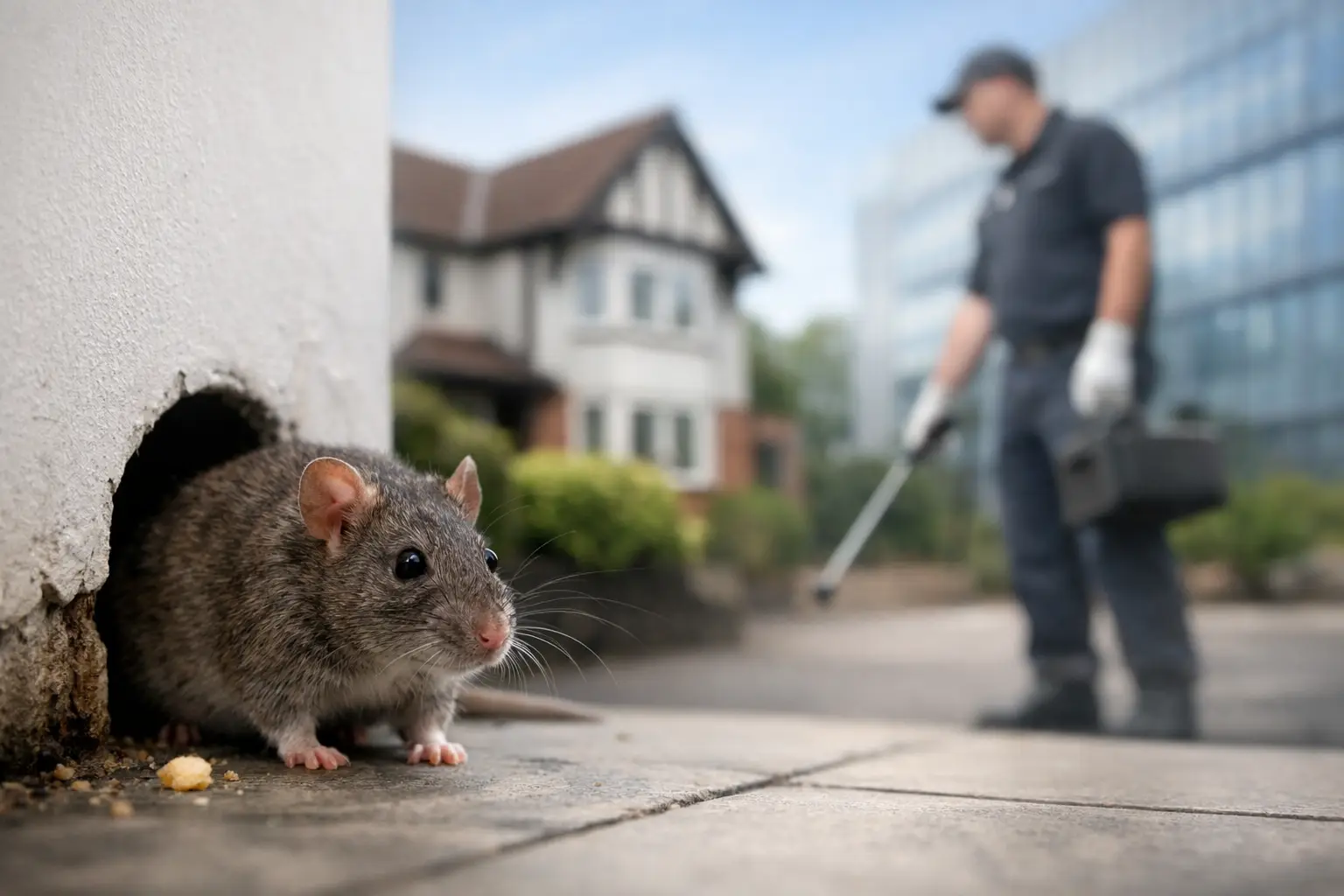
A scratching sound behind the kitchen units, droppings in a cupboard or a chewed food packet can turn a minor concern into an urgent one. For rat control in Pinner, early action matters: rats breed quickly, damage property and can contaminate surfaces, food and stored goods. A professional response identifies where the activity is coming from, treats it safely and helps stop the problem returning.
Rats are common in built-up areas because they have easy access to warmth, shelter and food. They do not need an untidy property to get inside. A gap around a pipe, an unsecured air brick, a damaged drain or an open bin area may be all they need.
Signs you may have rats on your property
Seeing a rat is a clear sign, but it is not the only one. Rats are often most active at night and stay out of sight when people are nearby. In homes, flats and business premises, the first evidence is commonly droppings, noises or damage rather than a direct sighting.
Fresh rat droppings are dark, moist and shaped like large grains of rice. You may find them near skirting boards, behind appliances, inside cupboards, in lofts, under decking or around bin stores. Older droppings become dry and grey, but their presence still suggests that the area needs checking.
Listen for scratching, scurrying or gnawing sounds in ceiling voids, wall cavities and under floorboards, particularly after dark. Rats constantly gnaw to wear down their teeth, so marks on timber, plastic pipework, wiring, packaging and food containers should be taken seriously. A persistent musky smell, greasy rub marks along walls and small burrows in soil are further warning signs.
For restaurants, offices, shops and managed buildings, evidence around waste storage, delivery areas and staff kitchens deserves prompt attention. A single rat sighting can create hygiene concerns, disrupt operations and affect customer confidence. Waiting to see whether the problem disappears is rarely the best option.
Why rat activity should not be ignored
Rats can spread bacteria through urine, droppings and contaminated surfaces. They may also introduce fleas and other parasites into a property. The practical risks are just as significant: gnawed electrical cables can become a fire hazard, damaged insulation reduces efficiency, and disturbed pipework may lead to leaks.
There is also a wider issue with rat control in Pinner properties: the source is not always inside the building. A rat may be nesting beneath a shed, in a garden, along a shared access route or within a drainage defect, then entering the property to feed. Treating only the place where droppings are found may reduce activity temporarily without resolving the cause.
This is why a proper inspection is more effective than placing a few shop-bought traps at random. The right approach depends on the species, the extent of the activity, the layout of the premises, whether children or pets are present, and where rats are gaining access.
What professional rat treatment involves
A reliable treatment begins with a careful survey. A pest control technician checks likely entry points, harbourage areas, food sources and signs of movement. This may include inspecting kitchen voids, loft spaces, external walls, gardens, bin areas, drains and outbuildings. For commercial sites, the inspection also considers operational areas where pests may affect hygiene procedures.
The treatment plan is then tailored to the property. Depending on the findings, this can involve professionally placed traps, secured bait stations, monitoring points and practical proofing advice. Treatments must be located and managed carefully, especially in homes with children or pets, and in workplaces where staff or customers may access the area.
It is normal for rat control to require follow-up visits. Rats can be cautious around unfamiliar objects and may be using more than one route through a building. Follow-up allows the technician to assess activity, replenish or remove control measures where needed, and confirm that the treatment is working.
Professional treatment should not be treated as a quick poison-only solution. The aim is to remove active rats while reducing the conditions that allow new ones to enter. Golden Pest Control provides inspection-led treatment for homes and businesses, with clear advice on what to expect during each stage.
The entry points that are often missed
Many rat problems continue because the opening they are using has not been found or properly sealed. Rats can squeeze through surprisingly small gaps and will enlarge weak points by gnawing. Around older properties, attention is often needed at pipe penetrations, damaged brickwork, broken vents, gaps beneath doors and worn drain covers.
Gardens can contribute too. Dense vegetation, stacked materials, open compost, bird food and overflowing bins can create shelter and a reliable food supply. This does not mean every garden feature needs to be removed. It means food waste should be contained, bird feeding kept tidy, and gaps around sheds, decking and external storage checked regularly.
Drains need particular consideration where signs suggest rats are travelling below ground. Repeated indoor activity, especially in a clean property with no obvious external entry point, can indicate a drainage issue. A drain survey may be appropriate where standard proofing and treatment do not explain the pattern of infestation.
What you can do before help arrives
You do not need to handle a rat to take useful first steps. Keep food in sealed containers, clear crumbs and spills promptly, and avoid leaving pet food out overnight. Make sure household and commercial waste is bagged securely, with bin lids closed and surrounding areas kept as clean as practical.
Do not sweep or vacuum dry droppings, as this can disturb contaminated dust. Wear disposable gloves, lightly dampen the affected area with suitable disinfectant, then wipe it with paper towels and dispose of them in a sealed bag. Wash hands thoroughly afterwards. If droppings are widespread or in a difficult-to-reach void, leave the area for a professional assessment.
Avoid moving traps or bait that have been professionally installed. Likewise, be cautious with unprotected poison products. Incorrect use can put pets, wildlife and children at risk, while also leaving dead rodents in inaccessible spaces. If you have used a shop-bought product already, tell the technician what it was and where it was placed.
Rat control for landlords and businesses
Landlords have a responsibility to act when rodent activity affects the condition or safety of a rental property. Clear communication with tenants helps establish when the signs began, where activity has been noticed and whether access will be needed to kitchens, lofts, utility cupboards or outside areas. Fast action can prevent a small issue becoming a larger repair and hygiene concern.
Businesses need a response that works around the site, rather than against it. A café may need careful attention to food storage and waste routines, while an office may have risks around kitchens, suspended ceilings and shared service ducts. Facilities managers benefit from documented visits, sensible monitoring and prevention measures that staff can follow without disrupting normal operations.
When to arrange urgent rat control in Pinner
Arrange professional help promptly if you see rats during the day, find repeated fresh droppings, hear regular movement in walls or ceilings, or notice damage to wiring and pipework. Daytime sightings can indicate that the local population is established or competing for food and shelter.
For a food business, care setting, school, rental block or property with young children, quick intervention is particularly sensible. The longer rats have access to a site, the more routes they establish and the harder it can be to achieve lasting control.
A rat problem is stressful, but it is manageable with a measured, professional response. Acting on the first clear signs, allowing access for a thorough inspection and completing the recommended proofing work gives your home or premises the best chance of staying protected long after the treatment ends.