
A scratching sound in the loft at 2am, bites appearing overnight, or a wasp nest near the front door can turn a normal day into a problem that needs attention fast. If you are wondering what are the types of pest control services, the answer depends on the pest, the property, and how urgent the situation is.
Some infestations can be handled with a planned treatment and follow-up visits. Others need same-day action because they affect health, safety, hygiene, or business operations. In homes, rented properties, offices, shops, restaurants, and outdoor spaces, pest control services are usually grouped by the type of pest and the method needed to remove it properly.
What are the types of pest control services for homes and businesses?
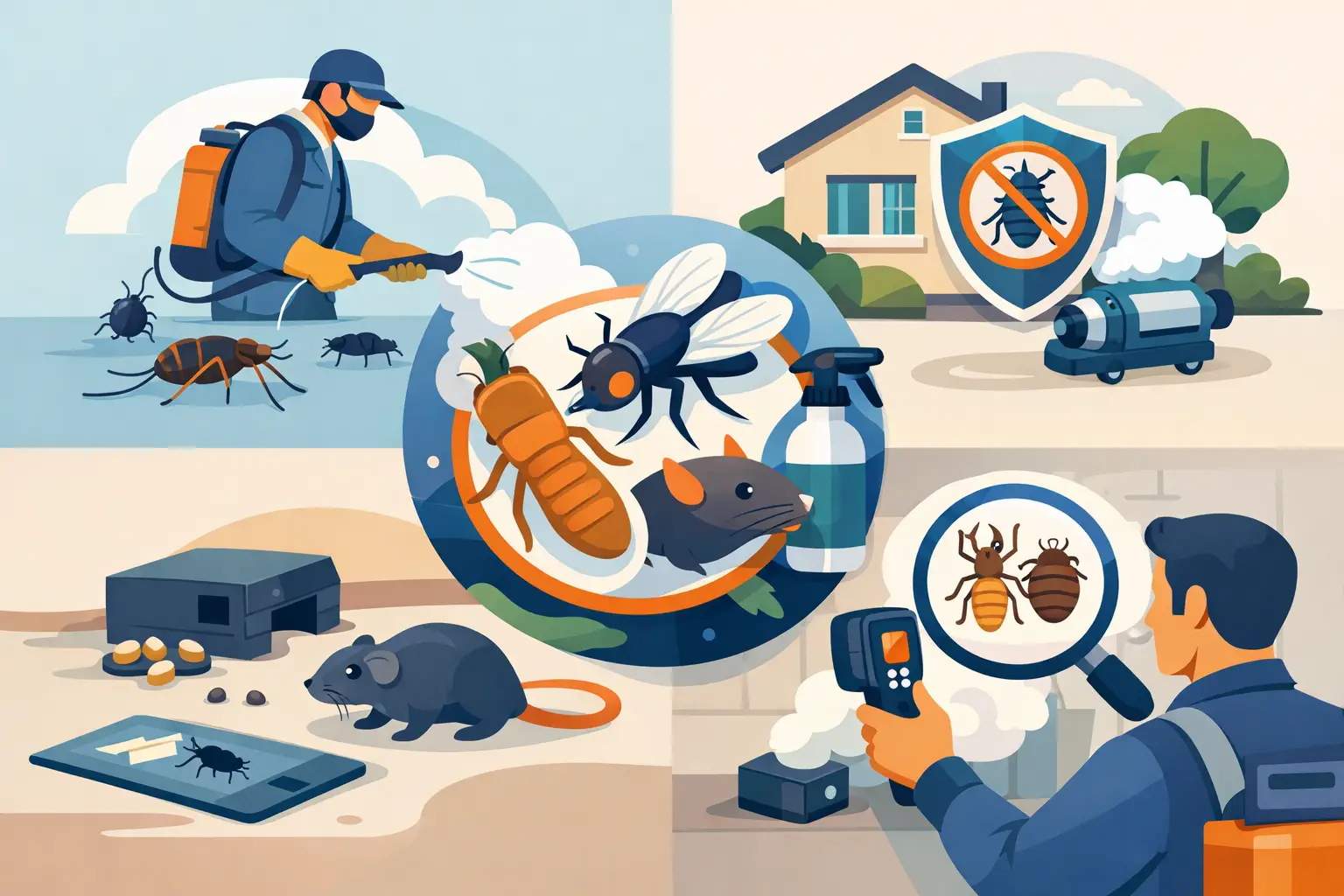
The main types of pest control services include rodent control, insect control, bed bug treatment, flea treatment, cockroach treatment, ant control, wasp and bee nest treatment, and preventive pest management. There are also specialist services for commercial premises, where hygiene standards, documentation, and discreet response matter just as much as the treatment itself.
A professional service is not simply about spraying and leaving. The right provider inspects the property, confirms the source of the problem, chooses a safe and suitable treatment, and advises on how to reduce the chance of it coming back. That matters because not every pest behaves in the same way, and the wrong approach can waste time while the infestation grows.
Rodent control services
Rodent control covers rats and mice, which are among the most urgent urban pest problems. They can damage wiring, contaminate food areas, leave droppings, and move quickly through wall voids, lofts, basements, kitchens, stockrooms, and bin areas.
A rodent service usually starts with a survey to identify activity, entry points, nesting sites, and access to food or water. Treatment may include traps, secure bait stations, proofing recommendations, and follow-up monitoring. In some cases, the infestation is straightforward. In others, especially in larger buildings or shared blocks, the problem spreads through multiple units and needs a wider plan.
For landlords, tenants, and business operators, speed matters here. Rodents rarely remain a minor issue for long, particularly in dense parts of London where adjoining properties can make reinfestation more likely if the wider cause is not addressed.
Insect control services
Insect control is a broad category and can include ants, crawling insects, stored product pests, flies, and other nuisance or hygiene-related infestations. The treatment depends on where the insects are active and why they are there.
For example, ants often follow food sources and enter through tiny gaps around doors, windows, or pipework. A proper ant control service focuses on locating trails and nesting points, rather than only treating the insects you can see. General insect control may involve residual treatments, insecticidal dusts, targeted gels, and practical advice on cleaning, storage, and exclusion.
This is one area where a tailored treatment plan makes a real difference. A shop, a café kitchen, and a family home may all have insect activity, but the treatment needs, timing, and safety considerations will not be identical.
Bed bug treatment services
Bed bugs are one of the most distressing pests for households, tenants, hotels, and landlords. They hide in mattress seams, bed frames, skirting boards, soft furnishings, and cracks close to sleeping areas. Because they are excellent at staying out of sight, people often underestimate the extent of the problem at first.
Professional bed bug treatment usually involves a detailed inspection followed by targeted treatment of affected rooms and nearby harbourage points. Depending on the severity, this may require more than one visit. That is not a sign the treatment has failed. It is often part of the correct process, because bed bug eggs and hidden activity can make complete control more complex than people expect.
The key trade-off here is speed versus completeness. Shop-bought products may seem convenient, but they often only disturb the infestation and push bed bugs deeper into the property. A professional approach is safer, clearer, and far more likely to solve the problem properly.
Flea control services
Flea problems commonly appear in homes with pets, but they can also remain after pets are gone or be introduced from neighbouring properties. Fleas bite people as well as animals and can spread through carpets, soft furnishings, floor edges, and bedding.
A flea treatment service generally includes treatment of affected rooms and guidance on preparation, such as vacuuming and pet treatment through a vet if needed. This matters because flea control works best when the property treatment and the pet treatment are handled together. If only one side is addressed, the problem can continue.
Fleas can seem manageable at first, then escalate quickly once eggs hatch. Early treatment is usually simpler and less disruptive than waiting until several rooms are affected.
Cockroach control services
Cockroach control is a high-priority service in both domestic and commercial settings. Cockroaches are resilient, fast-breeding, and strongly linked to hygiene risks. In food premises, rental accommodation, communal buildings, and kitchens, they need immediate professional attention.
A cockroach service often uses gel baits, monitoring, targeted insecticide applications, and detailed inspection of warm, hidden areas such as behind appliances, inside cabinets, and around service ducts. Good control also depends on identifying why the cockroaches are thriving, whether that is food residue, moisture, clutter, or access from adjacent units.
This is not a pest to treat casually. Visible cockroaches often indicate a larger hidden population, so a proper service plan is essential.
Wasp and bee control services
Wasp nest treatment is usually one of the most urgent seasonal call-outs, especially when nests are close to entrances, gardens, rooflines, loft spaces, schools, or business premises. Wasps become more aggressive when disturbed, which makes DIY removal risky.
A professional wasp control service identifies the nest location, applies the appropriate treatment, and advises when the area is safe again. Timing and access matter here. A low garden nest is different from a nest high in eaves or inside a cavity wall.
Bee-related call-outs need more care. Bees are important pollinators, and treatment decisions should reflect that. Sometimes the issue is mistaken identity and the insects are not bees at all. Proper identification matters before any action is taken.
Preventive pest control services
Not every pest control service begins with a full infestation. Preventive pest control is designed to reduce the risk of future problems, which is especially useful for landlords, managing agents, restaurants, warehouses, offices, and other commercial sites.
This type of service may include routine inspections, monitoring devices, proofing advice, sanitation recommendations, and scheduled visits. It is often the most sensible option for businesses that need to protect their reputation and meet hygiene expectations without waiting for a visible pest issue.
For homes, prevention can also be valuable after a previous infestation. If a property has had rodent access points, recurring ant problems, or seasonal wasp activity, follow-up prevention helps break the pattern.
Emergency pest control services
Some situations cannot wait for a standard appointment. Emergency pest control services are designed for urgent cases such as active rodent infestations, severe bed bug issues, wasp nests in high-risk locations, or pest problems affecting trading premises.
The value of an emergency service is not only speed. It is also having qualified technicians who can assess risk quickly, take immediate action, and explain clearly what happens next. In high-pressure situations, that reassurance matters.
For many customers, especially businesses and families with children, the question is not just what treatment is available. It is how quickly the problem can be contained without creating more disruption.
How the right service is chosen
The right pest control service depends on four things: the pest itself, the size of the infestation, the type of property, and any safety or access concerns. A one-bedroom flat with early ant activity needs a different response from a restaurant with cockroaches or a loft with rat movement.
That is why professional inspection matters. Two pest problems can look similar from the surface but need completely different treatment. Bites may be caused by fleas rather than bed bugs. Noise in the ceiling may be mice rather than squirrels. Wasps entering through a roofline may point to a nest hidden in a cavity rather than visible outside.
A dependable service should also explain the treatment in plain language. Customers do not need jargon. They need to know what has been found, what will be done, whether follow-up is needed, and what practical steps will help afterwards.
Why professional pest control is usually the safer option
DIY products can have a place in minor nuisance issues, but they often fall short when there is an established infestation. The risk is not only wasted money. Poor treatment can scatter pests, delay proper control, and increase the overall cost and disruption.
Professional pest control brings accurate identification, safe product use, stronger treatment methods, and a plan that fits the property. For homes, that means protecting your comfort and health. For businesses, it also means protecting staff, customers, stock, and reputation.
If you are deciding what type of service you need, the best starting point is simple: act early, get the pest identified properly, and choose a treatment that deals with the cause as well as the symptoms. Pest problems rarely improve by being ignored, but the right response can make the situation manageable much faster.