
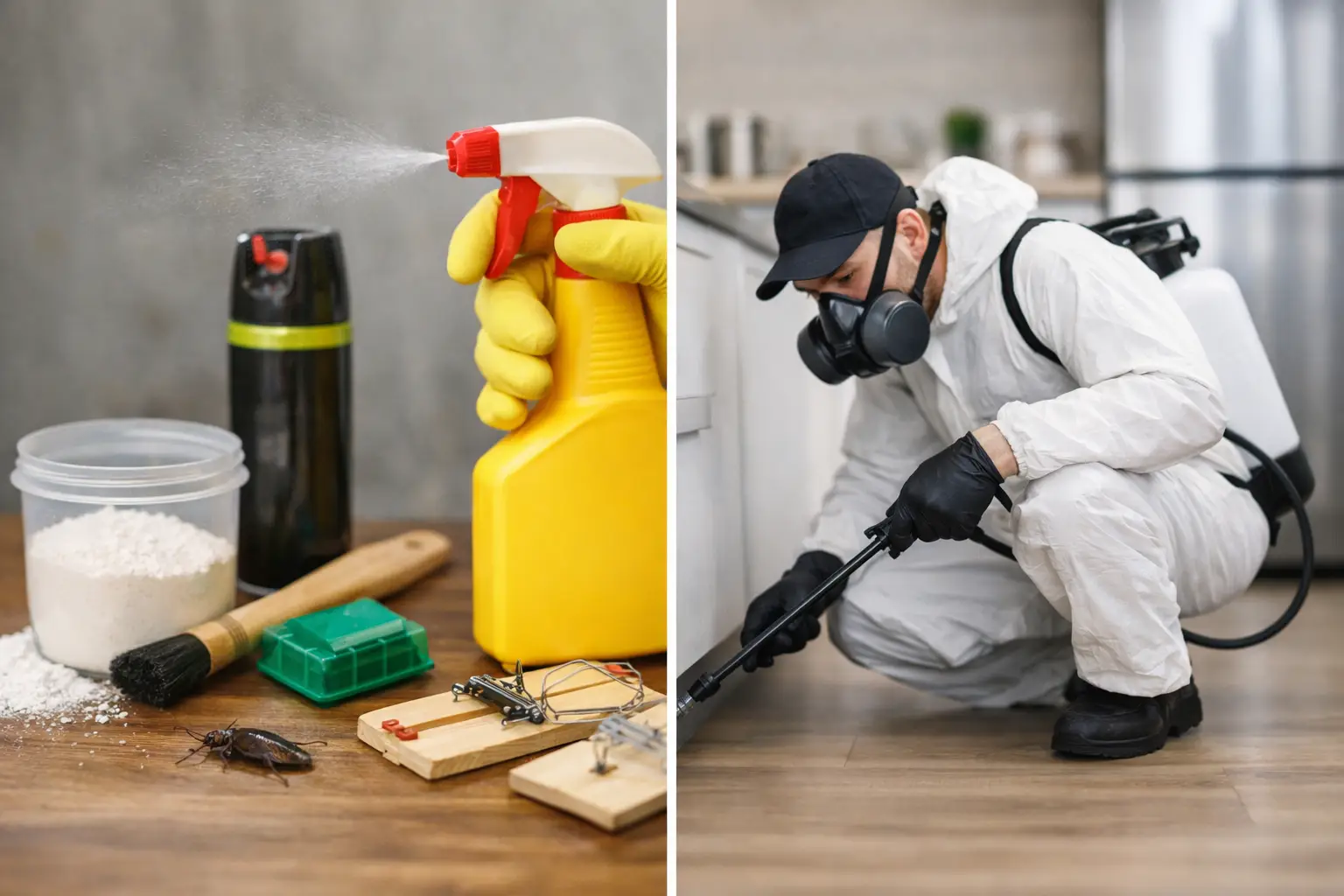
A line of ants in the kitchen or a wasp nest in the garden can make anyone reach for a spray straight away. But when the problem keeps returning, or gets worse overnight, the real question is not what product to buy first. It is DIY pest control vs professional treatment, and which option will actually solve the issue safely.
For some minor pest problems, a careful DIY approach can help. For others, especially rodents, bed bugs, cockroaches or stinging insects, delay often makes treatment harder and more expensive. The right choice depends on the pest, the scale of the infestation, the risks on the property and how quickly you need the problem under control.
DIY pest control vs professional treatment
DIY pest control usually means shop-bought sprays, traps, bait stations, powders or home remedies. Professional pest control starts with identifying the pest properly, assessing how far the infestation has spread, choosing the right treatment and putting prevention in place to reduce the chance of it returning.
That difference matters more than most people expect. Pest control is not only about killing what you can see. It is about finding where pests are nesting, how they are entering the property and what conditions are helping them stay.
If you only treat the visible signs, the infestation can continue in wall voids, lofts, under floorboards, behind appliances or around drains. That is often why a DIY attempt seems to work for a few days, then the problem returns.
When DIY can be a reasonable option
DIY treatment can make sense when the issue is small, visible and caught early. A few ants near a back door in warm weather, a single wasp indoors, or the occasional silverfish in a bathroom may not always require a full call-out if there is no wider infestation.
In those cases, basic housekeeping and simple control measures can help. Sealing food properly, removing standing water, emptying bins more often, blocking small entry points and using an appropriate over-the-counter product may reduce the problem.
DIY can also be useful as a first response while you decide next steps. For example, setting a basic mouse trap after hearing one noise in the kitchen may help confirm whether activity is isolated or part of a larger issue.
The key word is limited. Once there is evidence of breeding, repeated sightings, droppings, bites, foul odours, damage or activity in multiple rooms, DIY becomes far less reliable.
Where DIY often falls short
The biggest problem with DIY pest control is misdiagnosis. People often treat the wrong pest or use the wrong product in the wrong place. Flea bites may be mistaken for bed bugs. Mouse activity may actually be rats. A few cockroaches seen in daylight can suggest a much larger infestation hidden out of sight.
Even when the pest is identified correctly, store-bought treatments have limits. They may not be strong enough, may not reach harbourage areas, or may fail because the application is incomplete. One trap in the loft will not solve a rat problem across a whole building. One spray around a bed frame will not deal with bed bugs hiding in skirting boards, sockets and nearby furniture.
There is also the issue of false confidence. If a treatment reduces activity briefly, it can seem like the problem is solved. Meanwhile, eggs hatch, nests remain active and pests spread further through the property.
For landlords, businesses and facilities managers, that delay carries extra risk. A pest issue in a rental property, office, food premises or shared building can quickly become a complaint, a hygiene concern or a reputational problem.
Cost: cheaper at first, not always cheaper overall
DIY is attractive because the upfront cost is lower. A spray, trap or bait box is obviously less expensive than booking a professional visit. But first cost and total cost are not the same thing.
If the infestation is minor and the product works properly, DIY may save money. If it does not, you can end up paying for multiple products, replacing contaminated food, cleaning affected areas, repairing damage and then arranging professional treatment anyway.
Rodents are a good example. A few cheap traps can turn into damaged wiring, spoiled stock, chewed packaging and repeat activity if the access points are never found. Bed bugs are another. Repeated DIY treatments often spread the infestation into other rooms, making the eventual professional job more involved.
A professional service costs more at the start, but it is designed to solve the problem faster and more completely. In many cases, that is the cheaper route overall.
Safety is where the decision becomes clearer
Pest control products are not harmless simply because they are sold to the public. Used incorrectly, sprays, powders and baits can create risks for children, pets, food preparation areas and anyone with respiratory sensitivity.
That matters even more in flats, rental homes and commercial premises where people share walls, storage areas, bin spaces or ventilation routes. Applying products without understanding the pest’s behaviour or the site conditions can be ineffective at best and unsafe at worst.
Professional technicians are trained to choose the right treatment for the pest and the environment. That includes knowing where products can be used, how much is needed, what precautions are required and when non-chemical control is the better option.
Stinging insects deserve special mention. Trying to remove a wasp nest without proper equipment can escalate the problem in seconds. The same applies to rodent infestations in places where droppings, urine and nesting material may pose health concerns.
Speed and certainty matter in real infestations
Some pest problems are annoying. Others are urgent. If you run a business, manage a property or have children at home, you may not have the luxury of testing three different DIY products over two weeks.
Professional pest control offers something DIY rarely can: speed with a plan. A proper inspection identifies the source, the scale and the treatment path straight away. That is especially valuable for pests that spread quickly or create immediate risk, such as rats, mice, bed bugs, cockroaches and wasps.
In a city like London, infestations can build fast due to dense housing, shared walls, rear access routes, food waste and constant movement between properties. What starts in one flat, shop or communal area can soon affect others. Fast action is not just convenient. It can prevent a manageable issue becoming a larger one.
Which pests usually need a professional
Some pests are far more difficult to eliminate than most people realise. Bed bugs are one of the clearest examples because they hide well, spread easily and often require more than one treatment. Cockroaches are similar, especially in kitchens, service areas and commercial settings where warmth and moisture support breeding.
Rodents also tend to need a professional response once there is more than light activity. Seeing droppings, hearing movement at night, finding gnawed materials or spotting daytime movement usually points to a wider issue that needs inspection and proofing, not just traps.
Wasp nests are best handled professionally because of the sting risk and the difficulty of treating the nest fully. Fleas can also be stubborn, particularly where pets, soft furnishings and multiple rooms are involved.
Ants and occasional insects sit in more of a middle ground. A small, seasonal issue may respond to DIY. Repeated return, large numbers or nesting within the structure usually means it is time to call in help.
DIY pest control vs professional for homes and businesses
In homes, the decision often comes down to stress, time and confidence. If you know exactly what you are dealing with and it is clearly minor, DIY may be enough. If you are losing sleep, finding signs in more than one room or worrying about health risks, professional treatment is normally the better choice.
For businesses, the threshold is lower. Pest activity in restaurants, cafés, offices, warehouses, rental portfolios and shared buildings can affect hygiene standards, staff confidence and customer trust. A slower trial-and-error approach is rarely worth the risk.
This is where a responsive provider matters. A company such as Golden Pest Control is set up for urgent call-outs, clear advice and treatment plans that match the property, whether the issue is in a home, a commercial kitchen or an outdoor area.
How to decide without wasting time
Ask three simple questions. Do you know exactly what pest you are dealing with? Is the activity clearly small and isolated? Can you treat it safely without risking people, pets or making the infestation spread?
If the answer to any of those is no, professional treatment is usually the more sensible route. That is not about fear. It is about solving the problem properly before it disrupts the property further.
There is nothing wrong with trying a sensible DIY fix for a very minor issue. But there is also no benefit in letting pride, cost concerns or uncertainty drag out a problem that needs expert attention. The sooner the right treatment starts, the sooner the property gets back to normal.
When pests show up, the best decision is the one that protects your home, your business and your peace of mind with the least delay.
1 Comment
Fast Pest Control in Pinner for Homes & Businesses - Golden Pest Control London
September 5, 2026[…] scale of activity, likely entry points and the conditions allowing it to continue. This is why a professional inspection is more useful than applying a product without a clear […]