
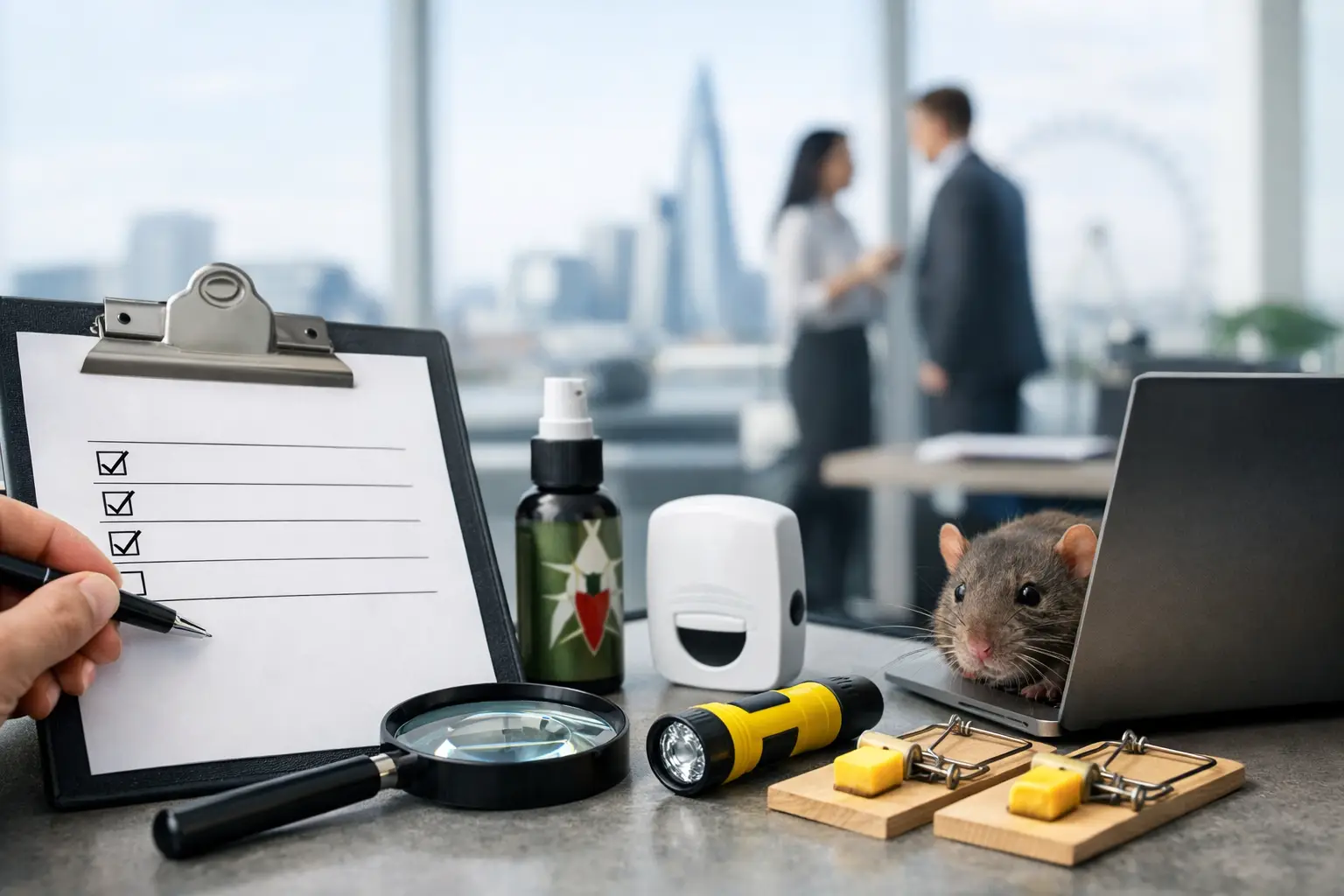
A single packet of biscuits left in a desk drawer, a leaking kitchen tap or an overfilled bin can be enough to attract pests into a busy workplace. This office pest prevention checklist gives facilities managers, landlords and office teams practical ways to reduce that risk before a small issue becomes a disruptive infestation.
Pest prevention is not just about keeping an office looking tidy. Rodents, cockroaches, flies and ants can affect hygiene, staff confidence, client impressions and, in some workplaces, compliance responsibilities. In shared London buildings, pests can also move through wall voids, ceiling spaces and service risers from neighbouring units. That makes early reporting and consistent routines especially valuable.
Start with a clear office pest prevention checklist
A prevention plan works best when one person is responsible for coordinating it, even if every member of staff has a part to play. For smaller offices, this may be the office manager. In larger premises, it is usually a facilities manager, building manager or nominated health and safety lead.
The key is to make checks routine rather than waiting for a sighting. Walk through kitchens, washrooms, storage areas, reception, plant rooms and external bin locations at least once a week. Look for the conditions pests need: food, water, shelter and an easy way inside.
Use the following checks as part of your regular workplace routine:
- Empty internal bins daily, particularly food and recycling bins, and ensure external bins have close-fitting lids.
- Clean kitchen worktops, microwaves, fridges and coffee areas every day, including crumbs behind appliances and spills beneath cupboards.
- Store tea, coffee, snacks and catering supplies in sealed containers rather than open packets, cardboard boxes or desk drawers.
- Report dripping taps, blocked drains, condensation and damaged pipework promptly, as pests need reliable moisture.
- Keep delivery areas, stationery stores and cleaner’s cupboards orderly so there are fewer undisturbed hiding places.
- Check doors, window frames, air vents, pipe entry points and gaps around cables for openings that could admit rodents or insects.
These tasks are straightforward, but they must be consistent. A spotless front desk will not prevent a mouse problem if food waste is left overnight in a kitchen cupboard or if there is a gap beneath a rear service door.
Control food and waste without creating friction
Office kitchens are often the highest-risk area because they combine food, warmth, water and limited daily supervision. The answer is not to make staff feel policed. It is to give them clear, reasonable rules that are easy to follow.
Encourage staff to take food home at the end of the day and avoid keeping snacks in pedestal drawers. If the office provides fruit, biscuits or catering, assign someone to remove leftovers before closing. Fridge contents should be checked weekly, with old food disposed of and shelves wiped clean. A forgotten lunch can quickly attract flies and, depending on the building, cockroaches or rodents.
Waste arrangements need the same attention. Internal bins should not overflow, and food waste should be removed before weekends and bank holidays. External waste areas should be kept clean around the base of bins, not just inside them. Loose rubbish, leaking bags and clutter around bin stores provide both food and cover for rats and mice.
Recycling deserves particular care. Rinse bottles, cans and food containers before putting them out. Cardboard should be flattened and removed regularly, especially after large deliveries. Cockroaches can hide in corrugated cardboard, while rodents may use piled packaging as nesting material.
Stop pests getting into the building
Good housekeeping reduces attraction, but exclusion prevents access. In older offices and converted commercial units, tiny gaps around pipes and damaged seals can be enough for pests to enter. Mice can squeeze through openings far smaller than most people expect, while insects can travel through vents, drains and poorly sealed windows.
Inspect external doors for worn brush strips and gaps at the threshold. Doors that are frequently propped open for deliveries, smoking breaks or warm weather should be managed carefully. Where practical, use self-closing doors and make sure staff know why doors need to remain shut.
Check utility penetrations in kitchens, washrooms, comms cupboards and plant areas. Seal gaps with suitable durable materials rather than temporary tape or expanding foam alone, which rodents may chew through. Vent covers should be secure and intact. If an opening cannot be sealed because it is needed for ventilation or services, it may require a pest-proof mesh or a professional assessment.
Outside, keep vegetation cut back from walls, remove standing water where possible and avoid storing unused furniture, pallets or bags directly against the building. These areas can provide harbourage for rodents and insects before they find a route indoors.
Know the early warning signs
A quick response is far easier and less disruptive than dealing with an established infestation. Staff should know what to report without embarrassment or delay. It is better to investigate one possible sign than ignore a developing issue.
Rodent signs include droppings, gnaw marks, shredded paper, greasy rub marks along walls, unusual odours and scratching sounds after the office is quiet. Do not sweep or vacuum droppings before they have been assessed. Keep people away from the immediate area if possible and report the finding.
For insects, look for live or dead cockroaches, small dark specks in cupboards, ant trails near food or water, fruit flies around drains and repeated wasp activity near external openings. Bed bugs are less commonly associated with offices, but they can be introduced through personal belongings, soft seating or frequent visitor traffic. Small bites alone do not confirm bed bugs, so avoid assumptions and arrange an inspection if there are supporting signs.
Keep a simple incident log with the date, location, pest signs and any action taken. A pattern – such as repeated sightings near one kitchen cupboard or a rear entrance – helps identify the source and supports faster treatment if professional help is needed.
Make cleaning contracts and building management work together
Prevention can fail when responsibilities are unclear. Your cleaning contractor may clean the kitchen, but who checks behind appliances? The landlord may control external repairs, but who reports a damaged drain cover? In multi-occupied buildings, pests do not respect tenancy boundaries.
Set out responsibilities in writing. Your office team should manage daily food, waste and reporting practices. Cleaners should have a defined scope for kitchens, washrooms, bins and hard-to-reach areas. Building management or the landlord should address structural defects, communal waste areas and issues in shared service spaces.
It also helps to schedule periodic deeper checks. These may include moving appliances, inspecting under sinks, reviewing storage rooms and examining external bin areas. The right frequency depends on the premises. An office with no kitchen and little visitor traffic may need less intensive monitoring than a serviced office with shared kitchens, regular deliveries and a ground-floor café nearby.
When an office needs professional pest control
Prevention measures are essential, but they are not a substitute for treatment when there is evidence of active pest activity. Avoid relying on shop-bought poisons, aerosols or traps without identifying the pest and the source. Incorrect use may create safety concerns, leave animals suffering, scatter pests into other areas or make the problem harder to assess.
Professional pest control is particularly advisable when you find rodent droppings, repeated insect sightings, evidence of nesting, damage to stock or wiring, or a pest issue that appears connected to communal areas. A qualified technician can identify the species, inspect likely access points, recommend proofing work and provide a treatment plan suited to an occupied workplace.
For urgent office pest concerns in London, Golden Pest Control can assess the problem, carry out safe targeted treatment and advise on practical measures to prevent recurrence. Fast action matters where staff, customers or hygiene standards could be affected.
Keep prevention active after treatment
A successful treatment resolves the immediate problem, but the follow-up routine protects the workplace over the long term. Complete any proofing recommendations promptly, continue monitoring the original area and make sure food and waste controls do not slip once activity stops.
Share a short reminder with staff after an incident, focusing on what they can do rather than blaming anyone. Clear guidance on food storage, reporting sightings and keeping shared spaces clean helps everyone support a pest-free office. A well-managed workplace gives pests very little reason to stay – and makes any new concern easier to spot early.