
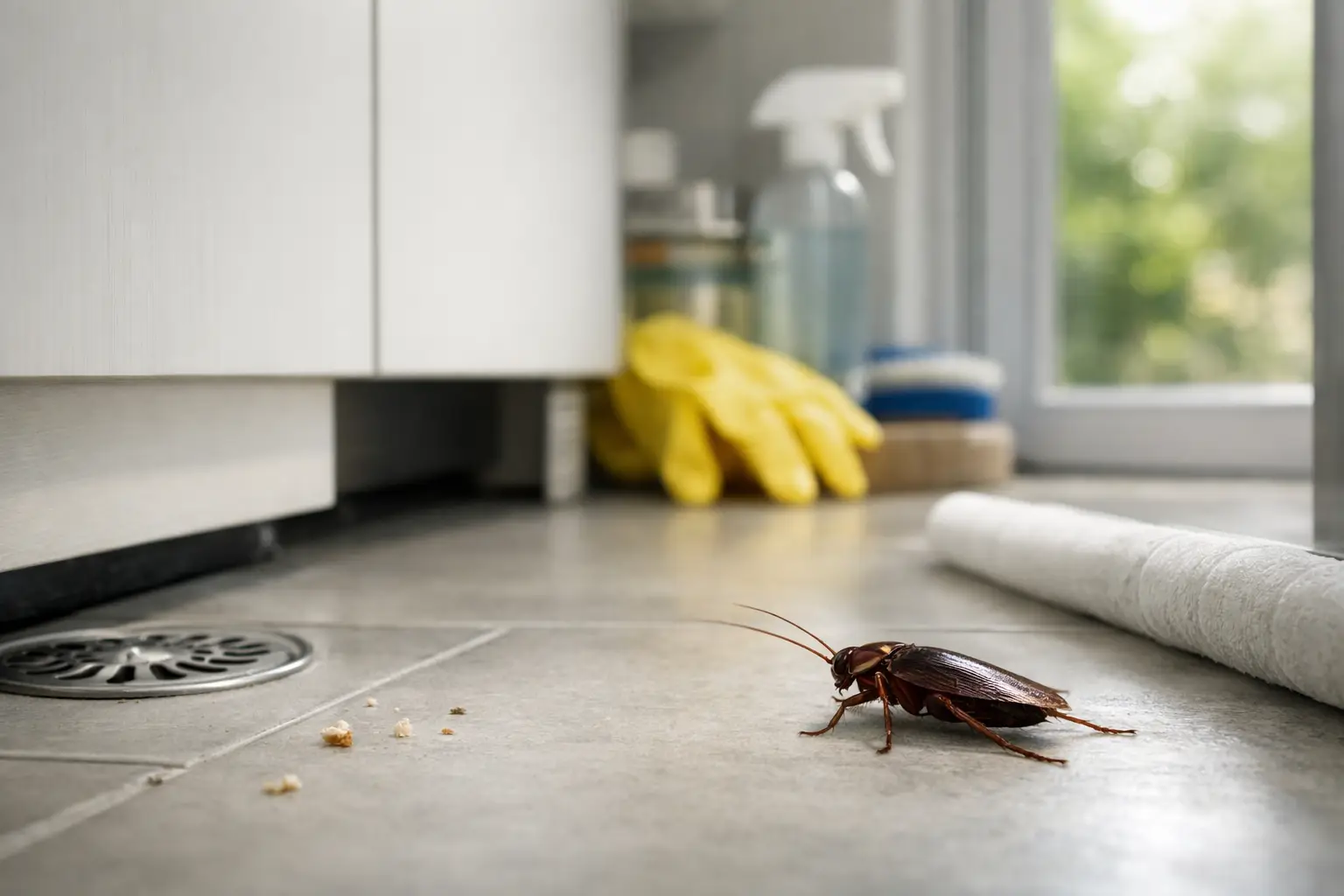
Seeing one cockroach in the kitchen at night is usually enough to make people think they have a major infestation. Sometimes they do. Sometimes they do not. But if you are wondering how to prevent cockroaches indoors, the key is to act early, remove what attracts them, and deal with the small access points most people miss.
Cockroaches are not drawn to dirty buildings alone. They are drawn to food, water, warmth, shelter and easy movement between rooms or neighbouring properties. That is why they turn up in well-kept homes, busy restaurants, office kitchens and communal blocks just as often as neglected spaces. Prevention works best when it is consistent rather than dramatic.
How to prevent cockroaches indoors at home and work
The most effective approach is to think like a pest control technician. A cockroach does not need much. A few crumbs under an appliance, condensation under a sink, cardboard stacked in a cupboard, and a narrow gap behind pipework can be enough to keep activity going.
In residential properties, kitchens and bathrooms are the main risk areas because they offer moisture and regular food residue. In commercial premises, especially food sites and staff break areas, the risk is higher because there is more frequent foot traffic, more waste, and more opportunities for pests to move in unnoticed. The same principles apply in both settings, but commercial sites usually need stricter routines and faster follow-up.
Remove food sources properly
This sounds obvious, but prevention often fails because cleaning is only done at surface level. Wiping the worktop is helpful, but cockroaches are usually feeding in places people do not clean every day. Grease under cookers, crumbs behind toasters, pet food left overnight and residue inside bins are all common triggers.
Store dry goods in sealed containers where possible, especially flour, rice, cereals and pet food. Avoid leaving washing up overnight, and do not rely on bin liners alone to contain food smells. The bin itself should be cleaned regularly, not just emptied. In commercial kitchens, end-of-day cleaning needs to include floor edges, drainage areas, equipment bases and storage shelving, not only visible prep surfaces.
Cut off moisture and standing water
Cockroaches can survive longer without food than without water. That is why even a clean property may still attract them if there are leaks or damp areas. Dripping taps, slow leaks under sinks, overflowing drip trays behind fridges and poorly ventilated bathrooms all create suitable conditions.
Check under kitchen units, behind the washing machine and around boiler cupboards. If you manage a rental property or commercial unit, water issues should be addressed quickly rather than left for the next maintenance visit. Prevention is far easier than dealing with an established infestation once moisture and shelter are both available.
Reduce hiding places
Cockroaches prefer dark, undisturbed spaces close to food and water. Clutter gives them exactly that. Cardboard is especially useful to them because it provides shelter and can hold moisture. Paper bags, unused packaging, stacked magazines and overcrowded cupboards all make detection harder.
You do not need to make a property look empty, but storage should be controlled. Use plastic containers where possible, keep floor areas clear in utility rooms and stockrooms, and avoid long-term build-up in understairs cupboards, service voids and back-of-house storage spaces.
Seal the routes they use to get in
If you want to know how to prevent cockroaches indoors for the long term, entry points matter just as much as cleaning. Cockroaches spread through surprisingly small gaps. They move around pipe entries, under doors, through cracked sealant, along service ducts and from neighbouring flats or units.
Start with kitchens and bathrooms because that is where most gaps are found. Look around sink pipework, behind toilets, around extractor fan fittings, under skirting and where cables enter walls. Seal cracks and crevices with suitable materials and replace damaged sealant where needed. Fit door sweeps if there is visible space beneath external or internal service doors.
In blocks of flats and commercial buildings, there is a limit to what one occupier can control alone. Shared risers, wall voids and communal drainage can allow pests to travel between units. In those cases, isolated action helps but may not solve the wider issue. A joined-up treatment and prevention plan is usually more effective.
Be careful with drains and service areas
Drains do not cause every cockroach problem, but they are a known risk area in some properties. Floor drains, grease traps, utility cupboards and bin storage areas should be cleaned and checked regularly. If there is a persistent musty smell, visible debris or moisture build-up, that area needs attention.
For businesses, especially food premises, this is as much about compliance and reputation as pest control. A single overlooked service area can undermine otherwise good hygiene standards.
Spot the early signs before numbers rise
Cockroaches are good at staying hidden, which is why people often underestimate how long activity has been present. The earlier you catch the signs, the easier it is to contain the problem.
The most common signs are live sightings at night, small dark droppings, smear marks in damp areas, egg cases and an unusual stale odour in enclosed spaces. In commercial settings, staff may notice activity when opening up in the morning or moving equipment during cleaning. In homes, residents often spot them when turning on the kitchen light late at night.
One sighting does not always mean a severe infestation, but it should never be ignored. Roaches reproduce quickly, and what looks minor can develop fast if the conditions remain favourable.
Why DIY prevention sometimes works and sometimes does not
Good housekeeping, sealing gaps and fixing leaks are always worth doing. They reduce risk and support any professional treatment later on. But prevention has limits when cockroaches are already breeding behind units, inside wall voids or in neighbouring parts of a building.
Shop-bought sprays can kill visible insects, but they often miss the nest and may scatter activity into new areas. Baits can be useful in the right hands, but poor placement or inconsistent use tends to reduce their effect. This is where trade-offs matter. A small, isolated issue may improve with careful prevention steps. A repeated sighting pattern, activity in multiple rooms or signs in a business setting usually calls for professional intervention.
For landlords, facilities managers and food businesses, speed matters. Waiting to see if the issue settles can lead to greater disruption, tenant complaints, failed inspections or damage to customer confidence.
Prevention habits that make the biggest difference
Most successful prevention plans are not complicated. They are disciplined. Keep food sealed, clear crumbs and grease properly, fix leaks quickly, reduce storage clutter, and inspect hidden areas on a routine basis. In workplaces, assign responsibility clearly so cleaning, waste handling and maintenance do not fall between teams.
It also helps to be realistic about risk. Ground floor units, older buildings, properties near food premises and busy commercial sites may need more frequent checks than a modern detached house with low foot traffic. London properties, especially those with shared walls and services, can face additional pressure simply because pests move easily between connected spaces.
If you have already seen signs of activity, prevention should start immediately, but it should also be paired with an honest assessment of whether the issue is beyond basic control. Golden Pest Control is often called when property owners have tried to manage it themselves and found the problem returning. That pattern usually means the source has not been fully identified or treated.
When to bring in professional help
If cockroaches keep reappearing after cleaning and sealing work, if you are seeing them during the day, or if the problem affects a restaurant, office, rental property or communal building, professional treatment is the safest next step. The same applies if you are unsure where they are coming from.
A proper inspection should identify harbourage areas, likely entry routes and the conditions keeping activity alive. From there, treatment can be tailored to the property rather than applied as a generic fix. That is especially important in homes with children or pets, and in businesses that need safe, discreet pest control with minimal disruption.
Preventing cockroaches indoors is not about one big clean-up. It is about making the property consistently hard for them to survive in, and reacting quickly when the first signs appear. The sooner you act, the more straightforward the outcome usually is.