
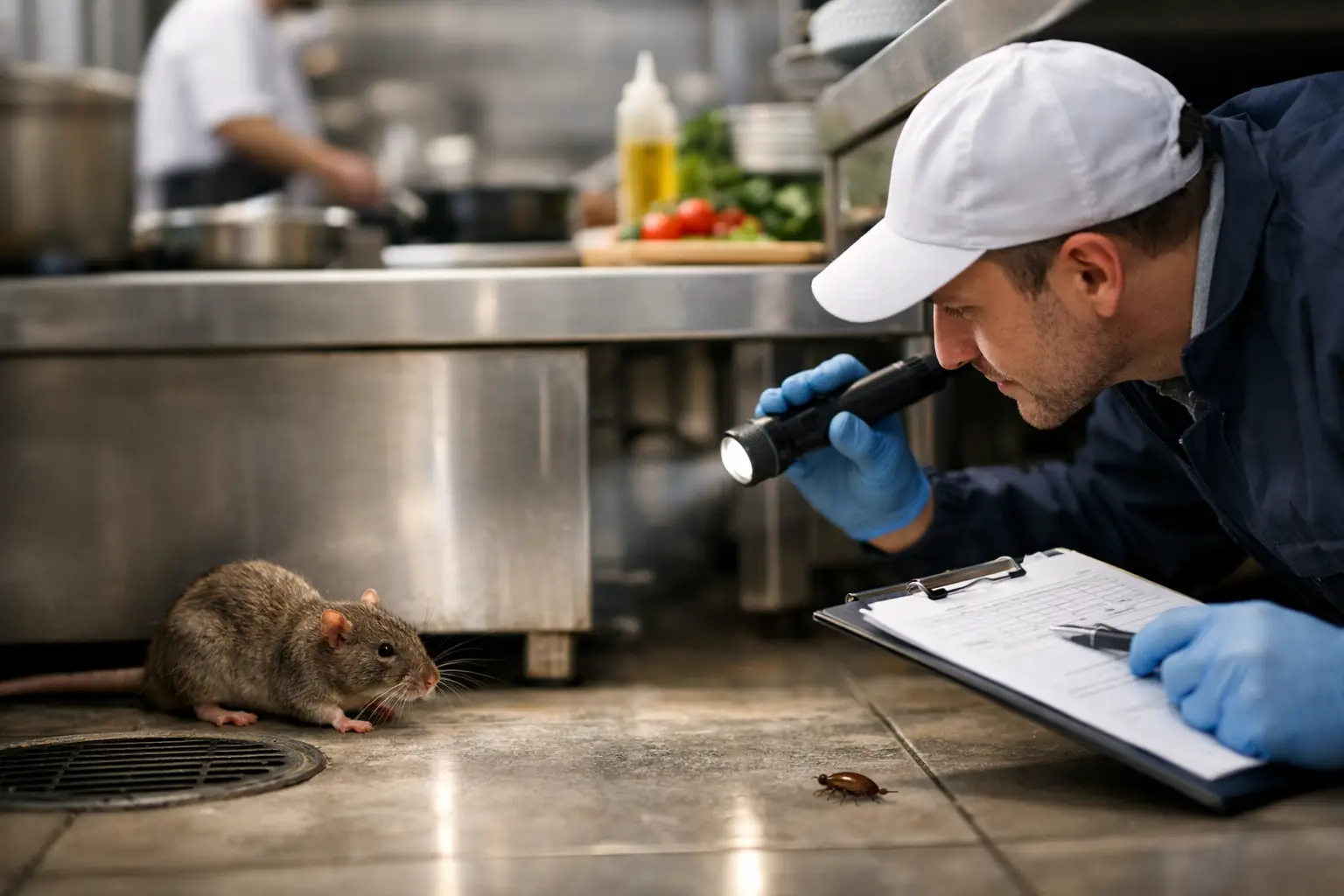
A single cockroach sighting during service can do more than unsettle diners. It can trigger complaints, damage your reputation, raise questions during inspection and expose gaps in how your site is managed. That is why a clear restaurant pest compliance guide matters for any operator who needs to protect food safety, staff confidence and day-to-day trading.
For restaurants, compliance is not just about reacting when pests appear. It is about proving that you have taken sensible, ongoing steps to prevent infestations, monitor risks and act quickly when signs are found. If you run a restaurant, café, takeaway or dark kitchen, pest control should sit alongside cleaning, stock rotation and temperature checks as part of normal operations.
What restaurant pest compliance really means
In practical terms, pest compliance means keeping your premises in a condition that discourages pests, spotting issues early and maintaining records that show you are managing the risk properly. Environmental health officers do not simply look for live pest activity. They also look at the conditions that make infestations more likely, such as poor waste handling, food debris, drain problems, damaged proofing and neglected storage areas.
This matters because pests rarely appear without a reason. Rodents follow food, warmth and shelter. Cockroaches thrive where moisture and hiding places are available. Flies are drawn to waste, drains and food preparation areas. If the environment allows them in, treatment alone will not hold for long.
A strong compliance approach balances prevention, monitoring and rapid response. That balance is where many sites either stay in control or drift into repeat issues.
The highest-risk areas in a restaurant
Most pest problems begin away from the dining area. Kitchens, bin stores, delivery points, cellars, dry stores and staff areas usually present the highest risk because they combine access routes with food residue, packaging and warmth.
External areas are often the first weak point. An overflowing bin area, a damaged drain cover or a rear door left open for ventilation can invite pests in before the team notices a problem. Once inside, they move quickly towards storage and prep zones.
Inside the building, look closely at gaps around pipework, broken seals on doors, cluttered stockrooms and any place where cleaning is difficult. Even well-run sites can develop blind spots. A busy service schedule sometimes means equipment is not pulled out as often as it should be, or deliveries are stacked before checks are completed. Those small operational shortcuts can create ideal harbourage.
Restaurant pest compliance guide: the records that matter
A reliable restaurant pest compliance guide should not focus only on treatment visits. Records are a key part of showing due diligence. If there is ever a complaint, an inspection or an internal review, clear documentation helps demonstrate that the business has taken reasonable steps.
You should be able to show a history of pest inspections, findings, actions taken and recommendations completed. Cleaning schedules, waste collection arrangements, staff reporting procedures and maintenance records also matter because pest issues often sit across several parts of the operation.
That does not mean creating paperwork for the sake of it. The useful test is simple: if an inspector asked how you manage pest risks, could your team show the answer clearly and quickly? If records are scattered, outdated or dependent on one manager’s memory, the process is too fragile.
Prevention is where compliance becomes practical
The best pest control plan is the one that reduces the chance of an emergency call in the first place. In restaurants, prevention depends on routine habits rather than one-off deep cleans.
Food should be stored in sealed containers where possible, with stock rotated and damaged packaging dealt with immediately. Waste should move out of prep areas promptly, and bin stores need regular cleaning rather than occasional attention when odour becomes obvious. Drains require monitoring too, especially in kitchens where grease and residue build up over time.
Proofing is equally important. Door sweeps, bristle strips, mesh screens and sealed service penetrations can make a major difference, particularly in older London properties where buildings often have more entry points than expected. Still, proofing has limits. If a site has strong attractants such as poor waste handling or standing water, sealing gaps alone will not solve the wider problem.
Staff awareness is part of compliance
A restaurant can have a strong contractor in place and still fall short if staff do not know what to report. The first signs of pest activity are often subtle – droppings in a dry store, gnaw marks on packaging, smear marks near walls, unusual odours, egg cases or dead insects around equipment.
Front and back of house teams do not need technical training, but they do need clear instructions. They should know what signs matter, who to tell and why speed matters. Waiting until the end of the week to mention a concern can turn a manageable issue into a larger one.
This is especially important in multi-shift sites. If communication between managers, chefs, cleaners and delivery staff is inconsistent, pest warnings can be missed. A short reporting process, written down and reinforced regularly, usually works better than anything complicated.
When routine checks are not enough
There is a difference between low-level prevention and an active infestation. If you are seeing repeated signs of rodents, cockroaches or flies, or if staff have raised the same concern more than once, it is time to move beyond routine checks.
At that stage, speed matters. Delaying action to see if the issue settles on its own rarely helps in food businesses. Pests breed, spread and establish harbourage quickly, especially where warmth, moisture and food sources are constant. The longer the delay, the more likely you are to face contamination risks, disruption to service and tougher questions from inspectors.
Professional support should include inspection, identification of the source, safe treatment and practical advice on prevention. The best results come when treatment is matched with site-specific recommendations. If the advice is not being implemented – for example waste remains unmanaged or structural gaps stay open – the problem may return.
Choosing the right level of pest control support
Not every restaurant needs the same level of intervention. A small café with strong housekeeping and limited storage may only need regular monitoring and quick access to support if something changes. A larger restaurant, takeaway or high-volume kitchen with late trading, frequent deliveries and complex waste handling usually needs a more active programme.
That is where a tailored service matters. There is no value in a generic plan that ignores the layout of the site, the type of food handled or the pressures of service. For many operators, what matters most is knowing that if activity is found, qualified help is available quickly and the next steps are clear.
For businesses in London, where dense urban conditions make rodent and insect pressure more persistent, response times can be especially important. Golden Pest Control works with urgent commercial pest issues where restaurants need fast inspection, effective treatment and practical prevention advice that supports ongoing compliance.
Common mistakes that weaken compliance
One of the most common mistakes is treating pest control as a separate issue rather than part of the wider food safety system. If managers only think about pests when there is visible activity, the site is already behind.
Another weak point is overreliance on cleaning alone. Cleanliness is essential, but it does not remove every risk. Structural defects, delivery practices, drainage faults and poor external waste management can still allow pests to enter and settle.
Some restaurants also fail to act on recommendations after inspections. This creates a paper trail without solving the problem. If reports repeatedly note the same proofing gap, deep cleaning issue or storage concern, that pattern may attract unwanted attention during inspection.
Building a compliance routine that holds up under pressure
The most reliable systems are simple enough to survive a busy Friday night. Managers should know when checks are done, what gets recorded and who is responsible for follow-up. Staff should understand that reporting a pest sign is not about blame. It is about protecting the business quickly.
A practical routine usually includes regular internal checks, contractor inspections where needed, prompt maintenance on entry points, disciplined waste control and a clear escalation process for urgent sightings. If your site already uses opening and closing checklists, pest prevention can be built into those routines without making them cumbersome.
It also helps to review seasonal pressure. Warmer months may bring more fly and wasp issues, while colder periods often drive rodents indoors. A plan that worked six months ago may need adjustment depending on weather, trade volume and recent building works nearby.
Compliance in restaurants is rarely about perfection. It is about showing control, acting early and fixing the conditions that create risk. If your team can do that consistently, you put yourself in a much stronger position with both inspectors and customers.
The best time to tighten your pest compliance process is before you need to explain why it failed.