
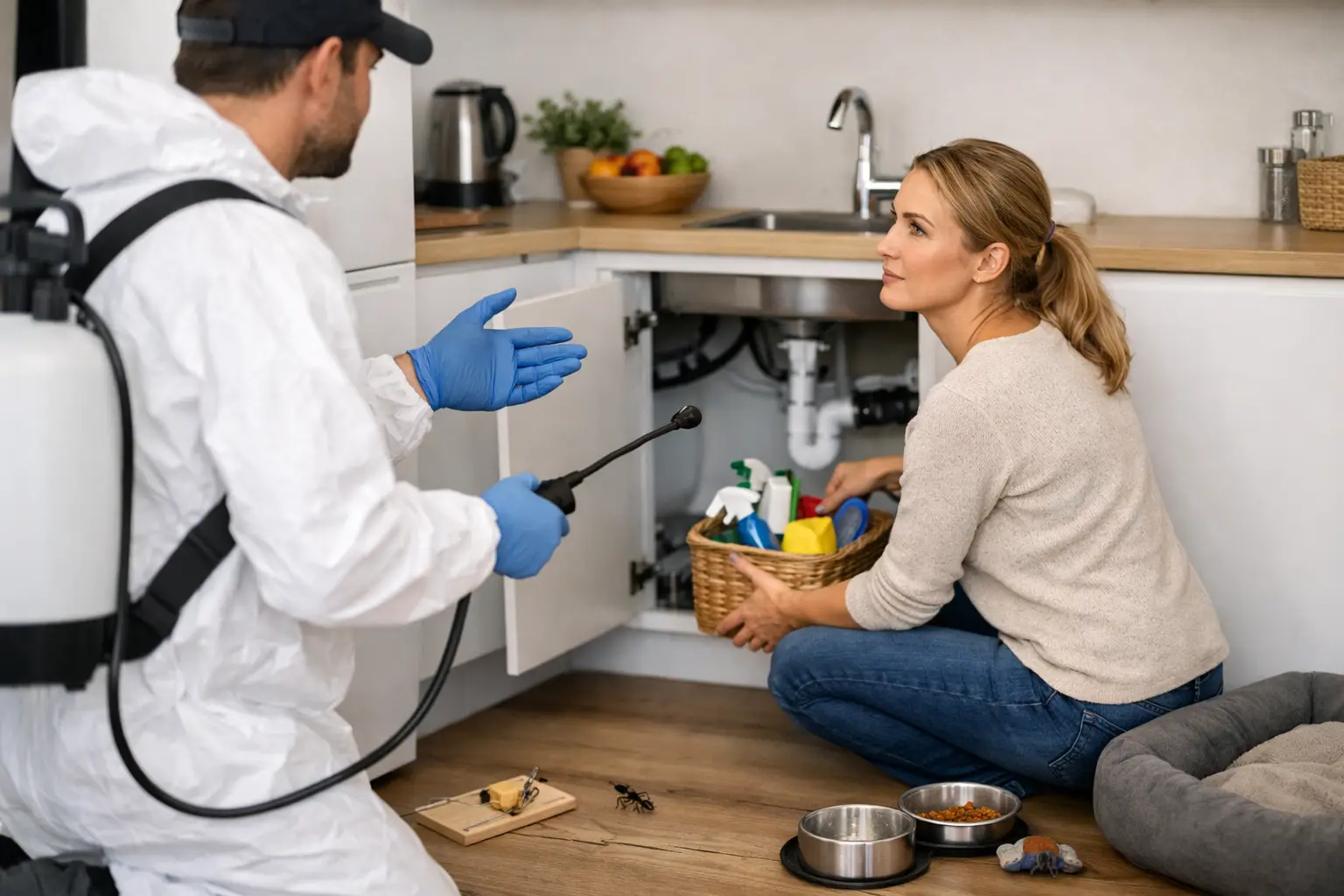
A pest treatment appointment goes much more smoothly when the property is ready before the technician arrives. If you are wondering how to prepare pest treatment properly, the main goal is simple: make access easy, reduce anything that interferes with treatment, and protect people, pets, food and personal belongings where needed. Good preparation saves time, helps the treatment reach the right areas, and can improve results after the visit.
Preparation is not exactly the same for every infestation. A rat treatment in a restaurant, a bed bug treatment in a bedroom, and a wasp nest treatment outside a house all require different steps. That is why clear instructions from your pest control provider matter. Still, there are some practical rules that apply in most situations.
How to prepare pest treatment before the visit
Start with access. Technicians need to inspect properly before they treat, and that means getting to the affected rooms, cupboards, loft spaces, utility areas, under sinks, behind appliances, and any known pest activity points. If boxes, stored items or furniture block these areas, move them in advance where you can do so safely.
Cleaning helps, but over-cleaning can sometimes be unhelpful. A normal tidy-up is useful because it removes clutter and makes signs of activity easier to spot. At the same time, if you scrub every surface immediately before certain treatments, especially for insects, you may remove evidence or reduce the effectiveness of products applied to key areas. A better approach is to follow any treatment-specific advice and avoid doing anything extreme the night before.
Pets and children should always be considered. If treatment products are being applied indoors, keep children away from the working area and arrange for pets to be out of the room, or out of the property if advised. Fish tanks need particular care because airborne products and sprays can be harmful. In many cases, the tank should be covered securely and air pumps turned off for the treatment period, but always check the exact instructions first.
Food preparation areas need attention as well. In homes, put away exposed food, cover utensils, and clear kitchen worktops. In commercial settings such as cafés, takeaways or shared office kitchens, a more careful shutdown may be needed so treatment can be carried out safely and hygienically.
Preparing for different pest problems
Rodents
For rats and mice, preparation usually focuses on access, hygiene and proofing awareness. Clear the areas under sinks, behind white goods, in pantry cupboards and around boiler cupboards or service risers if these are likely activity points. If droppings are present, do not vacuum them dry, as that can spread contamination. A technician can advise on safe cleaning and what should be left in place for inspection.
Food sources should be reduced as much as possible. Store dry goods in sealed containers, clean up crumbs, and avoid leaving pet food out overnight. For businesses, especially food-led premises, waste storage and stock rooms often need just as much attention as front-of-house areas.
If you have noticed gnawing, grease marks, scratching sounds or burrows outdoors, make a note of where and when. That kind of detail helps the technician target the treatment more accurately.
Bed bugs and fleas
These treatments usually involve more preparation than most people expect. Bedding, clothing and soft furnishings may need to be bagged, washed and dried on a high heat where suitable. Bed frames often need to be pulled away from the wall, and clutter around the bed should be reduced so all harbourage points can be checked.
For fleas, vacuuming beforehand is often recommended, especially on carpets, rugs, skirting edges and upholstered furniture. For bed bugs, preparation can be more detailed and may include emptying bedside drawers, reducing stored items under the bed, and making sure the technician can inspect mattress seams, headboards and adjacent furniture.
This is one area where exact instructions matter most. If preparation is incomplete, parts of the infestation can remain hidden and survive the first visit.
Cockroaches, ants and other crawling insects
With cockroaches and ants, kitchens, bathrooms and service areas are usually the priority. Emptying lower cupboards may be necessary if activity has been found there. Clean visible grease and food residue, but do not apply supermarket sprays before the appointment. That can scatter pests into new areas and make professional treatment less straightforward.
If you run a business, check under counters, behind fridges, around waste bins and near incoming pipework. In offices and shared buildings, pests often move between units, so the source may not be the room where they are first seen.
Wasps, bees and outdoor pests
Outdoor treatment is generally simpler to prepare for, but access still matters. Make sure gates can be opened, ladders or obstacles are moved if needed, and pets or children are kept away from the area. If there is a nest in a loft, shed or wall cavity, avoid disturbing it before the visit.
For stinging insects, trying to block the entry point yourself often makes matters worse. The colony may seek another route into the property.
What not to do before treatment
One of the most common mistakes is using shop-bought products just before a professional visit. It is understandable – people want quick relief – but DIY sprays, powders and traps can interfere with inspection findings and sometimes push pests deeper into walls, floors or furniture.
Another mistake is throwing away affected items too quickly. In some cases, that helps. In others, especially with bed bugs, moving infested items through communal hallways or putting them outside without proper wrapping can spread the problem. Ask first, then dispose of anything in the right way.
It is also best not to seal every hole or gap before the inspection if rodent movement is still active. Some proofing should wait until baiting, trapping or a full treatment plan is in place. If entry points are blocked too early, rodents can become trapped in harder-to-reach areas.
How to prepare pest treatment in homes and flats
In a house or flat, preparation usually comes down to keeping rooms accessible and following the instructions for the specific pest involved. Bedrooms should be easy to inspect, kitchens should be clear around kickboards and appliances, and loft hatches or airing cupboards should not be blocked.
If you live in a block, there is another factor to consider: shared risk. Pests may be travelling through wall voids, service ducts, bin stores or neighbouring units. That does not mean your home is unclean. It simply means the treatment may need a wider view. If the problem keeps returning, coordinated action with the landlord, managing agent or neighbouring residents may be needed.
For tenants, it helps to keep records of when the activity started, where it is worst, and what you have seen. That gives your pest control company a clearer starting point and helps avoid delays.
How businesses should get ready
Commercial pest treatment needs preparation that protects both safety and continuity. Restaurants, shops, offices, warehouses and rental properties all have different pressures, but the principle is the same: keep the site accessible, keep staff informed, and keep treatment areas compliant.
For food businesses, exposed ingredients, utensils and preparation surfaces should be secured. For offices, staff may need notice if desks, kitchenettes or storage rooms are being treated. For landlords and facilities managers, access arrangements are often the main obstacle, especially when pests are active across multiple rooms or occupied units.
Fast response matters in London because small issues can escalate quickly in dense buildings with shared services and heavy footfall. That is particularly true for rodents, cockroaches and bed bugs.
Aftercare starts before the treatment ends
The best preparation includes understanding what happens afterwards. Ask whether you need to stay out of treated rooms for a period, when you can clean again, whether follow-up visits are likely, and what signs of continuing activity are normal in the short term.
Some treatments do not give an instant visible result, and that does not mean they are not working. Insect treatments, for example, may rely on pests contacting treated surfaces over time. Rodent control may involve staged visits, monitoring and proofing recommendations rather than a single one-off fix.
If your provider gives aftercare instructions, follow them closely. Cleaning too early, moving bait stations, or bringing bagged laundry back before the room is ready can reduce the effectiveness of the treatment.
When professional guidance matters most
If the infestation is spreading, keeps returning, or involves high-risk areas such as food premises, children’s rooms, or communal housing, proper preparation should be guided by a qualified technician. Golden Pest Control regularly helps households and businesses prepare for treatment in a way that is safe, practical and suited to the pest involved.
The most useful approach is not to guess. Ask what needs to be moved, cleaned, washed, covered or avoided before the appointment. Clear guidance before the visit often makes the difference between a rushed treatment and one that properly deals with the problem.
A well-prepared property gives the treatment the best chance to work first time, and it gives you something just as valuable – a clearer path back to a clean, safe and pest-free space.