
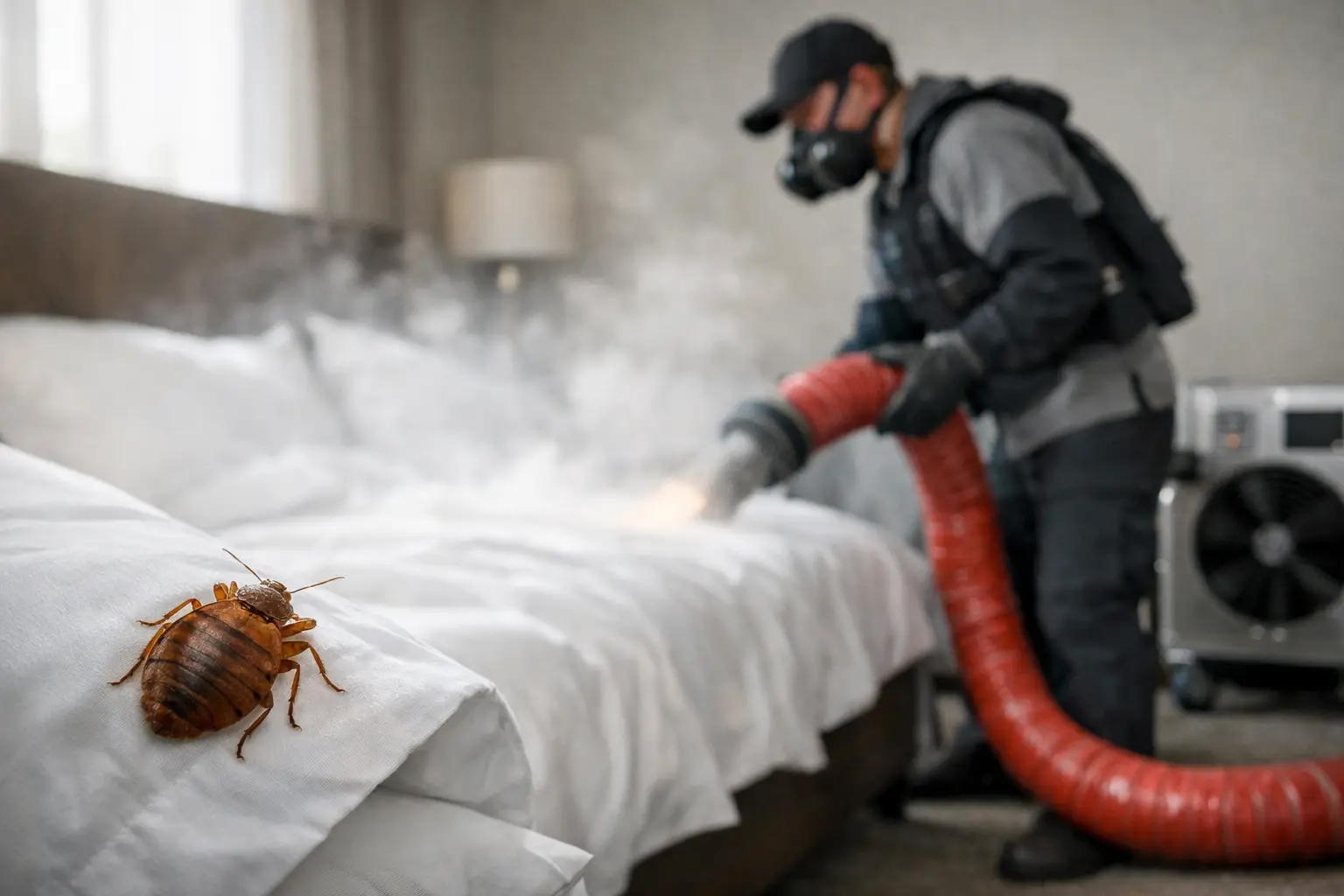
You usually do not need a long explanation to know bed bugs are serious. If you are waking up with bites, spotting marks on bedding, or getting complaints from tenants or guests, you want a treatment that works properly the first time. This bed bug heat treatment review looks at what heat treatment actually does, where it performs well, and where expectations need to stay realistic.
For many properties, heat treatment is one of the most effective ways to deal with a bed bug infestation quickly. It can reach into mattress seams, bed frames, skirting gaps, soft furnishings and other places where bed bugs hide. That said, success depends on preparation, equipment, technician experience and follow-up. Heat is powerful, but it is not magic.
Bed bug heat treatment review: the short answer
If you want the short version, heat treatment is highly effective when carried out correctly by trained professionals using commercial-grade equipment. It works by raising room and item temperatures to a level that kills bed bugs at all life stages, including eggs. That matters because eggs are often the reason infestations return after weaker treatments.
The biggest advantage is speed. In many cases, a severe problem can be tackled in a single treatment day rather than over several visits. For homes, that means less disruption stretched over weeks. For businesses, especially hospitality settings, it can mean faster recovery and lower reputational risk.
The main drawback is that heat treatment needs careful planning. Rooms must be prepared properly. Certain heat-sensitive items need to be removed or protected. If the heat does not penetrate the full treatment area evenly, some bed bugs may survive in cooler pockets. This is why the quality of the provider matters as much as the method itself.
How bed bug heat treatment works
Professional heat treatment raises the temperature of the affected space to a lethal range for bed bugs, then holds it there long enough to kill active insects and eggs. It is not the same as using a domestic steamer or turning up the heating. Bed bugs are excellent at hiding, and household methods rarely create consistent, deep heat where it is needed.
A proper treatment uses specialist heaters, sensors and air movement equipment to distribute heat throughout the room. Technicians monitor temperatures in multiple locations because surface warmth is not enough. The target is to get heat into the cracks, joints and concealed spaces where bed bugs settle.
This is where many online reviews become misleading. Some people say heat treatment failed, but the real issue may have been incomplete coverage, poor preparation or reinfestation afterwards. A treatment can only work on the areas included and prepared for treatment.
What heat treatment gets right
The strongest point in any bed bug heat treatment review is its ability to kill eggs as well as live bed bugs. That gives it an advantage over some lower-intensity or badly timed chemical approaches, where eggs may hatch after the first visit and restart the problem.
Heat also reduces the need to apply insecticides across large areas. That can be reassuring in family homes, furnished rentals and commercial premises where customers or staff are present regularly. In some cases, a provider may still combine heat with targeted residual treatment, especially around risk points, but the main knockdown comes from temperature.
Another benefit is reach. Bed bugs hide in places that are difficult to spray thoroughly, such as inside divan bases, behind headboards, within upholstered furniture and around flooring edges. Heat can penetrate these spaces more effectively than a surface-only treatment.
For landlords and facilities managers, there is also a practical value in speed. A faster treatment programme can help reduce void periods, repeated complaints and ongoing disruption between occupants.
Where heat treatment has limits
No honest review should present heat treatment as perfect in every case. The first limitation is cost. Heat treatment is usually more expensive upfront than basic chemical treatment because it requires specialist machinery, more setup and close temperature monitoring.
The second issue is preparation. Cluttered rooms make treatment harder because bed bugs gain more insulated hiding places. Overloaded storage areas, tightly packed wardrobes and dense piles of belongings can create cooler zones that are more difficult to treat thoroughly.
There is also the question of what caused the infestation and whether it might happen again. If bed bugs are being reintroduced through travel, second-hand furniture, adjoining occupancies or repeated movement of infested items, even a good treatment may not be the end of the story.
Then there are material risks. Some items can be affected by high temperatures, including candles, certain cosmetics, electronics with low heat tolerance, vinyl records, pressurised containers and delicate possessions. A professional should explain what needs removing before treatment starts.
Bed bug heat treatment review versus chemical treatment
This is often the comparison people really want. Heat treatment is generally faster and more decisive, especially for established infestations. Chemical treatment can also work, but it often needs multiple visits and depends heavily on bed bug exposure to treated surfaces.
Heat is often the better option where the infestation is widespread, the turnaround needs to be fast, or there is concern about eggs surviving. Chemical treatment may still be suitable in lower-level cases, in targeted follow-up work, or where a full heat setup is not practical.
It is not always an either-or decision. Experienced pest controllers may recommend an integrated approach based on the layout of the property, the severity of activity and whether neighbouring rooms are at risk.
What affects the result most
The provider matters more than the brochure. A successful bed bug heat treatment review should judge the service on inspection quality, preparation guidance, temperature monitoring and aftercare, not just whether heaters were brought in.
A proper inspection should identify where activity is concentrated and whether adjoining rooms need attention. In a flat, hotel or shared building, this can be especially important because bed bugs do not always stay neatly inside one room.
Preparation instructions should be clear and practical. If a company gives vague advice, problems can follow. Clients need to know what to bag, what to move, what to wash, and what must be removed for safety.
Aftercare also matters. Even when heat treatment has been effective, properties still benefit from monitoring, sensible housekeeping and advice on preventing reintroduction. A good contractor will explain what signs to watch for and whether a follow-up inspection is recommended.
Is it worth it for London properties?
In many London homes and businesses, yes. Dense housing, regular travel, tenant turnover and shared walls can all make bed bug problems harder to contain. A method that deals with all life stages quickly can be a strong option where speed and reliability matter.
This is especially true in rented accommodation, serviced properties and commercial environments where delays create bigger costs. Waiting through repeated low-impact treatments may look cheaper at first, but it can become more expensive once lost time, repeat callouts and resident dissatisfaction are factored in.
For this reason, companies such as Golden Pest Control often assess not just the infestation itself, but the pressure around it – who is affected, how quickly the issue needs resolving, and what level of disruption the property can tolerate.
Who should think twice before choosing heat treatment
Heat treatment may not be the first choice if the property contains many heat-sensitive contents that cannot be removed, or if access is too limited for proper airflow and equipment placement. It may also be less practical where only a tiny, very localised issue has been caught early and a targeted treatment plan is more proportionate.
Budget is another real factor. Some clients need the lowest immediate cost, even if it means more than one visit. That is understandable. The key is making the decision with clear expectations rather than assuming every treatment route offers the same result.
Final view on bed bug heat treatment
A fair bed bug heat treatment review comes down to this: when done properly, it is one of the strongest treatment options available. It is fast, effective across life stages, and well suited to situations where delays cause stress, complaints or business disruption. But it only delivers that level of performance when the inspection is accurate, the setup is professional and the preparation is taken seriously.
If you are choosing between treatment options, look past promises of quick fixes and ask practical questions. How will the room be assessed? How will temperatures be monitored? What preparation is required? What follow-up is included if activity continues? The right answers tell you far more than a cheap quote ever will.
When bed bugs are already affecting sleep, tenants, guests or day-to-day operations, the best treatment is the one that is planned properly and carried out without shortcuts.
2 Comments
Bed Bug Treatment Comparison: What Works Best? - Golden Pest Control London
August 28, 2026[…] or whole-property heat treatment raises the temperature in affected areas to a level that kills bed bugs at all life stages, […]
Bed Bugs: Signs, Treatment and Prevention - Golden Pest Control London
September 28, 2026[…] may involve carefully applied insecticides, targeted residual products, heat-based methods or a combination of approaches. The most suitable option depends on the property, the number of […]