
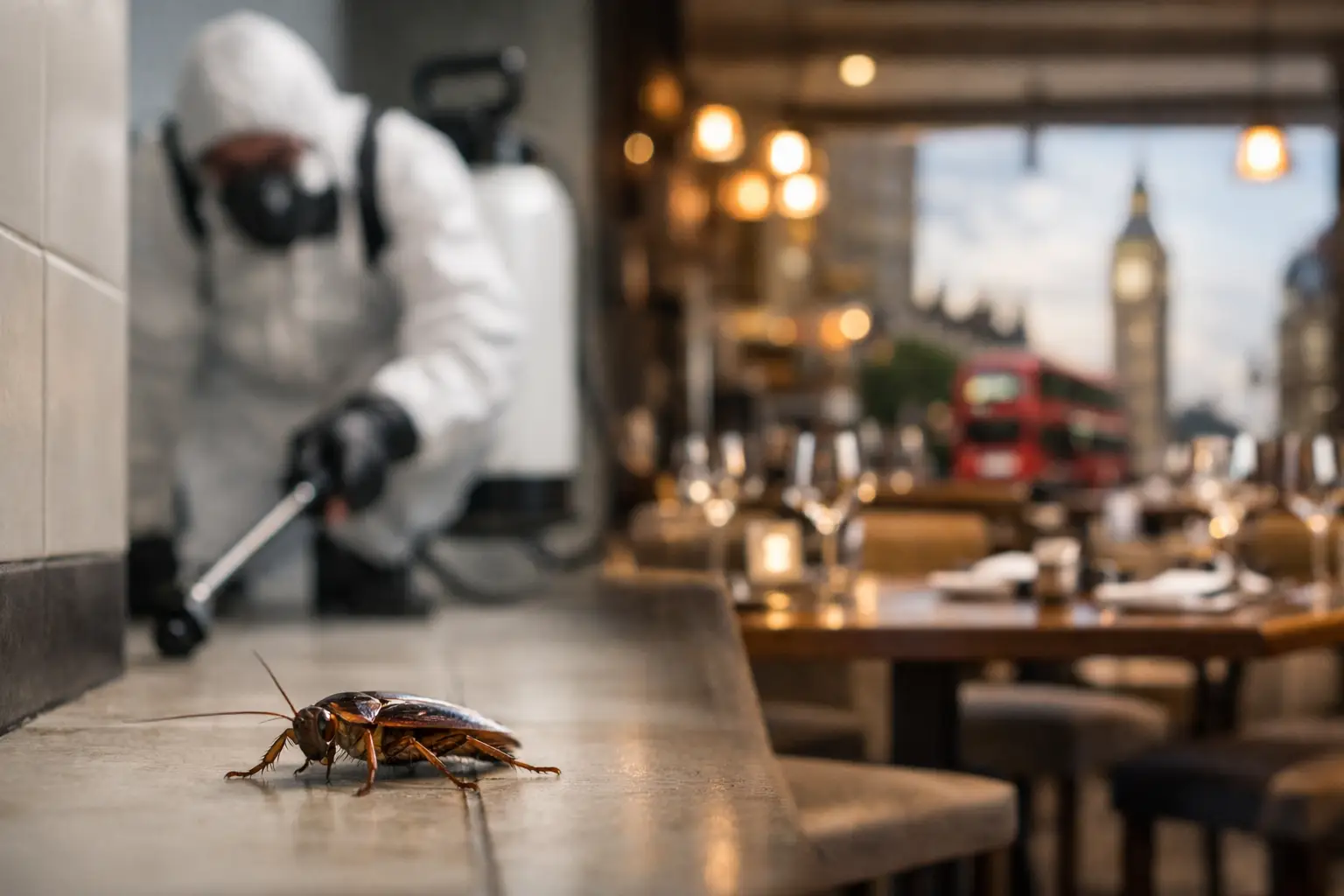
A single cockroach sighting in a restaurant kitchen can turn into a hygiene issue, a staff morale problem and a serious risk to your reputation within days. That is why cockroach control for restaurants London businesses can rely on needs to be fast, discreet and thorough, not a quick spray-and-go visit that leaves the real problem behind.
Restaurants give cockroaches exactly what they want – warmth, moisture, food debris and plenty of places to hide. In London, where many food premises operate in older buildings, shared blocks or tightly packed high streets, infestations can spread through pipe runs, wall gaps, service ducts and neighbouring units. You may be keeping your own kitchen tidy and still find cockroaches appearing because the source is not always obvious at first glance.
Why restaurants face a higher cockroach risk
Cockroaches are not just unpleasant to look at. In a food business, they create pressure on every front. They can contaminate surfaces, storage areas and equipment, and they often stay hidden until numbers build. By the time staff see one during service, there may already be activity behind appliances, under sinks, inside motor housings and along drainage lines.
This is one reason restaurants need a more focused response than many other commercial premises. A flat or office might tolerate a slower investigation. A restaurant cannot. Food handling standards, customer expectations and the pace of daily operations mean the window for action is much smaller.
In practice, infestation risk tends to be higher where heat and moisture remain constant. Busy kitchens, pot wash areas, bin stores, cellar spaces and rear service corridors are common hotspots. Deliveries and second-hand equipment can also introduce cockroaches, especially if items come from infested premises and are brought in without inspection.
The warning signs to act on immediately
The obvious sign is seeing a live cockroach, especially at night or when lights are switched on in a quiet kitchen. But restaurants often notice subtler clues first. Small dark droppings near skirting boards or behind equipment, smear marks along walls, an unusual musty odour, or shed skins in hidden corners can all point to active harbourage.
Egg cases are another warning sign. These are often tucked into cracks, beneath shelving, inside cupboards or behind fridges. If staff report repeated sightings in the same area, that usually means there is a nearby nesting point rather than a one-off visitor.
It also matters which area is affected. A sighting in a bin store is serious, but sightings in food prep zones, dry storage or front-of-house washrooms raise a different level of concern. The wider the movement through the premises, the more urgent the treatment plan needs to be.
Cockroach control for restaurants London – why DIY is rarely enough
For a restaurant, DIY products are usually a false economy. Off-the-shelf sprays may kill visible insects, but they seldom reach the harbourages where the infestation is established. Worse, the wrong product in the wrong place can scatter the population deeper into walls, voids or service routes, making later treatment harder.
There is also the question of compliance and safety. Food premises cannot afford casual pesticide use around preparation areas, utensils or stock. Treatments need to be selected and applied with care, with full attention to the layout of the site, the severity of the infestation and the way the kitchen operates.
Professional cockroach control starts with inspection, not guesswork. That means finding where activity is strongest, identifying contributing conditions and choosing a treatment method that works within the realities of the business. In some cases, gel baiting is appropriate. In others, monitoring, targeted insecticide use and follow-up visits are needed together. It depends on species, access, hygiene conditions and whether neighbouring units may be involved.
What a proper treatment plan should include
A restaurant needs more than a one-visit fix. Effective control usually begins with a detailed survey of kitchens, storage areas, wash stations, drainage points, staff areas and service voids. The aim is to map both visible activity and likely harbourages, including the places staff cannot easily inspect during a normal cleaning routine.
Treatment should then be targeted and measured. In many food premises, discreet bait placements are useful because they reach hidden areas without creating unnecessary disruption. Monitoring points help track movement and confirm whether activity is reducing. Where conditions allow, additional products may be used in cracks, crevices and inaccessible spaces, but only in a way that supports food safety and operational continuity.
Follow-up is essential. Cockroach eggs are resilient, and infestations often collapse in stages rather than overnight. A responsible service includes review visits, adjustment of the treatment plan where needed and clear recommendations for prevention. If no one comes back to check, you cannot be sure the problem is actually under control.
Prevention matters as much as treatment
Once an infestation is active, treatment is urgent. But long-term control depends on what changes afterwards. Restaurants that keep seeing repeat activity often have one of three issues: hidden access points have not been addressed, cleaning routines do not reach the right areas, or external conditions in the building are still feeding the problem.
Good prevention is practical rather than complicated. Deep cleaning behind fixed equipment matters more than making front-of-house look spotless. Moisture control around sinks, dishwashers and drains matters because cockroaches are drawn to reliable water sources. Stock rotation matters because undisturbed cardboard and dry goods storage give pests shelter as well as food.
Structural proofing also has a role, though it is not always a complete answer on its own. Sealing gaps around pipework, improving door seals and reducing clutter will help, but in older London premises there may still be hidden routes between units. That is why ongoing monitoring can be sensible for restaurants in high-risk locations such as dense parades, mixed-use buildings or premises with shared service corridors.
Balancing speed with discretion
Restaurant operators usually want the same two things at once – immediate action and minimal disruption. Both are possible, but there are trade-offs. A same-day emergency response can contain the issue quickly, yet lasting control may still require scheduled follow-up visits and changes to cleaning or storage routines.
Discretion matters too. No restaurant wants a pest control issue handled in a way that alarms staff or attracts attention from customers. A professional service should communicate clearly, arrive prepared and work around service hours where possible. Early-morning, late-evening or quieter trading windows can often be used to reduce interference with operations.
For managers, the most useful approach is honesty and urgency. If there has been a sighting, treat it as a live operational issue, not something to revisit next week. Delay gives cockroaches time to breed, spread and become harder to eliminate.
When to call for urgent help
Some situations should never wait. Multiple sightings, daytime activity, repeated kitchen sightings after cleaning, or signs in food storage areas all justify immediate professional attention. The same applies if you have recently taken over a new premises, inherited old equipment or suspect activity may be coming from neighbouring units.
If a restaurant has already tried DIY treatment without success, the need is even more pressing. Partial control often masks the scale of the infestation while allowing it to continue in hidden areas. At that point, a proper inspection can save time, stock loss and disruption later.
For London restaurants, speed matters because the operating environment is demanding. High footfall, deliveries, compact back-of-house spaces and shared infrastructure all make pest issues more complex than they first appear. A responsive local team with commercial experience can make the difference between a controlled incident and a prolonged problem. That is where a provider such as Golden Pest Control adds value – not just by treating visible activity, but by helping the business regain control quickly and safely.
Choosing a service that fits a restaurant environment
Not every pest control service is geared towards hospitality. Restaurants need technicians who understand food premises, urgency and the need for clear reporting. You should expect straightforward advice, safe treatment methods, sensible follow-up and a plan that matches your hours and layout.
The best service is not always the one that promises the fastest miracle. It is the one that inspects properly, explains what is happening, treats the right areas and stays involved until the risk is brought down. In a restaurant, confidence comes from knowing the issue has been handled thoroughly, not just hidden for a few days.
If you run a restaurant and something feels off, trust that instinct. Fast action is easier than damage control, and a clean, compliant kitchen starts with dealing with small warning signs before they become visible to everyone else.