
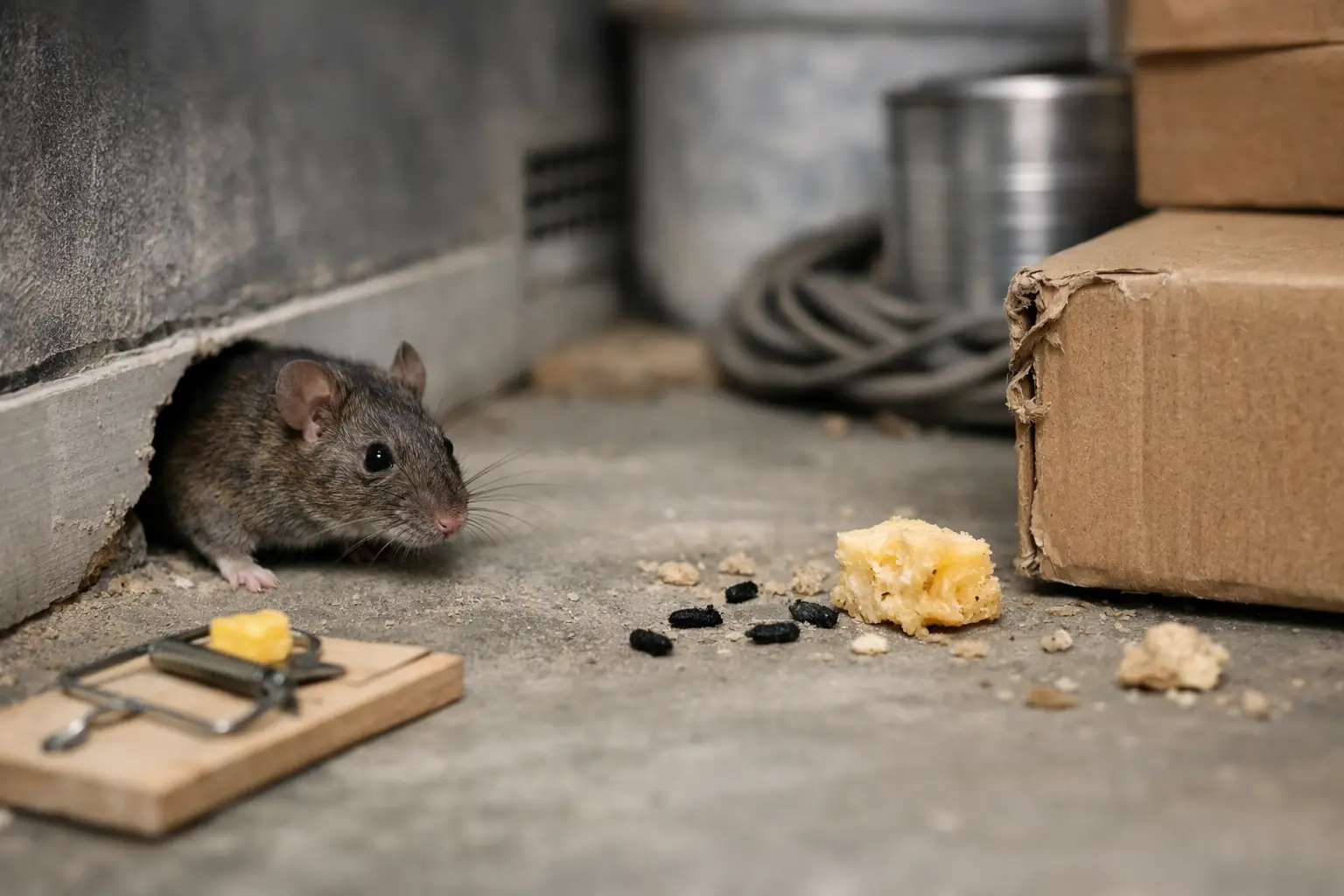
You usually notice rats after they have already settled in. A strange scratching sound in the wall at night, a torn food packet in the cupboard, or droppings behind a bin often means the problem is no longer new. Knowing how to spot rat activity early gives you a better chance of stopping damage, contamination, and a larger infestation before it takes hold.
In London properties, rats are drawn to warmth, shelter, water, and easy food. That can mean a family kitchen, a restaurant yard, a stockroom, a garden shed, or the voids behind walls in a block of flats. They are cautious animals, so direct sightings are not always the first clue. More often, the warning signs are subtle at the start and easy to dismiss if you do not know what to look for.
How to spot rat activity inside a property
One of the clearest signs is droppings. Rat droppings are dark, pellet-shaped, and usually larger than mouse droppings. Fresh droppings tend to look moist and dark, while older ones become dry and grey. If you find them repeatedly in the same areas, especially near skirting boards, under sinks, behind appliances, or in loft spaces, that strongly suggests an active route rather than an isolated visit.
Noise is another common indicator. Rats are most active at night, so people often hear scratching, scurrying, gnawing, or light movement after dark. These sounds may come from ceilings, wall cavities, under floorboards, or behind kitchen units. It depends on where they are nesting and how they are travelling through the building. In upper floors or lofts, the noise can sound surprisingly loud because rats will use insulation, joists, and tight voids for cover.
Gnaw marks are worth taking seriously. Rats need to keep their teeth worn down, so they chew constantly. You might see fresh bite marks on wood, plastic, wiring, plasterboard, pipe boxing, food packaging, or even door edges. New gnawing often looks lighter in colour than older damage. This is not just unpleasant. It can become a safety issue, especially where electrical cables are involved.
Smears and grease marks can also point to regular rat movement. As rats travel the same routes along walls and edges, the oils and dirt from their fur leave dark rub marks. These are often found at low level near holes, behind stored items, or along narrow runways. In commercial spaces, these marks may show up near stock storage, service cupboards, and rear access points.
A strong, stale odour is another warning sign. Rat infestations often create a persistent musky smell, particularly in enclosed or poorly ventilated spaces. If that odour seems to linger around one cupboard, void, basement corner, or riser area, it may indicate nesting or heavy movement nearby.
Signs of rat activity outside
Not all rat problems start indoors. In many cases, the source is outside and the rats only enter when the opportunity is there. Gardens, bins, drains, sheds, alleys, and rear service areas can all provide food and shelter.
Burrows are one of the main signs to watch for outdoors. Rats dig entry holes into soil banks, under decking, beside walls, around sheds, or near compost areas. These holes are usually larger than you might expect and often have smooth edges from repeated use. Fresh soil around the opening can suggest recent activity.
Bin areas deserve close attention. Overflowing rubbish, badly fitted lids, and food waste create ideal feeding conditions. If you notice torn refuse sacks, scattered waste, or droppings around bins, there is a good chance rats are visiting regularly. This is especially important for restaurants, shared housing, and commercial premises where waste builds up quickly.
Pet food and bird feed can also attract rodents. Food left out overnight, spilled seed under feeders, or unsecured animal feed in garages and outbuildings can all sustain rat activity. Many infestations continue because the food source is overlooked rather than because the rats are hard to reach.
Drainage problems can play a part as well. Rats are strong climbers and excellent swimmers, and damaged drains are a known access route in urban areas. Repeated activity near gullies, manholes, or lower ground external walls may point to a deeper drainage issue that needs proper investigation.
The signs people often miss
Some of the earliest clues are easy to mistake for something else. Shredded paper, loft insulation, cardboard, or fabric can indicate nesting material rather than simple wear and tear. If these materials are gathered into hidden corners, behind stored goods, or in quiet voids, that is more concerning than general mess.
Tracks can be missed too. In dusty areas such as cellars, storerooms, or under large appliances, rats may leave tail marks or footprints. These are not always obvious unless you look closely with a torch. In business premises, signs may show up in the quietest areas first, not where staff spend most of their time.
Pets sometimes notice a rat problem before people do. A dog repeatedly staring at one kitchen unit, or a cat becoming fixated on a wall void, can be a clue worth checking. It is not proof on its own, but when combined with droppings, noise, or smell, it becomes more significant.
How to tell if the problem is current
A common question is whether the signs are old or whether rats are active right now. Fresh droppings, new gnawing, current noises at night, and strong odours usually suggest an active infestation. Repeated signs in the same area over several days also matter more than a single discovery.
If you only find one or two old droppings in a shed, it may not mean there is a live issue today. If you find fresh droppings every morning behind kitchen appliances, that is different. The same goes for burrows outdoors. An old hole may be disused, while an active one tends to look clean, open, and regularly used.
This is where professional inspection helps. Rats are good at staying out of sight, and the visible signs do not always reveal the full extent of the problem. A small amount of evidence in one room can actually point to a much wider infestation across voids, drains, lofts, or adjoining units.
Why acting quickly matters
Rats do not stay a minor issue for long. They contaminate surfaces and stored food, damage materials, and can spread bacteria through droppings and urine. In commercial environments, they can also create serious hygiene and reputational risks. For landlords and facilities managers, delay often means higher treatment costs and more disruption later.
There is also the question of access. Once rats find a safe route into a property, they tend to keep using it. That might be a gap around pipework, a broken air brick, an ill-fitting door, or a fault in the drain system. Removing the rats without dealing with the entry point is rarely enough for a lasting result.
What to do if you suspect rat activity
Start by avoiding direct contact with droppings or nesting material. Do not sweep or vacuum dry rodent waste, as that can spread contamination into the air. Keep children and pets away from affected areas, secure food properly, and reduce easy access to rubbish and water.
If possible, make a note of what you have seen and where. Fresh droppings, noises at certain times, visible holes, gnaw damage, or activity around bins all help build a clearer picture. In a house, that may point to a loft or kitchen void. In a business, it may reveal a pattern around deliveries, waste storage, or a rear yard.
Professional treatment is usually the safest and most effective next step, particularly when the signs suggest ongoing activity. A proper response is not just about putting bait down. It should include inspection, identifying entry points, checking for nesting areas, and reducing the conditions that allowed the infestation to start.
For properties in London, fast action matters because close building layouts, shared walls, busy bin areas, and ageing drains can all make rodent issues spread more quickly. That is why many customers contact Golden Pest Control as soon as the first clear signs appear rather than waiting for sightings to become frequent.
If something feels off in your property, trust that instinct and check it properly. The earlier you spot rat activity, the easier it is to contain, treat, and prevent it from returning.
1 Comment
Pest Control in Harrow When You Need Help - Golden Pest Control London
September 3, 2026[…] for professional help promptly if you find fresh droppings, gnaw marks, greasy rub marks along walls, persistent insect sightings, nests, bites or unusual smells. Hearing […]