
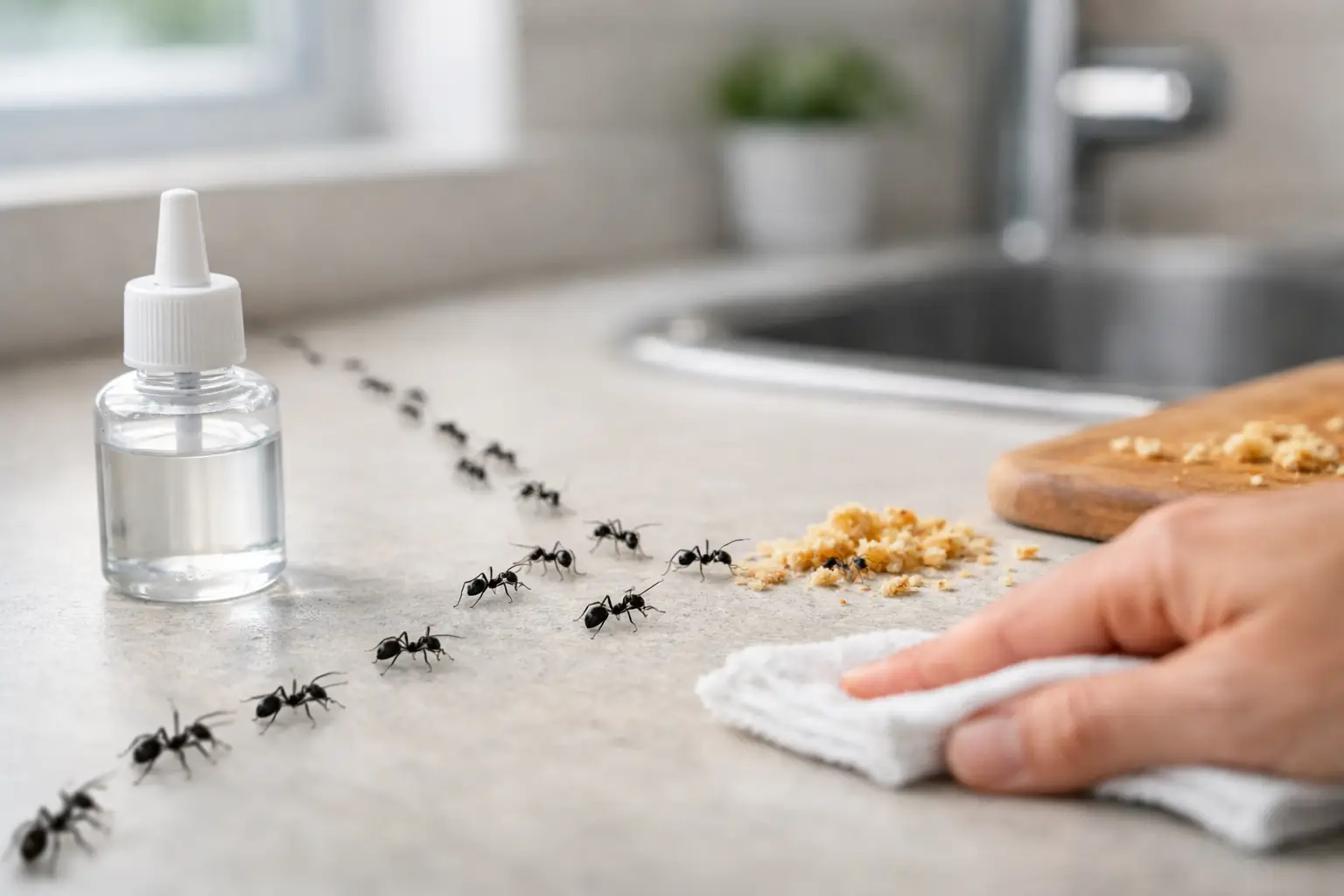
A line of ants across the kitchen worktop can disappear after cleaning, then reappear days later in exactly the same place. That is because the visible ants are usually workers from an established colony, not the source of the problem. Knowing how to stop ants returning means removing the food trail, reducing access and dealing with the nest rather than only the ants you can see.
Ant activity is most common in warmer months, but heated homes, kitchens, plant rooms and food premises can provide the warmth and moisture they need for much longer. A quick response limits the chance of a small trail becoming a repeated infestation.
Why ants keep coming back
Ants communicate through scent trails. When a worker finds sugar, crumbs, pet food, grease or moisture, it marks a route back to the colony. Other workers then follow that route. Wiping away the ants without removing the scent and food source may reduce activity briefly, but it does not persuade the colony to move on.
The colony may be outdoors beneath paving, in a garden wall, under a patio or close to the building foundations. In some properties, ants nest in wall voids, beneath floors, behind skirting boards or around pipework. They can enter through very small gaps around windows, doors, vents and utility pipes.
It is also worth checking for moisture. A dripping pipe under the sink, condensation around appliances or a damp area behind a unit can make a property more attractive, especially when other food sources have been removed.
How to stop ants returning: treat the cause
Start by following the trail. Do not assume the point where ants appear is the entry point. Watch where they travel, particularly in the early morning or evening, and inspect nearby cracks, gaps, damaged sealant and pipe penetrations. Outside, look around bins, paving edges, air bricks, external walls and vegetation touching the property.
Clean the route thoroughly using warm, soapy water or a household surface cleaner, paying close attention to skirting boards, cupboard edges and the underside of worktops. This removes food residue and disrupts the scent trail. Vacuuming visible ants can help immediately, but empty the vacuum outside straight afterwards.
Next, make food less available. Store dry goods, cereals, biscuits and pet food in sealed containers. Wipe up spills as they happen, clean beneath small appliances, and do not leave dirty plates or uncovered food overnight. In communal buildings and workplaces, one untidy kitchen, staff room or bin area can keep ants active across several units.
Once the route is clear, seal access points where practical. Use appropriate sealant around cracks, gaps around service pipes and damaged edges of frames. Replace worn door or window seals and repair loose tiles or gaps at floor level. Sealing works best after a treatment plan is underway. If ants are already nesting inside a void, blocking their usual exit too early can send them searching for another route indoors.
Use bait carefully, not just spray
For a recurring ant problem, bait is often more effective than spraying the visible trail. Worker ants collect bait and carry it back to the colony, where it can reach other workers and the queen. This is what helps break the cycle.
Place bait close to, but not directly on, an active trail and follow the product instructions exactly. Keep it away from children, pets and food-preparation surfaces. You may see more ants around a bait at first. That can be a normal sign that workers are collecting it, so avoid disturbing the area too soon.
Do not spray insecticide over bait or along the route leading to it. Repellent sprays can kill or scatter workers before they take the bait back to the nest. They may also split activity into less obvious areas, making the infestation harder to assess.
The right bait and treatment method depend on the ant species, the location of the nest and whether the site is a home, restaurant, office or shared building. Food businesses should be particularly cautious with DIY products, as treatment must protect food hygiene and avoid contamination risks.
Remove outdoor conditions that encourage ants
Outdoor prevention matters because many indoor trails start from nests close to the property. Keep refuse areas clean, close bin lids properly and clear spilled food or drink promptly. Rinse recyclable containers where possible, particularly during summer.
Cut back plants that touch walls, windows or roof edges. They do not always create an ant infestation, but they can provide sheltered routes towards the building. Repair cracked paving, loose brickwork and gaps around external pipework when these offer direct access to walls or floors.
Avoid leaving pet food outdoors, and clear fallen fruit from gardens or patios. If you have a compost area, keep it well managed and positioned away from entrances where possible. Ants are part of the outdoor environment, so the aim is not to eliminate every ant from a garden. It is to stop them finding a reliable route and reward inside your property.
Check the places people miss
Ants rarely limit themselves to an obvious kitchen worktop. In homes, inspect cupboards near plumbing, behind washing machines, around boilers, beneath floor-level units and close to pet feeding areas. In flats, activity can travel through shared pipe runs, service risers and voids between neighbouring properties.
For commercial premises, include staff kitchens, vending areas, storage rooms, washrooms, delivery entrances and external waste points. Restaurants, cafés and food retailers need regular checks around grease, sugary syrups, beverage equipment and stock that has been stored for long periods.
Keep a simple record of where and when you see activity. A repeated trail at the same time each day can reveal the source more clearly than a one-off sighting. It also helps a pest control technician identify whether the issue is a single nearby nest or wider activity throughout the building.
When a professional ant treatment is the sensible option
DIY measures are useful for an occasional trail, but repeated activity after cleaning and baiting often indicates a nest you cannot reach. Professional help is recommended when ants are emerging from walls, electrical fittings, flooring or multiple rooms; when you have tried suitable bait without improvement; or when the infestation affects a food business, rental property or shared building.
A proper inspection should identify likely entry routes, nesting areas, food and moisture conditions, and the treatment most suitable for the site. The goal is not simply to make ants disappear for a day. It is to target the colony and provide practical proofing advice that reduces the chance of another trail developing.
Golden Pest Control can assess recurring ant activity in homes and businesses across London, including urgent situations where ants are affecting hygiene, customer areas or day-to-day use of a property. Treatments are tailored to the location of the activity and the needs of the household or business.
Common questions about returning ants
How long does it take for ant bait to work?
It varies by product, colony size and how easily workers can reach the bait. Activity may reduce within several days, but a full result can take longer because the bait needs to be carried back through the colony. Continue good cleaning and do not remove bait prematurely unless the instructions say to do so.
Why are ants back after I sealed a gap?
There may be more than one entry point, or the ants may already be nesting within the structure. Ants can also find tiny alternative gaps around pipes, flooring and window frames. An inspection is often needed when a sealed route has not resolved the problem.
Are ants a health risk?
Common household ants are not usually dangerous, but they can contaminate food as they travel across surfaces, bins and hidden areas. In kitchens, food premises and homes with vulnerable occupants, that is reason enough to address persistent activity promptly.
A returning ant trail is a signal to look beyond the surface. Remove the reward, protect the entry points and give any bait or treatment time to reach the colony. If the same route continues to appear, early professional action is usually quicker, cleaner and more reassuring than repeated short-term fixes.