
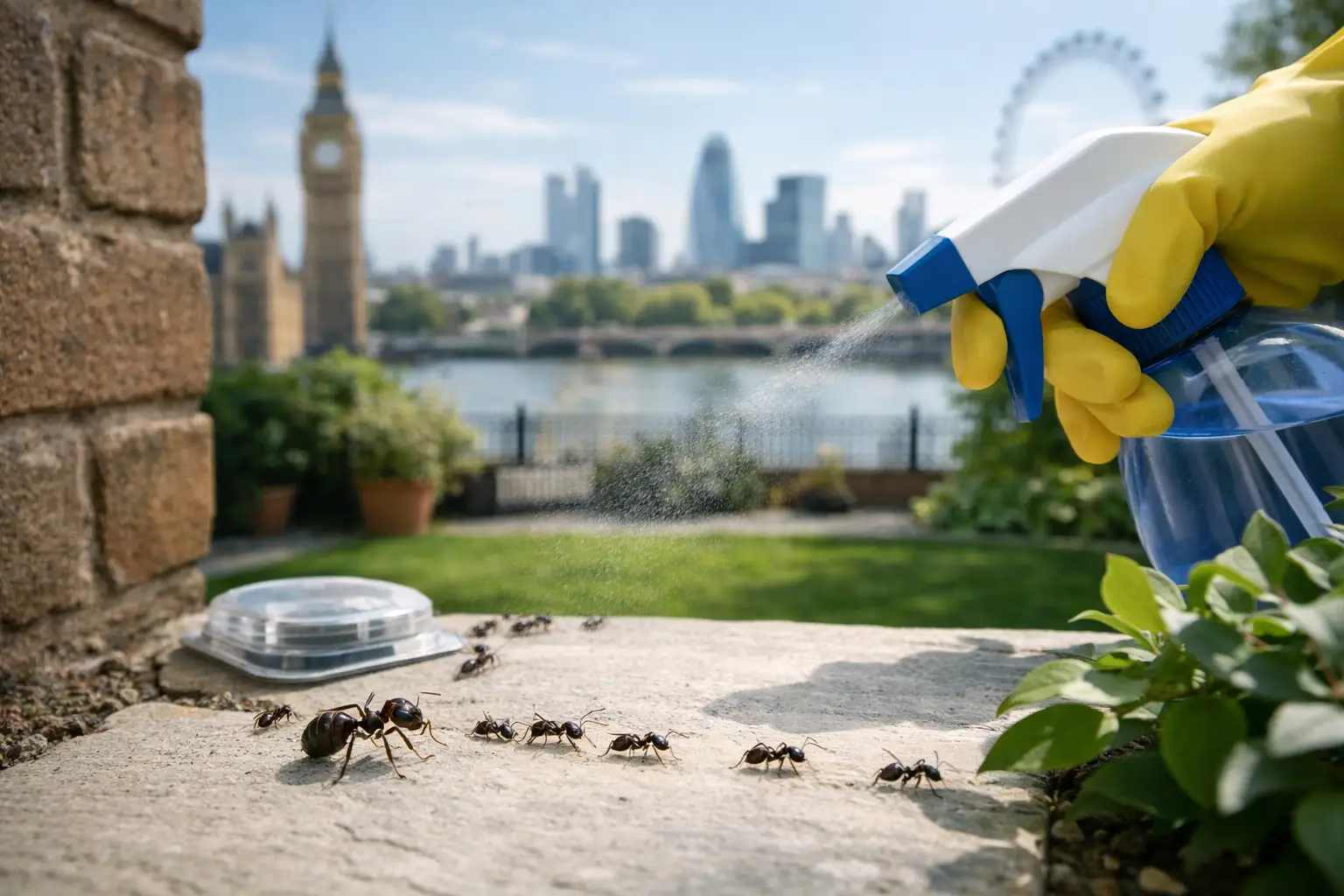
A few ants near a skirting board can quickly become a steady trail across the kitchen worktop. The best ways to keep ants out are usually simple, but they need to tackle the reason ants are visiting in the first place: accessible food, moisture and an easy route indoors.
For homes, flats, restaurants, offices and managed properties, prevention is far easier than dealing with a well-established colony. A visible trail is rarely just a cleaning issue. It is a sign that worker ants have found something worth returning for and have left a scent trail for the rest of the colony to follow.
Best ways to keep ants out before they settle in
Ants are persistent, organised foragers. They can enter through surprisingly small gaps around pipes, window frames, doors, air bricks and cracked masonry. Once one ant finds crumbs, a sticky spill or a reliable water source, others can follow quickly.
The most effective approach is to remove what attracts them, block their access and avoid actions that merely scatter the problem into another part of the property.
Keep food sealed and surfaces truly clean
Kitchen hygiene is the first line of defence. Ants are drawn to sweet foods, grease, crumbs, pet food and even small amounts of residue left on jars, bins or recycling. Wipe worktops, tables and floors promptly, especially after preparing food or serving children’s snacks.
Store dry goods in sealed containers rather than opened packets, and rinse tins, bottles and food packaging before placing them in recycling. Empty internal bins regularly and make sure the lid closes properly. In commercial kitchens, staff areas and break rooms, cleaning needs to include beneath appliances, vending machines and cupboards where food debris is easily missed.
Pet bowls deserve particular attention. Avoid leaving wet food down for long periods, and clean the surrounding floor after feeding. A bowl of water may also support ants during dry spells, so move it away from known entry points where practical.
Remove moisture and fix small leaks
Food gets most of the attention, but water can be just as attractive. Check beneath sinks, around washing machines, near boilers and behind toilets for slow drips or condensation. Repair leaks promptly and do not leave wet cloths, mops or standing water on floors overnight.
Outside, clear blocked gutters and make sure water drains away from the building. Damp areas close to foundations, patios and external doors can create favourable conditions for ants to nest nearby. This is particularly relevant in older London properties, where gaps around services and ageing brickwork can offer easy access indoors.
Follow the trail to find the entry point
Do not simply wipe away the ants you can see. Watch where the trail begins and ends, ideally during a quiet period when the ants are actively foraging. It may lead to a gap behind a cupboard, a crack near a window, a pipe penetration under the sink or a doorway with a worn seal.
Once the route is identified, clean the trail with warm soapy water or a household surface cleaner. This removes the scent markers that guide other workers. Then seal small cracks and holes with a suitable filler or sealant. Fit door brushes or replace damaged weather stripping where ants are entering beneath external doors.
Take care not to seal an area before you understand whether ants are already nesting inside a wall, floor void or cupboard. If activity increases after sealing, or ants begin appearing from several locations, professional inspection is the safer next step.
Why killing the visible ants is not always enough
Sprays can kill ants on contact, but this often deals only with the workers you see. The colony, including the queen, may remain protected in a nest outdoors, under flooring, inside a wall void or beneath paving. If the nest survives, the trail can return days later through a different route.
For a small, occasional number of garden ants, thorough cleaning and sealing may be sufficient. Where a regular trail is present, ant bait is often more useful than a surface spray because workers carry it back to the nest. However, placement matters. A bait positioned away from the active trail is unlikely to work well, while excessive cleaning directly around a newly placed bait can discourage feeding.
Always follow the product label, keep treatments away from children and pets, and avoid mixing products. Do not spray insecticide directly around a bait station unless the instructions specifically allow it. The spray may repel ants before they can take the bait back to the colony.
Do not disturb outdoor nests without a plan
Ant nests are commonly found under paving slabs, along paths, beside walls and in dry soil around the property. Disturbing the nest with boiling water, strong chemicals or repeated digging can force ants to relocate rather than resolve the issue. That can mean new activity closer to the building.
Keeping vegetation trimmed back from walls and removing leaf litter, timber piles and unnecessary clutter around entrances can make the area less inviting. Still, outdoor ants are not automatically a problem. Treatment is most appropriate when ants are entering the property, contaminating food areas, creating repeated trails or affecting customers, residents or staff.
Protect kitchens, businesses and shared buildings
In a restaurant, café, office or rental property, a small ant issue can become a hygiene concern quickly. Food businesses should inspect dry stores, bins, wall-floor junctions and delivery areas as part of routine cleaning. Record repeated sightings, including the time and exact location, so a pattern can be identified.
Landlords and facilities managers should also consider the wider building. Ants may move through service risers, communal corridors, utility cupboards or gaps between adjoining units. Treating one flat while ignoring a nearby access route may only provide temporary relief.
Tenants can help by reporting activity early rather than waiting for a large trail to develop. Clear photographs and a note of where ants are entering can make inspection and treatment more efficient. For businesses, early action protects hygiene standards and prevents an uncomfortable customer-facing problem.
When an ant problem needs professional treatment
Call a professional pest controller when ants are appearing daily, moving through food preparation areas, emerging from wall voids or spreading across multiple rooms. The same applies if shop-bought products have not reduced activity after being used correctly, or if you cannot identify the entry route.
Some ants need a more careful response. Pharaoh ants, for example, can be difficult to control and may form multiple colonies when disturbed by unsuitable treatment. They are small, pale yellow to reddish ants and are more likely to be found in warm buildings, including blocks of flats, hospitals, commercial premises and food environments. Repeated spraying can make this type of infestation harder to manage.
A qualified technician can identify likely nesting and entry areas, select an appropriate treatment and advise on the practical changes needed to prevent recurrence. Golden Pest Control provides tailored ant control for homes and businesses across London, with clear guidance on what to expect before and after treatment.
The key is to act when activity is still limited. A clean kitchen, dry plumbing, sealed entry points and the right response to a visible trail give ants far less reason to make your property part of their route.
1 Comment
Insect Bait Versus Spray Treatments Compared - Golden Pest Control London
September 17, 2026[…] ant problems, bait is usually more useful than repeatedly spraying the visible trail. Spraying may kill worker […]