
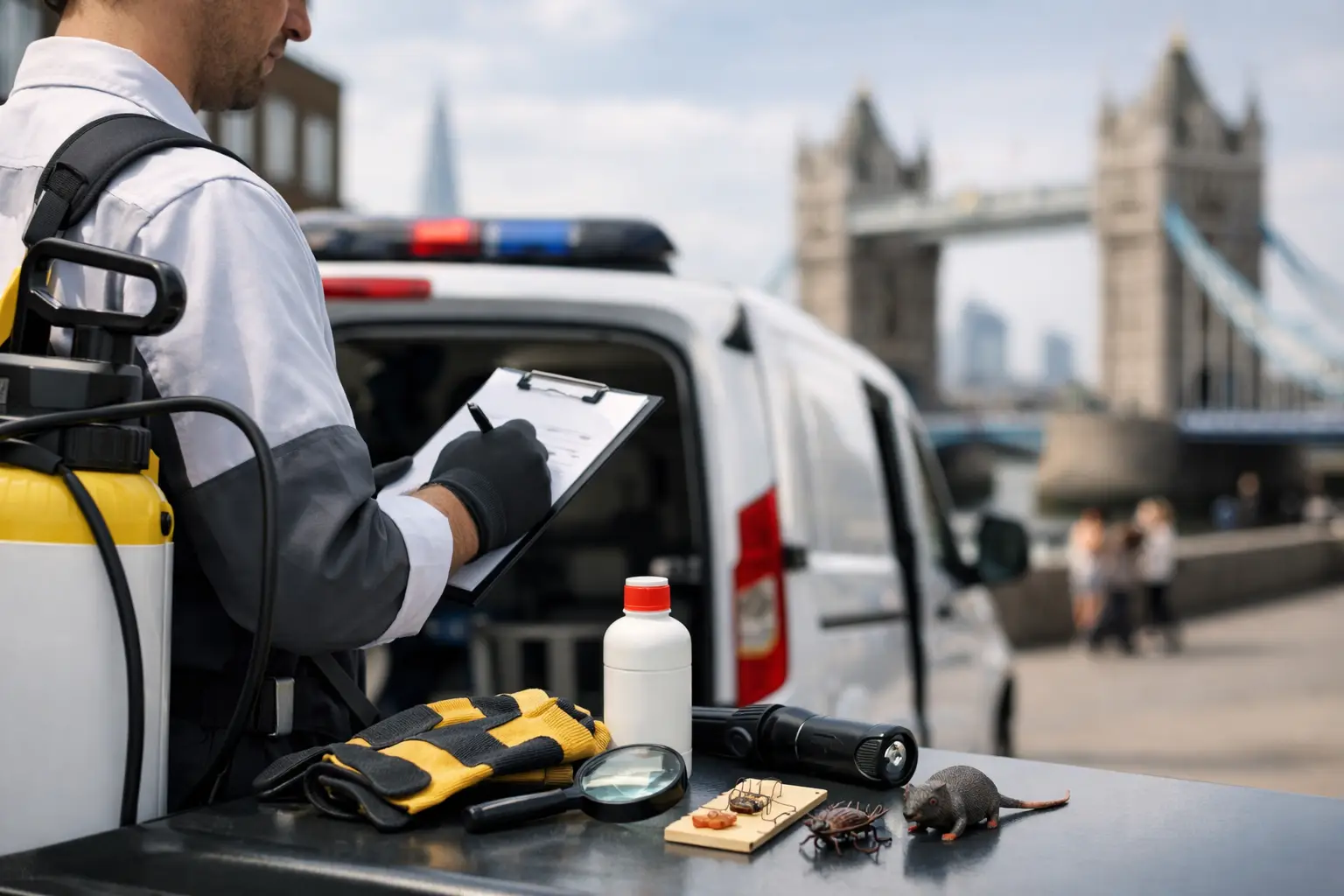
A rat running through a restaurant kitchen, cockroaches appearing around food storage, or a wasp nest by a child’s bedroom can quickly turn from an unpleasant discovery into a serious concern. This emergency pest callout checklist helps London property owners, tenants and business operators take calm, practical action before a qualified technician arrives.
Not every sighting needs an out-of-hours visit, but delay can be costly when there is a risk to health, food safety, property, vulnerable people or business operations. The aim is not to identify every pest perfectly. It is to reduce immediate risk, preserve useful evidence and make the first treatment visit as effective as possible.
When a pest problem needs an emergency callout
An emergency callout is usually justified when pests present an immediate safety, hygiene or operational risk. Rodents seen inside food preparation areas, a widespread cockroach infestation, bed bugs in accommodation with guests due to arrive, or an active wasp nest near a busy entrance all need prompt professional attention.
For homes, urgency increases where there are babies, elderly residents, pets, people with allergies, or signs of rodents in living spaces. Rats and mice can contaminate surfaces and food, damage wiring and spread quickly through voids, lofts and shared drainage routes. Bed bugs may not spread disease, but their bites, lost sleep and rapid movement between rooms can make a fast response worthwhile.
For businesses, the threshold is often lower. Restaurants, cafés, care settings, offices, shops and landlords may need rapid action to protect customers, staff, stock, reputation and hygiene standards. One rodent sighting in a kitchen is not something to leave until next week.
Call emergency services rather than a pest controller if someone has severe breathing difficulty, facial swelling or signs of a serious allergic reaction after a sting. Keep away from the area and seek urgent medical help.
Emergency pest callout checklist: what to do first
Your first actions should protect people and prevent the problem being made worse. Avoid panic cleaning, spraying or moving pests through the property. A few measured steps are more useful than a rushed response.
- Keep people and pets away from the affected area, particularly around rodent droppings, insect nests, pesticides or contaminated food.
- Do not touch, trap or disturb a wasp or bee nest. Vibrations, smoke, water and DIY insecticide can provoke stinging insects and push them into other parts of a building.
- Stop food contamination by sealing food in hard containers, removing exposed items and keeping preparation surfaces clear. In commercial kitchens, follow your site’s food safety and incident procedures.
- Close internal doors where practical to limit movement, but do not block a suspected rodent access point before it has been assessed. You could trap an animal inside a wall, cupboard or ceiling void.
- Take clear photographs or short videos from a safe distance. Capture droppings, gnaw marks, insect trails, nesting material, bites on bedding, damaged packaging or the nest location.
- Make a note of when and where you saw the pest, how many you saw, and whether the issue is getting worse. This information can help the technician choose the right treatment quickly.
If you find rodent droppings, do not sweep or vacuum them dry. This can stir particles into the air. Ventilate the space if possible, wear disposable gloves, apply a suitable disinfectant, allow it to work as directed, then wipe the area with disposable paper towels. Bag and dispose of the waste safely, then wash your hands thoroughly.
Information to have ready when you call
A rapid callout starts with a clear description. You do not need technical pest knowledge, but the right details allow a pest control professional to judge urgency, bring appropriate equipment and plan safe access.
Be ready to explain the property type, whether it is a house, flat, restaurant, office, warehouse or rental property, and the exact rooms or external areas affected. Mention any children, pets, allergies, pregnancy, mobility concerns or people who may be especially vulnerable. For commercial premises, identify food areas, customer-facing spaces and any relevant opening times.
Describe what you have actually seen rather than guessing. “Small dark droppings under the sink and scratching in the wall at night” is more helpful than simply saying “we have rats”. If you have used traps, sprays, powders or cleaning chemicals, say so. This matters for safety and can affect the treatment approach.
Access is another practical detail. Confirm whether someone can meet the technician, whether there are entry codes, concierge arrangements, parking restrictions, locked cupboards or roof access requirements. In a block of flats, pest activity may be linked to neighbouring properties, communal bins, drainage or voids, so report the issue to the managing agent or landlord where appropriate.
Avoid these common emergency mistakes
DIY action can sometimes provide a short-term reduction in visible activity, but it can also make professional treatment harder. Loose poison bought without advice is a particular concern. It may be unsafe around children and pets, lead to an animal dying in an inaccessible void, or fail to address the source of the infestation.
Avoid using multiple aerosol sprays around cockroaches, fleas or bed bugs. Sprays can drive insects deeper into cracks or spread them to other rooms. Bed bugs are especially easy to move on clothing, bags and furniture, so do not carry belongings from the affected room into other areas of the property. Keep items contained until you have been advised what can be washed, heat-treated or disposed of.
Do not put a mattress, sofa or other infested item outside without a plan. It can expose others and may not solve the problem if insects remain in skirting boards, bed frames or nearby furniture. Similarly, sealing every visible mouse hole with foam before an inspection may simply encourage rodents to find another route.
With wasps and bees, identification matters. Bees may be protected or best handled through relocation advice, while wasps near doors, schools, loft bedrooms or public seating may require treatment. Never attempt to knock down a nest yourself.
Preparing the property for treatment
The technician will advise on preparation once the pest and treatment method are confirmed. Preparation differs significantly between rodents, bed bugs, cockroaches, fleas and flying insects, so generic instructions can cause unnecessary disruption.
For rodent work, clear access to cupboards, behind appliances, loft hatches and suspected entry points where safe to do so. Do not remove all signs of activity before the inspection – fresh droppings, grease marks and damage help identify routes. Secure pet food and empty overflowing bins, but avoid changing the whole environment immediately before the visit.
For cockroaches and ants, clear worktops, remove food debris, empty and clean bins, and make sinks accessible. Leaks and moisture are often part of the problem, so tell the technician about dripping pipes, damaged seals or damp areas. A treatment plan may also include proofing and sanitation recommendations, not just insecticide application.
For bed bugs or fleas, do not begin a major clean-out unless instructed. A technician may ask for bedding to be bagged and washed at a specified temperature, floors to be vacuumed, or rooms to be decluttered for access. The correct order matters. Preparation completed too early can spread insects; preparation skipped altogether can reduce treatment success.
For an external nest, keep the area quiet and make sure the technician can see the flight path or nest entrance. If it is near a school gate, café terrace, loading bay or shared entrance, consider temporarily redirecting people until it has been assessed.
What a professional emergency visit should achieve
A proper callout is more than a quick spray or a few traps. The immediate visit should identify the pest where possible, assess the scale of activity, locate likely harbourage or entry points and set out the safest effective treatment.
In some cases, one visit resolves the urgent risk. A straightforward wasp nest treatment, for example, may need only monitoring afterwards. Rodents, bed bugs and cockroaches often require follow-up visits because eggs, hidden harbourage, property layout and reinfestation routes all affect the outcome. That is not a failure – it is the reality of controlling pests properly.
Ask what you need to do after treatment, when the area can be used again, whether pets need to be kept away, and what signs should prompt a further call. For businesses, request clear records of findings, treatment and recommended corrective actions for your site files.
Golden Pest Control provides rapid, professional support for urgent pest problems across London, with treatment plans tailored to the pest, property and level of risk. The priority is to make the space safe, explain the next steps clearly and reduce the chance of the problem returning.
When pests appear at the worst possible moment, focus on protecting people, containing the immediate risk and giving your technician a clear picture. That calm response can save time, limit disruption and help get your home or business back under control sooner.