
Waking up with itchy bites is frustrating. Finding out they may be bed bugs is worse. The top signs of bed bugs are often subtle at first, which is why infestations can build quietly in bedrooms, guest rooms, rental properties and even staff accommodation before anyone realises what is happening.
Bed bugs are small, flat insects that hide well and feed mainly at night. They do not care whether a property is spotless or cluttered. They are attracted to people, warmth and places where they can stay close to a sleeping host. In London, they are commonly picked up through travel, second-hand furniture, shared buildings and regular visitor traffic. If you spot the warning signs early, treatment is usually more straightforward and less disruptive.
Top signs of bed bugs you should not ignore
One of the clearest signs is bites that appear after sleeping. Bed bug bites often show as small red marks, sometimes in lines or clusters, on exposed skin such as arms, shoulders, neck or legs. That said, bites alone are not proof. Some people react strongly, others barely react at all, and similar marks can come from other insects or skin irritation.
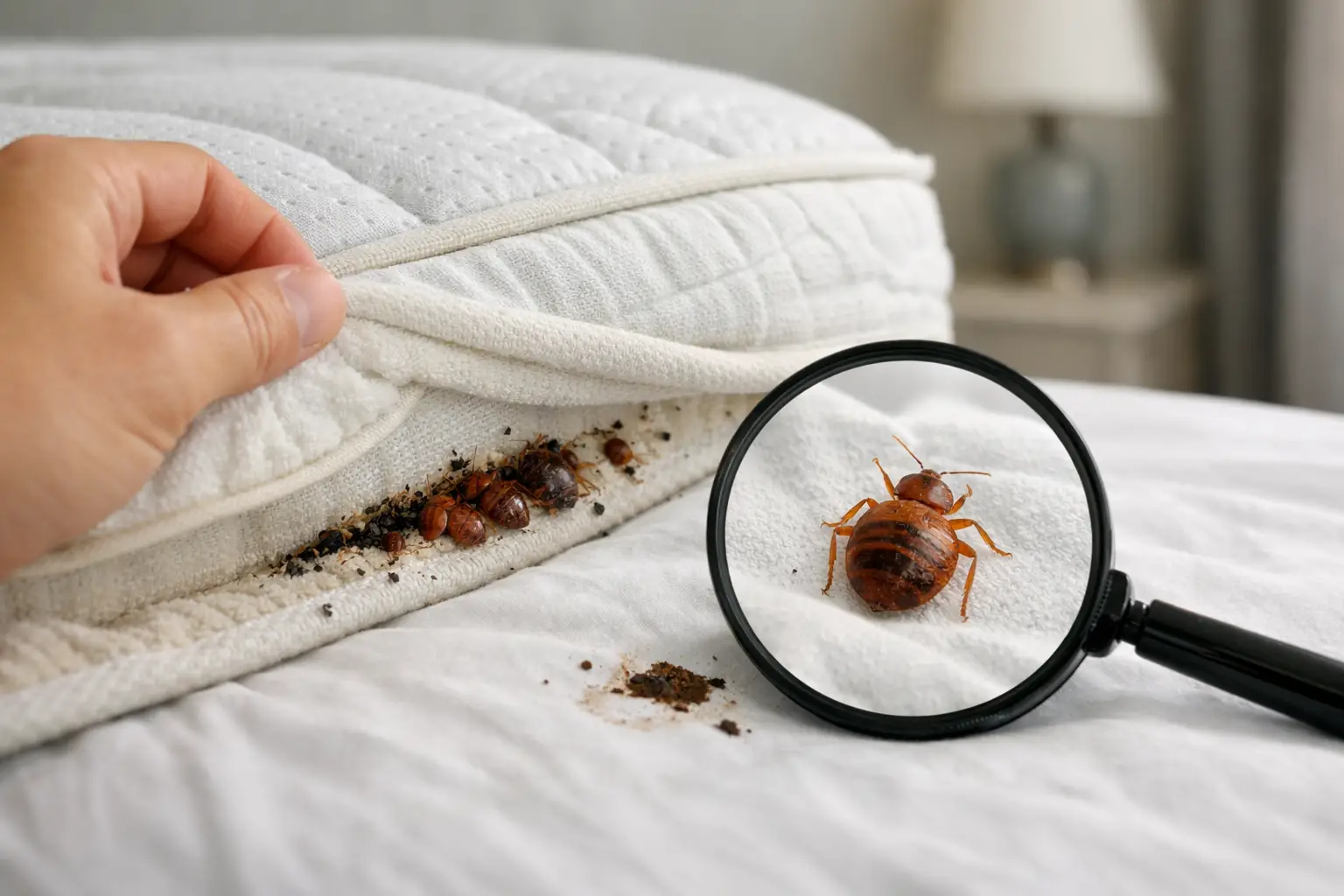
Another strong indicator is tiny blood spots on bed sheets or pillowcases. These can happen if a bug is crushed after feeding, or if a bite continues to bleed slightly during the night. You may also notice small dark spots on bedding, mattresses or the bed frame. These marks are bed bug droppings and often look like little ink dots.
A further sign is the presence of shed skins. As bed bugs grow, they moult and leave behind pale, empty shells. These are often found around mattress seams, headboards, skirting boards, upholstered furniture and cracks near the bed. Live bugs may also be visible if the infestation has developed. Adults are brown and about the size of an apple pip, while younger bed bugs are smaller and lighter in colour.
Some properties also develop a sweet, musty odour when an infestation is more established. This is not always obvious in the early stages, but in a heavily affected room it can be noticeable. Smell on its own is not enough to identify bed bugs, yet when it appears alongside bites and spotting, it adds to the overall picture.
Where bed bugs usually hide
Most people start by checking the mattress, and that makes sense, but bed bugs rarely stay in one place. They prefer narrow spaces close to where people sleep. Mattress seams, buttons and labels are common hiding points, as are headboards, divan bases and the joints of wooden or metal bed frames.
They can also spread into bedside furniture, soft chairs, sofas, curtains and behind loose wallpaper. In flats, hotels, hostels and other high-turnover settings, they may move between rooms through wall gaps, electrical points and shared structural spaces. That is one reason quick action matters. What begins in one room can become a wider property issue if left untreated.
If you manage rental accommodation or staff housing, it is worth remembering that bed bugs do not always stay limited to the first reported bedroom. A proper inspection should look beyond the obvious sleeping area, especially if bites have continued after bedding has been washed or mattresses have been replaced.
How to tell bed bugs from other pest problems
Flea activity is one of the most common points of confusion. Flea bites usually appear around the ankles and lower legs more than the upper body, especially in homes with pets. Bed bugs, by contrast, are more often linked to bites on areas exposed during sleep. Fleas also tend to jump, while bed bugs crawl and hide close to resting areas.
Mosquito bites are another possibility, particularly in warmer months, but mosquitoes are easier to notice flying around and do not leave the same spotting and shed skins around beds. Skin rashes, allergic reactions and detergent irritation can also be mistaken for insect bites. That is why visual evidence matters.
It depends on what combination of signs you are seeing. A few itchy marks with no spotting, no shells and no trace around the bed may not be enough to confirm anything. But if you are seeing bites plus dark specks on the mattress, blood smears on sheets or small insects hiding in seams and joints, the likelihood rises sharply.
What to check if you suspect bed bugs
Start with the bed itself. Remove bedding carefully and inspect sheets, pillowcases and the mattress surface under good light. Pay close attention to seams, piping, labels and the edges near the head of the bed. Then inspect the headboard, frame joints and the area where the bed meets the wall.
Move outward from there. Check bedside tables, drawer joints, skirting boards, curtain folds and upholstered furniture nearby. If the room has clutter under the bed or around soft furnishings, bed bugs can use those spaces as cover. In commercial settings such as staff rest areas or short-stay accommodation, inspect seating as well as sleeping areas.
Avoid the temptation to move infested items through the property unless you need to. Carrying mattresses, bedding or soft furnishings from room to room can spread the problem. It is also best not to rely on random aerosol sprays bought in a hurry. Used incorrectly, they can scatter bed bugs deeper into hiding and make treatment harder.
Why early action matters
Bed bugs are not known for spreading disease in the way some other pests can, but that does not make them a minor problem. Lack of sleep, repeated bites, anxiety and embarrassment are common. In homes, they quickly affect comfort and routine. In rented properties and businesses, they can damage trust and create complaints that escalate fast.
The earlier an infestation is dealt with, the better the outcome tends to be. Small infestations are easier to contain, and there is less chance of bugs spreading into additional rooms, neighbouring units or soft furnishings. Waiting to see if the issue goes away on its own rarely ends well. Bed bugs breed steadily and are highly resilient once established.
For landlords, letting agents and facilities managers, speed also reduces the risk of wider disruption. A delayed response can mean more rooms affected, more treatment visits and more inconvenience for occupants. Acting quickly is not panic. It is practical control.
When professional help is the right step
If you have confirmed several of the top signs of bed bugs, or if bites are continuing despite laundering bedding and checking the room, professional inspection is the sensible next move. Bed bug control is not just about killing visible insects. It is about finding the full extent of the infestation, treating the right areas safely and reducing the chance of recurrence.
This is especially important in larger homes, shared accommodation, HMOs, hotels, offices with rest areas and any building where people come and go regularly. Bed bugs are difficult to eliminate with guesswork. Eggs can be missed, hiding places can be overlooked and untreated adjoining areas can lead to repeat activity.
A professional service should explain what has been found, what treatment is needed, how to prepare the space and what follow-up may be required. Clear communication matters because bed bug treatments often involve more than one stage. The goal is not just immediate knockdown, but lasting control.
In busy parts of London, where travel, shared walls and high occupancy are part of daily life, bed bug issues can escalate quickly if they are handled too casually. Rapid response makes a real difference.
Aftercare and prevention
Once treatment has been carried out, a few habits can help reduce the chance of reintroduction. Be cautious with second-hand beds and upholstered furniture. After travelling, inspect luggage and wash clothing at the appropriate temperature. In rental or hospitality settings, regular room checks can catch problems before they become widespread.
Mattress encasements can be useful in some cases, but they are not a substitute for proper treatment. Deep cleaning can help remove evidence, yet cleaning alone does not solve an active infestation. Prevention works best when it is paired with accurate identification and prompt action.
If you are unsure, trust the signs rather than hoping for the best. Bed bugs are stressful, but they are manageable when the problem is identified early and dealt with properly. A careful check today can save a far more disruptive situation later.
1 Comment
Residential Pest Control Treatment Guide - Golden Pest Control London
September 9, 2026[…] bed bugs, look for bites in lines or clusters, tiny dark marks around mattress seams, shed skins and live insects in bed […]