
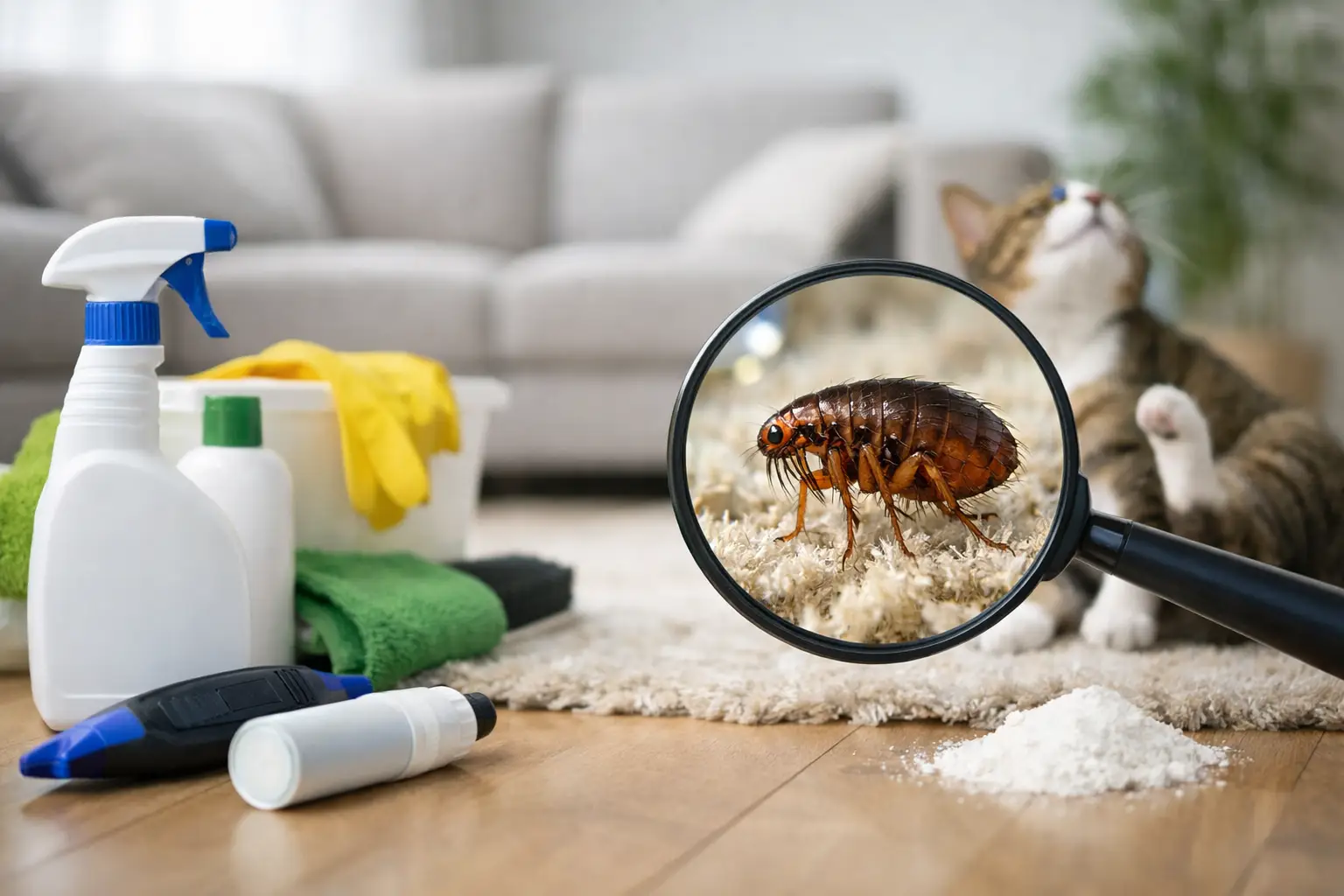
If you have started noticing bites around your ankles, a pet scratching more than usual, or tiny dark specks on bedding, flea activity can go from irritating to overwhelming very quickly. Knowing how to get rid of fleas properly matters because a few adult fleas are rarely the full problem – eggs, larvae and pupae are often already spread through soft furnishings, carpets and pet resting areas.
Fleas are stubborn because their life cycle gives them several chances to survive a basic clean-up. Killing what you can see is only one part of the job. To clear an infestation properly, you need to treat the animal, the home and the source at the same time.
How to get rid of fleas without missing the real problem
Most people first focus on the pet, which makes sense, but household treatment is just as important. Adult fleas live on animals to feed, but eggs drop off into carpets, rugs, cracks in flooring, sofas and beds. That means your cat or dog may keep picking fleas back up even after treatment if the property has not been dealt with thoroughly.
In London homes, this can be especially frustrating in flats and shared buildings where pets, soft furnishings and central heating create ideal conditions year-round. The warmer and more sheltered the space, the easier it is for fleas to keep developing indoors.
Start with your pets
If you have pets, speak to your vet or use a trusted flea treatment suitable for the animal’s age, size and species. Spot-on treatments, oral tablets and flea shampoos all have their place, but they do not work in exactly the same way. Some kill adult fleas quickly, while others interrupt the breeding cycle. If the infestation is heavy, speed matters.
Do not mix treatments casually. Using the wrong product, or combining products without advice, can be ineffective and in some cases unsafe. This is particularly important in households with both cats and dogs, as certain dog flea treatments are dangerous for cats.
Wash pet bedding at a high temperature if the care label allows it. Anything your pet uses regularly should be cleaned straight away and then repeatedly during treatment. If a bed or blanket is badly infested and inexpensive to replace, replacing it can sometimes be the more practical option.
Treat the home thoroughly
When people ask how to get rid of fleas, the biggest mistake is underestimating how much cleaning is required in the first week. Vacuuming is one of the most useful steps because it removes flea dirt, eggs and some larvae, while also encouraging pupae to emerge. Focus on carpets, skirting board edges, rugs, under furniture, sofas, pet sleeping areas and cracks in flooring.
Empty the vacuum immediately after use. If it is a bagged vacuum, dispose of the bag outside. If it is bagless, empty the canister into a sealed bag and clean the compartment. Otherwise, you risk allowing fleas to remain inside and re-enter the property.
Wash bedding, throws, cushion covers and removable soft furnishings on a hot wash where fabric care allows. Pay close attention to rooms where pets sleep, but do not ignore bedrooms and living rooms just because your pet does not spend all day there. Fleas move easily through a property.
Use flea treatment products carefully
Household flea sprays can help, but only if they are used correctly and chosen for indoor flea control rather than general insect use. A good product will usually target not just adult fleas but also eggs and larvae. Read the label fully, follow safety guidance and make sure the treatment is suitable for homes with children and pets.
Coverage matters more than people expect. A quick spray in the middle of the carpet will not solve the problem. Fleas favour protected spaces such as carpet edges, furniture seams, under cushions and areas close to where animals rest.
Foggers and smoke treatments can look appealing because they seem fast, but they are not always enough on their own. They may miss sheltered areas where immature flea stages are developing. In many cases, a targeted residual treatment is more effective than relying on one dramatic-looking product.
Understand why fleas keep coming back
A flea infestation often feels worse after treatment, and that can be alarming. In reality, this is sometimes part of the process. Pupae can survive for a while in protective cocoons and then emerge days or even weeks later when vibration, warmth and carbon dioxide signal that a host is nearby.
That is why one clean and one spray rarely finishes the job. Repeated vacuuming and, where appropriate, follow-up treatment are usually needed. If you stop too early because activity seems to improve, the infestation can restart.
There is also the question of source. If fleas came in on a pet, that needs managing long term. If they came from wildlife in a loft, under decking, or in a garden outbuilding, the surrounding environment may also need attention. In rented properties or multi-occupancy buildings, neighbouring activity can sometimes contribute as well.
What to do in homes without pets
You can still get fleas even if you do not own an animal. Previous occupants may have left an infestation behind, or fleas may arrive via visiting pets, second-hand furniture, or wildlife such as foxes and rodents near the property. This is one reason empty rooms can suddenly show flea activity after people move in – dormant pupae react when they sense movement again.
In these cases, cleaning and treatment are still necessary, but identifying the source becomes even more important. If the fleas are linked to another pest issue, both problems need addressing. Treating fleas without resolving the host animal problem can waste time and money.
When professional flea control is the better option
DIY measures can work for very light infestations if they are started early and carried out consistently. But if bites are continuing, pets are repeatedly affected, or fleas are spreading across several rooms, professional treatment is usually the faster and more reliable route.
This is especially true for landlords preparing a property for new tenants, businesses that cannot afford a pest issue to linger, or households with young children where quick control matters. A professional technician can assess the severity, identify likely harbourage areas, choose the right treatment and explain exactly what preparation and follow-up are required.
At Golden Pest Control, flea jobs are treated as urgent because delay gives the infestation more time to spread. For homes and businesses across London, prompt inspection and targeted treatment can make the difference between a manageable problem and weeks of disruption.
How to get rid of fleas and stop them returning
Prevention is less about one magic product and more about routine control. Pets should stay on a reliable flea prevention plan where appropriate. Pet bedding should be washed regularly. Floors, rugs and upholstery need frequent vacuuming, particularly in warmer months or in homes with animals.
If you buy second-hand furniture, inspect it carefully before bringing it inside. If wildlife is nesting close to the property, that may need attention too. In commercial premises, especially those with staff rest areas, soft seating or regular public access, early reporting is important so a minor issue does not become an operational problem.
The other part of prevention is acting early. Fleas multiply quickly, so waiting to see if the problem settles down on its own usually leads to a larger treatment job later.
Signs you should not wait any longer
If someone in the property is being bitten daily, if your pet remains uncomfortable after treatment, or if you are seeing fleas jump on socks, carpets or furniture, the problem is already established. The same applies if you have tried supermarket products and repeated cleaning but the infestation keeps returning.
Professional help is also worth considering if the property has a lot of carpeting, multiple pets, or a history of recurring flea issues. These cases tend to need a more structured treatment plan, not just a one-off attempt.
Fleas are not a sign that a home or business is dirty. They are opportunistic, persistent and very good at surviving in the places people overlook. The right response is a thorough one, carried out quickly and followed through properly. If the problem feels like it is getting ahead of you, getting expert support early is often the simplest way to get your space back to normal.