
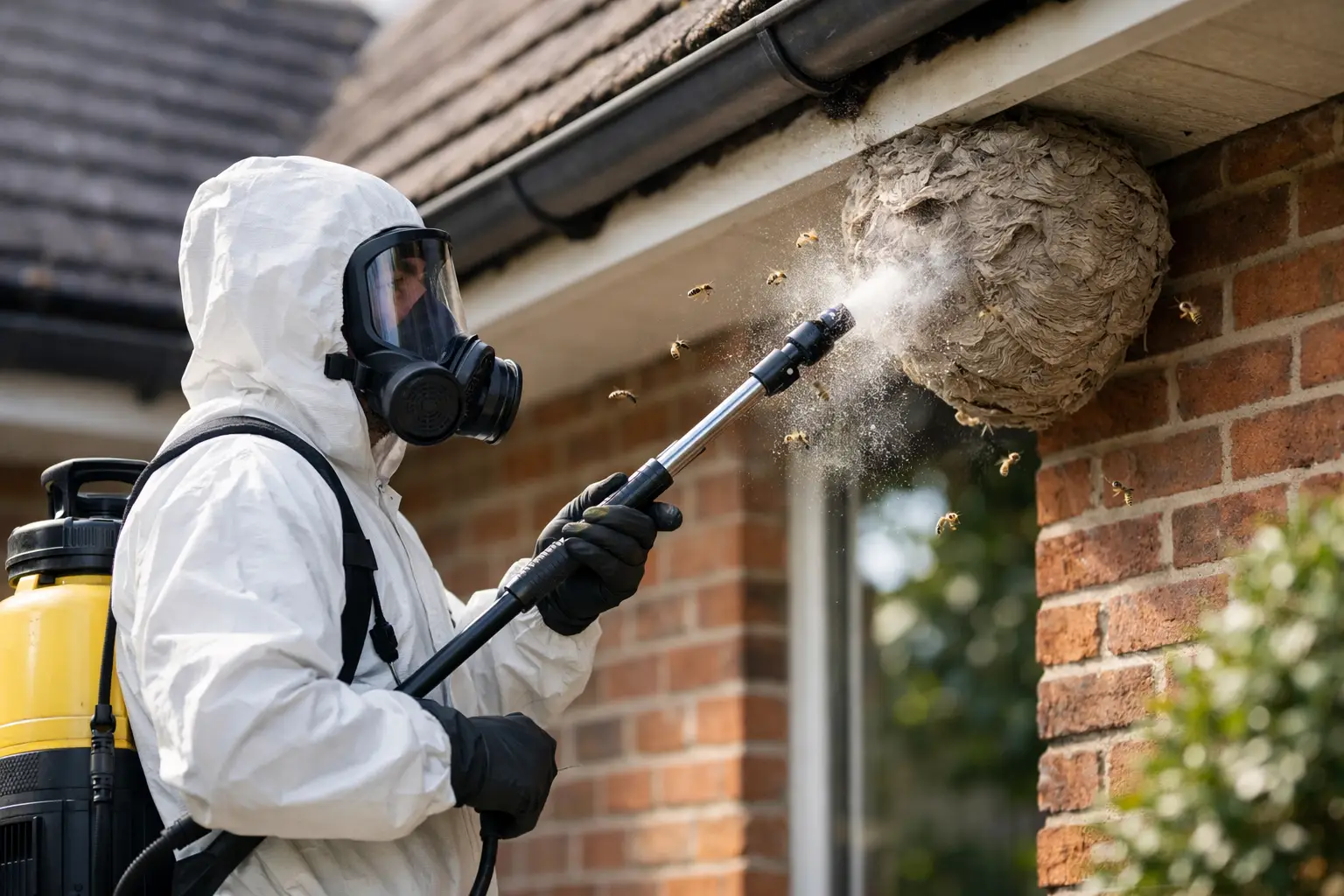
A wasp problem rarely stays small for long. If you need emergency wasp nest removal Ealing, the priority is simple – protect people first, avoid making the nest more active, and get qualified help in place quickly.
Wasps become a genuine emergency when the nest is close to daily activity. That might mean a loft hatch above a landing, a nest in a garden shed used every day, or an entry point near a shop doorway, bin store, school run route or outdoor seating area. In those situations, leaving it alone for even a short time can increase the risk of repeated stings, disruption to work or home life, and a much larger nest to deal with later.
When a wasp nest becomes an emergency
Not every nest needs same-hour action, but many do need prompt professional treatment. The risk depends on where the nest is, how active the wasps are, and who is nearby. A small nest high in a tree may be less urgent than one inside a cavity wall beside a bedroom window. Likewise, a nest near a restaurant entrance or childcare setting carries a different level of concern from one at the far end of a private garden.
The biggest issue is proximity to people. Homes with children, older residents or pets often need faster intervention because normal movement around the property can trigger defensive behaviour. Commercial sites also face extra pressure. A single visible swarm around a doorway, outdoor table area or loading entrance can quickly become a health and safety concern, not just a nuisance.
If anyone at the property has a known allergy to stings, the situation should always be treated as urgent. In that case, keeping distance and arranging professional attendance as soon as possible is the safest approach.
Emergency wasp nest removal in Ealing – what to do first
The first step is not to investigate too closely. Many people get stung when trying to locate the exact opening or tapping around walls, soffits and rooflines. If you can already see frequent wasp movement in and out of one area, that is usually enough to identify likely nest activity.
Keep children and pets away from the area and close nearby windows where practical. If the nest is inside a loft, garage, wall void or shed, avoid entering the space until treatment has been carried out. Wasps respond to vibration and disturbance, so DIY inspection often makes matters worse rather than better.
It is also wise to avoid blocking the entrance hole. That may sound sensible, but it can trap agitated wasps inside wall cavities or roof spaces and force them to find a new route into the property. A blocked access point can turn a straightforward treatment into a more disruptive one.
For businesses, cordon off the immediate area if possible and brief staff not to interfere. Clear communication matters. A calm, controlled response prevents panic and reduces the chance of someone trying to deal with it using household sprays or improvised methods.
Why professional treatment is the safer option
A wasp nest is not the same as a few insects around a window. Once a colony is established, there can be significant activity packed into a loft corner, eaves, air brick, shrub, outbuilding or cavity wall. Reaching the nest safely often requires the right protective equipment, the correct treatment method and experience in reading wasp behaviour.
DIY products can work in limited cases, but only when the nest is fully accessible, small, and positioned where treatment can be applied accurately without risk. That is not the reality in many emergency call-outs. In Ealing properties, nests are often found in awkward spaces such as roof voids, fascia gaps and wall cavities, where partial treatment can leave the colony active and more defensive.
Professional removal also reduces the chance of repeat problems caused by misidentification. People sometimes mistake general wasp activity for a single visible nest when there may be more than one access point, or more than one issue on site. A proper assessment helps avoid treating the wrong area and assuming the problem is solved when it is not.
What to expect from emergency wasp nest removal Ealing services
A reliable emergency service should focus on speed, safety and clear advice. The process usually starts with identifying the nest location, confirming whether the activity is from wasps or bees, assessing the safest treatment route, and applying an appropriate insecticidal treatment where suitable.
In many cases, the immediate goal is to neutralise the live nest rather than physically remove every trace on the first visit. That is an important distinction. Once treatment has taken effect and activity drops off, the remaining nest material may be left in place if it is sealed inside a void and poses no ongoing risk. Full extraction is not always necessary, and trying to remove inaccessible material can cause needless damage to the property.
Good service also means practical aftercare. You should be told how long to keep clear of the area, what level of residual activity is normal in the first hours after treatment, and what signs would justify a return visit. Clear communication is part of the job, especially when customers are dealing with an urgent problem.
Homes, rentals and business premises all face different risks
For homeowners, the main concern is household safety. Nests near bedrooms, lofts, conservatories, patios and children’s play areas can make normal use of the property difficult. Many customers call only after the problem begins affecting daily routines, such as not being able to open windows or use the garden comfortably.
For tenants and landlords, speed matters for another reason. Delays can turn a manageable maintenance issue into a complaint, an avoidable hazard, or a dispute about responsibility. Prompt treatment helps keep the property safe and reduces the chance of the infestation spreading into more disruptive parts of the building.
For commercial premises, the pressure is often immediate. Wasps around entrances, waste areas, kitchens, courtyards and outdoor customer spaces can affect staff confidence, customer experience and site compliance. A fast response protects operations as much as people.
Common nest locations around Ealing properties
The properties most likely to attract wasps are not necessarily neglected ones. Wasps look for sheltered, undisturbed spaces, and even well-kept homes and business sites can offer ideal nesting spots.
Typical locations include lofts, soffits, wall cavities, rooflines, garages, sheds, garden rooms, under decking and dense shrubs. On commercial sites, nests also appear around service yards, signage voids, extractor areas and storage spaces. The exact location shapes the treatment plan. A loft nest with clear access is different from one hidden deep behind cladding or inside a cavity wall.
That is why one-size-fits-all advice rarely helps. The safest response depends on access, nest size, surrounding foot traffic and whether the area can be temporarily isolated.
Preventing another urgent wasp problem
No prevention plan can guarantee that wasps will never return, but a few sensible steps can reduce the likelihood of another emergency. After treatment, it helps to review likely entry points around eaves, vents, gaps in cladding and damaged roof edges. If a site has recurring issues, especially around outbuildings or roof spaces, it may need more targeted proofing work.
Waste control also matters for business premises and busy households. Open bins, sugary drink residues and poorly managed outdoor eating areas attract foraging wasps, even when the nest itself is elsewhere. That does not create a nest on its own, but it does make activity more noticeable and harder to manage.
Regular checks are useful in spring and early summer, when nests are still small. Catching early movement around sheds, lofts and rooflines can make treatment more straightforward than waiting until peak activity later in the season.
Fast action matters more than guesswork
When people are worried about stings, it is tempting to try the quickest visible fix. In practice, spraying at random, knocking at a nest or blocking an entrance usually creates a more difficult problem. The safer option is a calm response, a clear exclusion zone and expert treatment tailored to the property.
Golden Pest Control supports homes and businesses with rapid-response pest control when urgent situations cannot wait. With wasps, early action is usually the difference between a contained job and a stressful, high-risk one.
If you are seeing steady wasp traffic around a roofline, wall cavity, loft, shed or entrance area, trust what you are seeing and act early. A prompt call can protect your household, your staff and your property before the nest becomes harder to manage.