
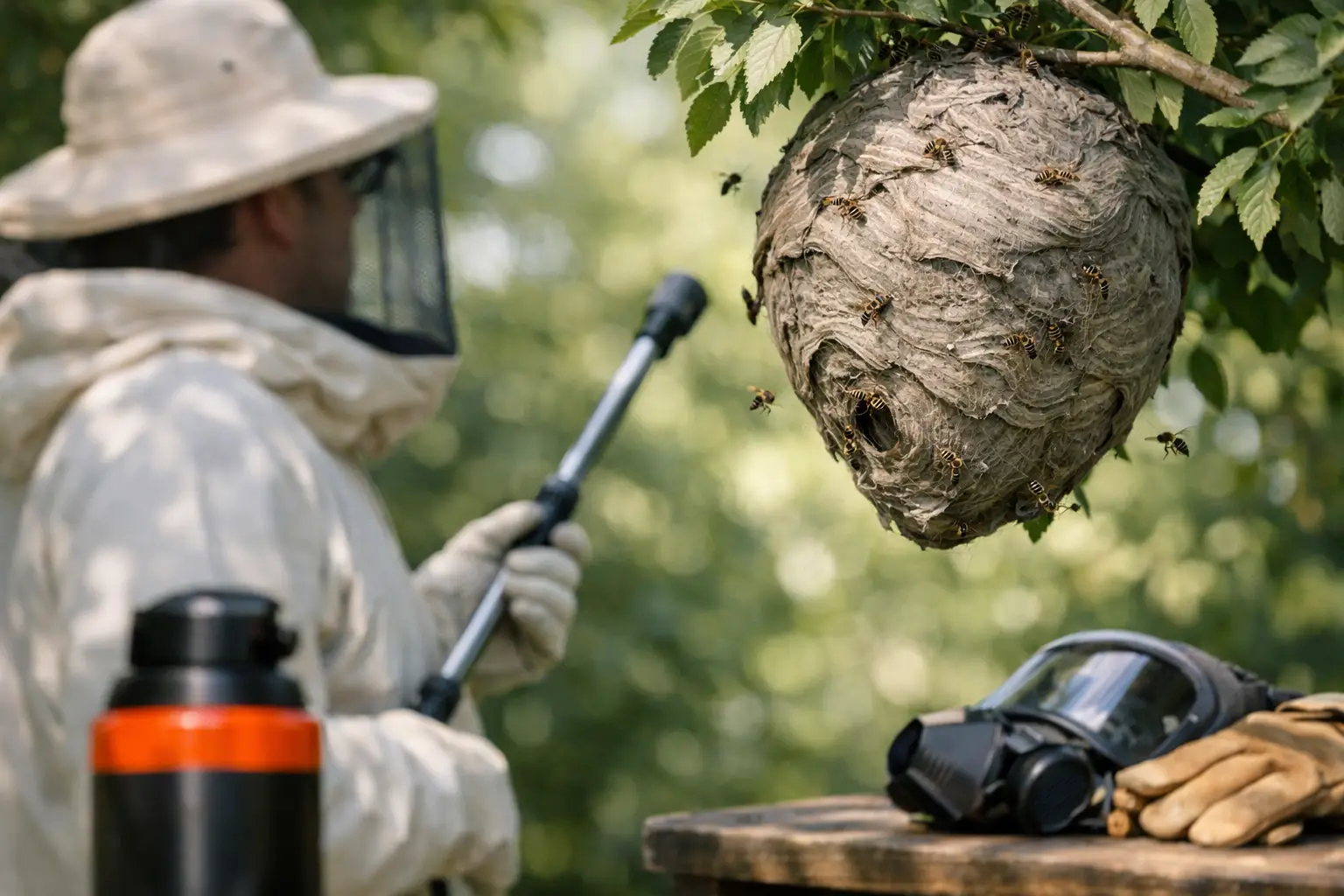
A wasp nest can go from minor nuisance to serious risk very quickly, especially in summer when activity peaks and colonies grow fast. If you are wondering how to handle wasp nests without putting your household, tenants, staff or customers at risk, the safest starting point is simple: do not disturb it until you know exactly what you are dealing with.
Wasps become aggressive when they think the nest is under threat. A light knock to a shed wall, an attempt to spray the entrance, or even repeated foot traffic too close to the nest can trigger a defensive swarm. In homes and commercial premises, that can mean painful stings, panic, and a much larger problem than the one you started with.
How to handle wasp nests without making things worse
The first job is identifying whether it is an active wasp nest or an old, inactive one. Active nests usually have visible wasp traffic in and out of a single entry point. You may notice a steady stream of wasps around rooflines, loft vents, wall cavities, garages, sheds or garden structures. The nest itself may be grey and papery, but in many cases you will not see the full nest at all – only the entry route.
If there is regular movement, treat the nest as active and hazardous. Do not poke it, knock it down or block the entrance. Blocking access often forces wasps to find another route, which can push them into loft spaces, bedrooms, suspended ceilings or office interiors. That tends to turn a contained issue into a wider infestation.
Distance matters. Keep children and pets away from the area, and if the nest is near a doorway or walkway, reduce use of that access point if possible. In a business setting, this may mean temporarily redirecting staff or customers away from the affected zone until it has been assessed.
When a wasp nest becomes an urgent problem
Not every nest needs the same response. A small nest high in a tree at the far end of a large garden is different from one above a front door, inside a loft hatch or in the wall of a café seating area. The level of risk depends on location, activity, and who may be exposed.
Urgent treatment is usually needed when the nest is close to daily movement, when someone at the property has a known sting allergy, or when wasps are entering indoor spaces. It is also a priority for landlords and commercial operators, because stinging insect activity can quickly become a safety and liability issue.
In London properties, wasp nests commonly appear in eaves, soffits, cavity walls, lofts and sheds. Commercial sites can be more complicated because bins, food waste areas, external signage and roof voids all provide shelter and attraction. In those cases, speed matters, but so does using the right treatment method for the exact nest location.
Should you remove a wasp nest yourself?
In most active nest situations, the honest answer is no. DIY treatment can work on very small, accessible nests, but the margin for error is high. If the nest is above head height, inside a structure, difficult to reach, or producing heavy activity, attempting removal yourself is risky.
Store-bought sprays are often used without proper assessment of nest size or access point. People tend to underestimate how many wasps are inside, and they overestimate how quickly a surface spray will solve the problem. If the nest is in a cavity wall or roof void, spraying the visible entrance may not treat the core nest effectively at all.
There is also the timing issue. Wasps are usually less active early in the morning or later in the evening, but that does not make a nest safe to approach. Disturbance at close range can still provoke a rapid defensive response. Protective clothing from a DIY shop is not the same as professional equipment, and for many householders or staff members, it is simply not worth the risk.
What to do while waiting for treatment
If you have identified an active nest and plan to arrange professional removal, the best approach is controlled caution. Keep windows near the nest closed where practical. Avoid using lawn mowers, strimmers, ladders or pressure washers anywhere close to the area. Vibrations and sudden movement can agitate the colony.
Food and drink should be kept covered outdoors, especially at hospitality sites or family gardens. Wasps are strongly attracted to sweet drinks, food scraps and overflowing bins, so basic housekeeping helps reduce contact even if it does not solve the nest itself.
If wasps are getting indoors, avoid swatting them. Open one window in the room if safe to do so, close internal doors, and allow them a route back out. Swatting distressed wasps often increases agitation and can release alarm signals that make nearby wasps more reactive.
How professionals handle wasp nests
Professional wasp nest treatment starts with inspection, not guesswork. The aim is to identify the nest location, the species behaviour, the access route and the safest treatment method for that particular setting. A nest in a shed can be handled differently from one in a cavity wall or under roof tiles.
Treatment usually involves applying insecticidal dust or another appropriate professional-use product directly into the nest access point or affected void. This is designed to reach the colony where it is living, not just the wasps visible outside. After treatment, activity often continues for a short period as returning wasps come into contact with the product, then falls away.
Removal of the physical nest is not always necessary straight away. In some cases, once the colony is inactive, the nest can be left in place if it is inaccessible and no longer poses a risk. An old nest is not reused by a new colony in the following season, although nearby locations can be attractive again if entry points and shelter remain unchanged.
For domestic and commercial clients, the real value of professional treatment is safety, speed and clarity. A qualified technician can tell you whether the issue is isolated, whether more than one nest may be present, and what prevention steps make sense for the property.
Prevention after the nest is gone
Knowing how to handle wasp nests is only part of the issue. The next step is reducing the chance of another nest appearing in the same place. This matters most in lofts, sheds, wall cavities and roof edges where queen wasps look for sheltered starting points in spring.
Small maintenance jobs make a difference. Repairing damaged vents, sealing gaps around soffits, fitting fine mesh over suitable openings, and keeping outbuildings in good condition can all reduce nesting opportunities. In commercial settings, waste management is just as important. Regular bin cleaning, secure lids and prompt disposal of food waste help make the area less attractive.
That said, prevention is never absolute. Wasps are part of the outdoor environment, and even well-maintained properties can get nests. The practical goal is to reduce the likelihood and spot problems early, before a small colony becomes a larger hazard.
Domestic and commercial properties need different responses
For households, the main concern is usually safety around children, pets and entryways. For businesses, there is often an added pressure around staff welfare, customer experience and hygiene standards. A nest near an office entrance may cause disruption. A nest near a restaurant garden or waste area can affect normal operation very quickly.
That is why response should match the setting. A property manager may need documentation, clear scheduling and reassurance for residents. A business owner may need a fast visit outside trading hours. A homeowner may simply need the nest dealt with before the weekend. The right service is not just about killing wasps – it is about restoring safe use of the space with minimum disruption.
For properties across London, especially during peak wasp season, delays tend to make things harder rather than easier. Colonies grow, activity increases, and people begin changing how they use their own property just to avoid stings.
When to call for immediate help
If the nest is inside a wall, loft or roof space, close to doors or windows, above a high-traffic area, or causing repeated stings, do not try to manage it alone. The same applies if someone on site is vulnerable to allergic reaction, or if the property is a workplace, rental property or customer-facing premises.
Golden Pest Control handles wasp problems with the urgency they require, using safe and effective treatment for homes and businesses. Fast assessment and proper treatment protect people first, then deal with the nest properly.
A wasp nest is not the sort of problem that improves with guesswork. The safest move is often the simplest one – step back, keep the area clear, and get it handled properly before it becomes a bigger risk.