
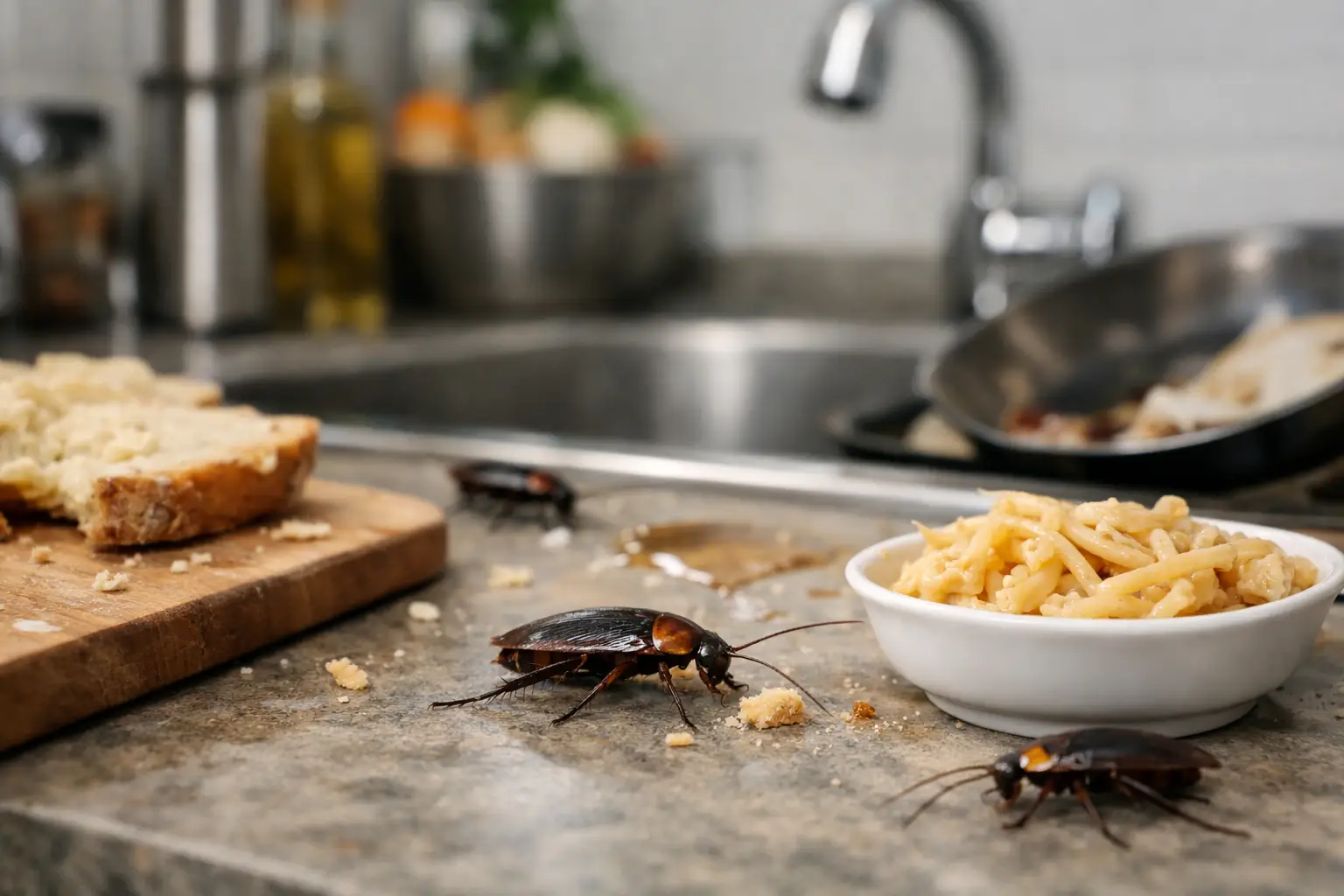
You wipe the worktops, take the bin out, and still spot a cockroach near the skirting board after dark. That is usually the moment people start asking what attracts cockroaches in kitchens, and the answer is rarely just one thing. Roaches are drawn in by a combination of food, water, warmth and shelter, often in places that look perfectly clean at first glance.
Kitchens give them exactly what they need to survive. In homes, flats, restaurants and staff kitchens, even small daily habits can create the right conditions for activity to start and spread. If you know what they are looking for, you have a much better chance of stopping a minor issue from becoming a larger infestation.
What attracts cockroaches in kitchens most?
The biggest attraction is reliable access to food and moisture. Cockroaches are opportunistic. They do not need a full meal left out on the side. A few crumbs under a toaster, grease behind a cooker, residue around a bin lid or standing water under a sink can be enough to keep them returning.
Warmth matters too. Kitchens stay active for long hours, especially in busy households and commercial premises. Appliances give off heat, pipework creates warm pockets, and enclosed areas behind units offer shelter close to food and water. From a cockroach’s point of view, that is an ideal setup.
It also depends on the species and the property. German cockroaches, for example, are strongly associated with indoor kitchens and can spread quickly once established. Oriental cockroaches are often linked to damper areas, basements and drains, but they may still enter kitchens if the conditions suit them.
Food sources are often smaller than people expect
Many customers assume cockroaches only appear where there is obvious dirt or neglect. That is not true. A tidy kitchen can still provide enough food to sustain them.
Roaches feed on scraps, grease, spillages, pet food, cardboard residue and even the film left on unwashed packaging. They are especially drawn to areas people do not clean every day, such as under large appliances, behind cupboards, inside drawer runners and around kickboards. In commercial kitchens, food prep zones, storage shelves and gaps around equipment are common risk points.
Bins are another major factor. If rubbish is left overnight, if liners leak, or if the bin area is not cleaned regularly, the smell alone can attract activity. Recycling can be just as appealing when jars, tins and containers still contain traces of food.
Dry goods should not be ignored either. Open packets of cereal, flour, rice and biscuits can support cockroaches, particularly when stored in damaged cupboards or loosely sealed containers.
Grease is a hidden driver
Grease build-up is one of the most overlooked causes. It collects in extractor filters, behind hobs, along splashbacks and underneath equipment. Because it is less visible than crumbs, it often remains in place far longer. For cockroaches, it is a steady food source.
This is one reason infestations can develop in kitchens that are cleaned on the surface but not deeply cleaned behind and beneath fixed units.
Moisture is just as important as food
If you want to understand what attracts cockroaches in kitchens, water is a key part of the answer. Roaches can survive for a period with very little food, but they need moisture more urgently. That is why leaks and condensation are such strong attractants.
The most common problem spots include pipe joints under sinks, washing machines, dishwashers, fridge drip trays and areas where sealant has failed. Even a slow drip can create enough dampness to support ongoing activity. Condensation around windows and cold external walls can also help, especially in older properties.
In some London buildings, kitchen layouts make this worse. Compact spaces, shared walls, older plumbing and limited ventilation can create hidden damp areas that residents do not notice until pest activity appears.
Drains and standing water
Drains deserve special attention. Food residue, moisture and darkness make them attractive, particularly if cleaning is inconsistent. Roaches may travel through drainage routes or remain near sink areas where water is regularly available.
Standing water in washing-up bowls, trays under plant pots, pet bowls left overnight or pooled water beneath appliances can all contribute. None of these alone guarantees an infestation, but together they make the kitchen more inviting.
Clutter and hiding spaces help them settle
Cockroaches do not just need something to eat and drink. They also need somewhere to stay out of sight. Kitchens offer plenty of narrow gaps and dark harbourage points where they can remain undisturbed during the day.
Typical hiding spots include cracks around pipe entry points, spaces behind fitted units, voids under cupboards, loose skirting, electrical housings and gaps around ovens or fridges. Cardboard boxes are especially useful to them because they provide shelter and can absorb moisture.
This is why cluttered cupboards and overfilled storage areas can make control harder. The more hiding places available, the easier it is for cockroaches to avoid detection and treatment. In commercial settings, stacked packaging, unused equipment and crowded store rooms often complicate the problem.
Why cockroaches appear at night
People often say they have only seen one or two, usually when they switch on the kitchen light late at night. Unfortunately, that does not always mean there are only one or two present.
Cockroaches are nocturnal and prefer to stay hidden when the area is active. Seeing them in the open during the day can suggest a larger population, pressure on harbourage spaces, or heavy competition for food and water. Night sightings around sinks, cookers and bin areas are common because that is when the kitchen is quiet and easier for them to explore.
What attracts cockroaches in kitchens in flats and shared buildings?
In flats, blocks and commercial premises, the issue is not always contained to one kitchen. Cockroaches can move through wall voids, service ducts, pipe runs and shared utility routes. That means one occupier may maintain a good standard of hygiene and still experience activity from a neighbouring unit.
This is an important point for tenants, landlords and facilities managers. Cleanliness helps reduce attraction, but it does not always solve the source. If roaches are travelling from another area of the building, the problem can return until the wider route is addressed properly.
Restaurants, cafés, takeaways and communal kitchens face a similar challenge. Longer operating hours, higher heat, frequent deliveries and constant food handling create more opportunities for roaches to feed and hide. In those cases, control needs to be fast and methodical because delay usually allows the infestation to spread.
How to make your kitchen less attractive to cockroaches
The goal is not perfection. It is reducing the conditions that support them. Start with the basics and focus on consistency.
Clean food debris from under and behind appliances, not just visible surfaces. Keep dry goods in sealed containers. Empty bins regularly and clean the bin area itself, including the lid and surrounding floor. Fix leaking pipework, dry sinks overnight where possible, and do not leave standing water in trays or bowls.
It also helps to reduce hiding places. Seal gaps around pipes, repair damaged sealant, limit cardboard storage and clear out crowded under-sink cupboards. In commercial kitchens, routine deep cleaning and regular inspection around heavy equipment are especially important.
That said, there is a limit to what housekeeping alone can achieve. If cockroaches are already breeding inside units, behind walls or within shared building infrastructure, professional treatment is usually the quickest and most reliable way to bring the problem under control.
When to call a professional
If you are seeing repeated sightings, droppings, egg cases or a musty odour in the kitchen, it is time to act. The same applies if you have tried sprays or shop-bought baits and the activity keeps returning. Roaches reproduce quickly, and partial treatment can make the issue harder to track.
A professional inspection helps identify not just where they are visible, but why they are there and where they are harbouring. That matters because effective cockroach control is not just about killing the insects you can see. It is about targeting nesting areas, interrupting breeding cycles and reducing the conditions that support reinfestation.
For households and businesses across London, speed matters. The earlier the problem is identified, the simpler it is to contain.
Cockroaches are not attracted by chance. They follow food, moisture, heat and shelter, and kitchens often provide all four at once. Once you remove those advantages, the space becomes far less hospitable. If activity continues despite your efforts, getting expert help quickly is often the safest way to protect your property, your hygiene standards and your peace of mind.