
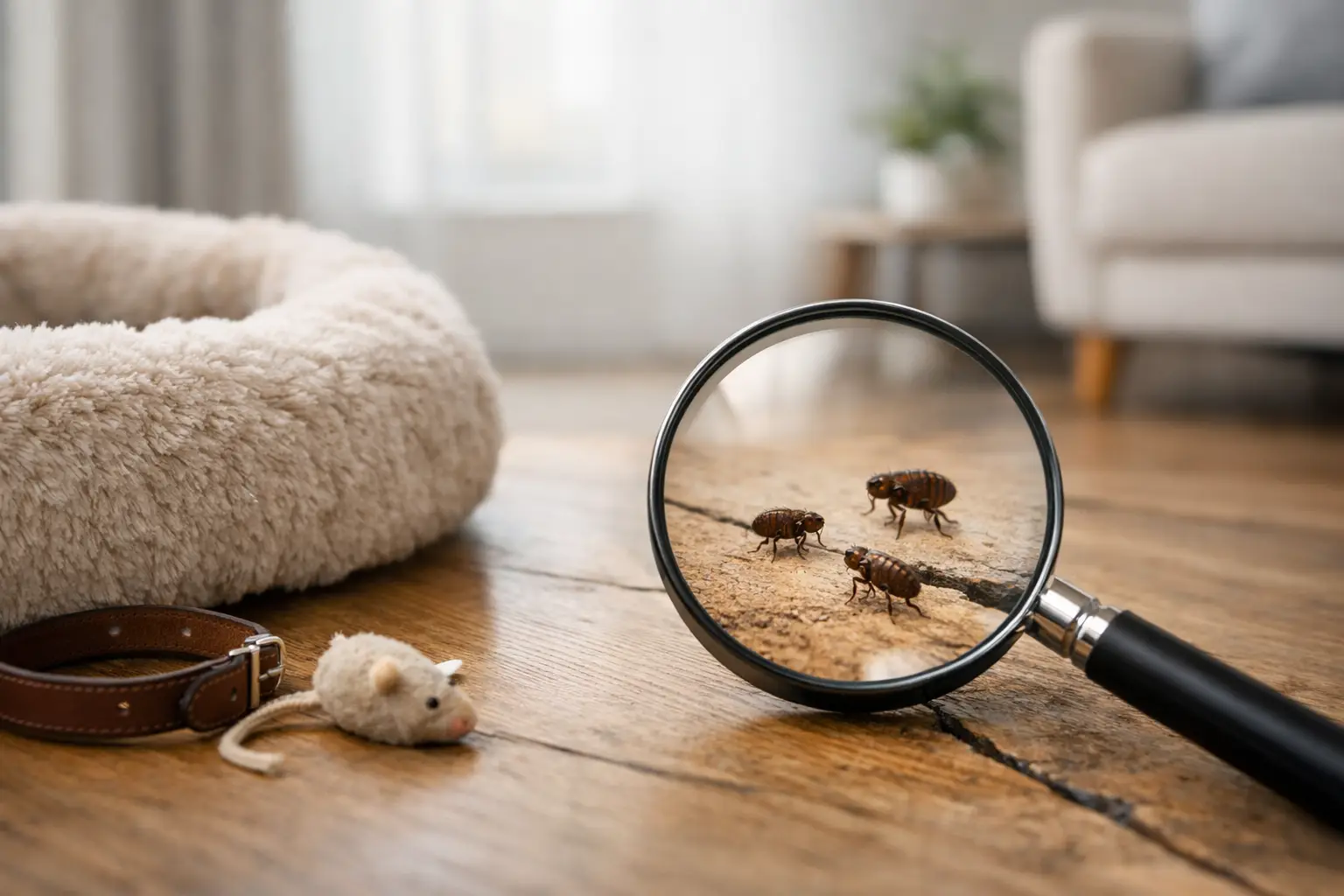
You vacuumed, washed the bedding, and the dog has been out of the house for days – yet you are still seeing bites or the odd flea. If you are asking can fleas live without pets, the short answer is yes. They can survive in a property without a cat or dog for a while, and in some cases they can continue their life cycle long enough to turn a small problem into a stubborn infestation.
That is the part many people in London only discover after the pets have been treated and the fleas keep coming back. Fleas are not simply living on animals all the time. A large part of the problem is often in carpets, soft furnishings, cracks in flooring, and pet resting areas, where eggs, larvae and pupae can remain protected until the conditions are right.
Can fleas live without pets in a house?
Yes, fleas can live without pets in a house, but it depends on which stage of the flea life cycle you are dealing with. Adult fleas prefer to feed on animals, and cats and dogs are their usual hosts. Without a blood meal, adult fleas do not last indefinitely. Even so, they can survive long enough to bite people, especially if no animal host is available.
The bigger issue is that adult fleas are only one part of the infestation. Eggs can drop off into carpets and upholstery. Larvae then develop in hidden areas, feeding on organic debris. Pupae can remain protected inside cocoons and are often the hardest stage to eliminate. That means a property can still have an active flea problem even when no pet is currently present.
This is why empty flats, rental properties, offices with soft seating, and homes where pets have recently been rehomed can all still produce flea activity. Removing the animal does not remove the infestation.
How long can fleas survive without a host?
There is no single answer, because survival depends on warmth, humidity, access to food, and life stage. Adult fleas usually survive for a shorter period without feeding, often only days to a couple of weeks in typical indoor conditions. However, pre-emerged fleas inside pupal cocoons can remain dormant for much longer.
In a heated property, especially one with carpets and regular foot traffic, dormant fleas may emerge when they detect vibration, body heat or carbon dioxide. That is why people often notice fleas after returning to a previously empty home or after moving into a property where pets once lived.
In practical terms, a flea problem can appear to survive without pets for weeks or even longer because different stages are emerging over time. It is not always the same adult fleas hanging on. It is often a cycle that has not been fully broken.
Why fleas still bite people when there are no pets
Fleas prefer animal hosts, but they are opportunistic. If there is no cat or dog nearby, they may bite people instead. Human blood is not their ideal food source, and people do not usually support flea breeding in the same way as furry animals, but bites can still happen.
This is one reason flea infestations are so frustrating in homes, HMOs and rented accommodation. Tenants may assume they cannot have fleas because they do not own a pet. In reality, fleas may have been brought in by a previous occupier, visiting animals, wildlife in lofts or gardens, or even second-hand soft furnishings.
For commercial settings, the same principle applies. A business might not have animals on site, but fleas can still be introduced from staff clothing, infested deliveries, shared seating, or nearby pest activity. It is less common, but it does happen.
Where fleas hide when pets are gone
Once pets are out of the picture, fleas do not vanish. They retreat to the places that give them shelter during the immature stages. Carpets are a common hotspot, especially around skirting boards, under beds, beneath sofas, and in corners that do not get much disturbance. Rugs, upholstered furniture and pet bedding are also high-risk areas.
In some properties, floorboard gaps and cracks in wooden flooring offer enough protection for larvae and pupae to continue developing. If there has been a heavier infestation, you may also find activity in wardrobes, under furniture, and in vehicles used to transport pets.
This hidden behaviour is exactly why flea control needs more than surface cleaning. By the time you are spotting live fleas, many more may be developing out of sight.
Signs the infestation is still active
The obvious sign is live fleas jumping on socks, carpets or furniture, but that is not the only clue. Repeated bites around the ankles and lower legs often point to fleas, although bites alone are never enough for a firm identification. Pets scratching excessively, flea dirt in bedding, and seeing activity after vacuuming are all common indicators.
An important detail is timing. People often report a sudden increase after cleaning, walking through a quiet room, or returning from a short trip. That happens because vibration and warmth can trigger emerging adults. It can make the problem feel random when it is actually part of a predictable cycle.
Can fleas die out on their own?
Sometimes, but relying on that is risky. A very minor flea issue in a cool, dry environment may eventually fade if there is no host and no fresh breeding. The problem is that most homes and workplaces give fleas enough warmth and shelter to keep going for longer than expected.
If there are pets in the building again at any stage, or if wildlife such as foxes, rodents or stray cats are active nearby, the infestation can quickly regain momentum. In rental properties and multi-occupancy buildings, reinfestation is especially common if the source has not been properly identified.
So yes, fleas can die out without pets, but that does not mean they will do so quickly, or before causing weeks of bites and contamination.
What actually works to get rid of fleas
Successful flea control means treating both the host and the environment. If there is a pet, that usually means prompt veterinary flea treatment. If there is no pet, the focus shifts to the property itself and any possible source nearby.
Vacuuming helps because it removes debris, stimulates pupae to emerge, and can reduce flea numbers. Washing bedding, throws and removable fabric covers on a hot cycle is also useful. But home cleaning alone often falls short once fleas are established, especially where eggs and pupae are deep in carpets or hidden furnishings.
Professional treatment is often the faster and more reliable route because it targets the spaces fleas use most, not just the ones you can see. It also matters that the correct insecticidal approach is used and that follow-up timing is right. Fleas are difficult not because they are indestructible, but because different life stages respond differently.
When to call a professional
If bites are continuing after cleaning, if you have treated pets but fleas remain, or if the property is vacant and fleas still appear when someone enters, it is sensible to get expert help. The same applies for landlords preparing a flat for new tenants, or businesses that need to protect staff, customers and hygiene standards.
A proper inspection can help confirm whether fleas are the issue and whether there may be another source, such as rodents, birds, or previous pet occupation. In some cases, what looks like a recurring flea problem is actually being sustained by another pest activity in or around the building.
For households and businesses across London, fast action usually means less disruption, fewer bites, and a better chance of stopping the cycle before it spreads further through bedrooms, reception areas, communal seating, or adjoining rooms.
The key point about can fleas live without pets
If you only remember one thing, let it be this: fleas do not need a pet sitting in the room to keep the problem going. They can persist in the environment, emerge later, and bite people while they wait for the next host. That is why flea infestations so often catch people out after they think the source has gone.
If you suspect flea activity, treat it as a property issue, not just a pet issue. The sooner you deal with the full life cycle, the easier it is to get your home or premises properly under control and keep it that way.