
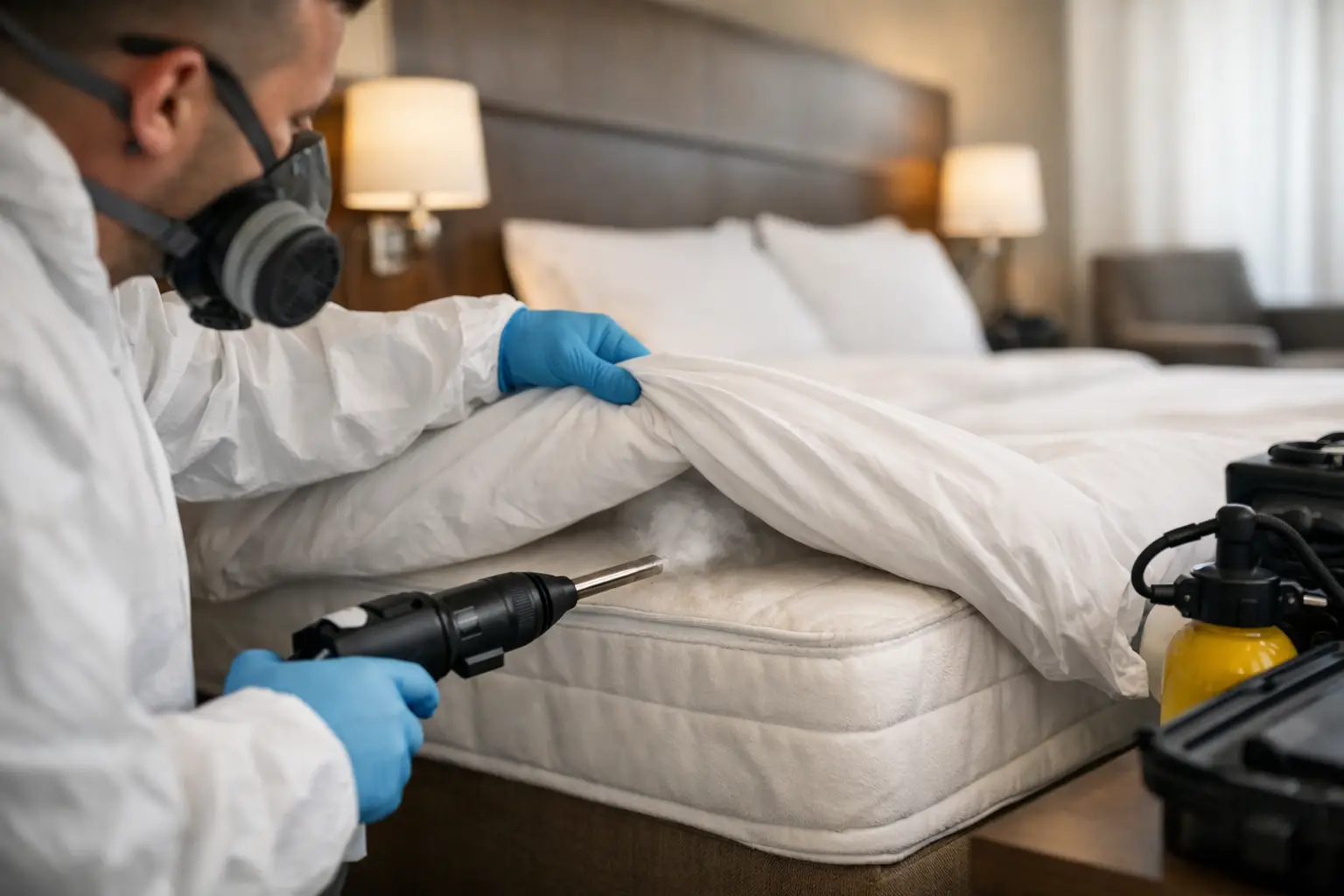
One guest complaint can turn into cancelled bookings, refund requests and a reputational problem that spreads faster than the infestation itself. That is why bed bug treatment for hotels has to be handled quickly, discreetly and properly the first time. In a hotel setting, the issue is never just the insects. It is guest confidence, room downtime, staff pressure and the risk of the problem moving from one room to the next.
Why bed bugs are a serious hotel issue
Hotels are uniquely exposed to bed bug activity because guests and luggage are constantly moving in and out. Even well-run, spotless properties can be affected. Bed bugs are not a sign of poor housekeeping. They are expert hitchhikers, and once introduced, they can spread through soft furnishings, bed frames, skirting gaps, service routes and adjoining rooms.
For hotel managers, the real cost goes beyond treatment. There is the loss of room revenue, the strain on front-of-house teams, potential compensation claims and the damage caused by online reviews. A delayed response usually makes all of that worse. Early action keeps the issue contained and gives you a far better chance of returning affected rooms to service sooner.
What effective bed bug treatment for hotels looks like
A proper hotel treatment plan starts with inspection, not guesswork. Bed bugs are small, elusive and often active at night, so visible bites alone are not enough to confirm the extent of an infestation. A professional inspection checks beds, headboards, mattress seams, upholstered furniture, curtains, carpets and cracks around the room. In hotels, adjoining rooms and sometimes rooms above and below should also be assessed.
This matters because treating only the room where a complaint was made can miss the wider pattern. If bed bugs have already travelled through wall voids, laundry transfer or housekeeping trolleys, a single-room treatment may offer only short-term relief. The right approach depends on the layout of the building, the severity of activity and how quickly the report was raised.
In practical terms, treatment usually combines targeted insecticidal application with detailed follow-up. Depending on the situation, heat-based methods may also be considered. There is no one-size-fits-all answer. Some hotels need focused treatment in a contained area. Others need a broader programme covering several rooms, monitoring points and repeat visits to break the breeding cycle.
Inspection comes first, and speed matters
The first few hours after a report are important. Staff should take the room out of service immediately and avoid moving bedding, mattresses or loose items through corridors unless containment steps are in place. Sending infested linen to the laundry in an open trolley can spread the problem. Reallocating guests into an adjacent room without inspection can do the same.
A fast inspection allows the hotel to make informed decisions instead of reactive ones. It identifies whether the issue is isolated, whether neighbouring rooms are at risk and what preparation is needed before treatment begins. For busy hotels, especially those working at high occupancy, this speed is not just helpful. It protects operational continuity.
For London hotels, where room turnover is high and reputational pressure is constant, rapid commercial response can make a noticeable difference. Golden Pest Control supports urgent pest situations with a service model built around quick attendance and clear communication, which is exactly what hotel teams need when time is tight.
Common mistakes hotels make with bed bug problems
The most common mistake is trying to keep the issue quiet internally and hoping housekeeping can manage it. Housekeeping teams are essential in spotting signs early, but bed bug control requires specialist treatment. Spraying shop-bought products, replacing one mattress or deep-cleaning the room without proper pest control rarely solves the problem.
Another mistake is treating the complaint as a single-room matter when the evidence suggests possible spread. Bed bugs do not respect room numbers. If a reported room shares walls with occupied rooms, those neighbouring spaces need inspection as well. The cost of widening the response early is often lower than the cost of chasing the infestation later.
Hotels also sometimes reopen rooms too soon. Even when activity seems reduced, eggs may still hatch after the first visit. Follow-up checks are a key part of bed bug treatment for hotels because successful control depends on breaking the life cycle, not just killing visible insects.
How treatment affects hotel operations
Every hotel wants the problem fixed with minimal disruption, but honest planning matters. Some treatments require rooms to remain vacant for a period, and preparation may involve bagging linens, reducing clutter, moving furniture or isolating items for specialist handling. Good pest control should be efficient, but it still needs cooperation from the site team.
The trade-off is straightforward. A more controlled, properly managed downtime often prevents a much longer operational problem later. If a hotel cuts corners to keep rooms in use, the infestation can spread and force more rooms out of service in the following days or weeks.
Discretion is also important. Guests should not be alarmed by obvious treatment activity in busy areas, and staff need clear instructions on what to say and what to do. Professional commercial pest control is not only about removing insects. It is about managing the situation in a calm, organised way that protects the guest experience as much as possible.
Prevention is part of the treatment plan
A good result does not end with the first cleared room. Hotels need practical prevention measures built into daily operations. That starts with staff awareness. Housekeeping, maintenance and reception teams should know the early signs, including spotting marks on bedding, cast skins, live insects and patterns of repeat complaints from specific rooms.
Mattress and bed frame checks should become routine, particularly in higher-turnover rooms. Luggage racks, upholstered chairs and headboards deserve close attention as well. Maintenance issues should not be ignored either. Cracked skirting, loose wallpaper and gaps around sockets can all provide hiding places.
Laundry handling procedures matter more than many hotels realise. Infested textiles need secure handling to avoid moving bed bugs through service corridors and into clean storage areas. Staff should also know when not to move items at all until advice has been given.
Prevention does not mean turning the hotel into a clinical environment. It means having a sensible, repeatable process that allows problems to be spotted early and contained fast.
Choosing a provider for hotel bed bug control
Hotels need more than a basic domestic pest service. The provider should understand commercial pressures, occupancy issues and the need for discreet attendance. Clear reporting matters, because management teams need to know what was found, which rooms were affected, what treatment was applied and what follow-up is required.
It also helps to work with a company that can respond outside standard office hours. Bed bug reports do not wait for convenient timing. A late-night guest complaint or an early-morning housekeeping discovery can quickly become an urgent operational issue.
When comparing providers, look for practical strength rather than vague promises. You want qualified technicians, safe treatment methods, a structured inspection process and realistic advice on aftercare. If a company claims a complete fix without follow-up or without assessing neighbouring rooms, that should raise concerns.
Aftercare and monitoring make the difference
The best outcomes usually come from treatment plus monitoring. Aftercare may include reinspection, advice to housekeeping, room-specific handling guidance and confirmation of when spaces can safely return to use. This is especially important in hotels because a room may appear normal before the infestation has been fully eliminated.
Monitoring also gives management confidence. Instead of relying on guesswork or waiting for another complaint, the hotel has a documented process for checking whether the treatment has worked. That reduces uncertainty and helps teams make better operational decisions.
There is no zero-risk environment in hospitality, but there is a clear difference between a hotel that reacts late and a hotel that responds professionally. Bed bug issues can happen in any property. What protects the business is a fast inspection, correct treatment, sensible containment and proper follow-up.
If your hotel is facing a suspected bed bug problem, the priority is simple: act early, stay calm and get the right help in place before a single guest complaint becomes a wider business problem.