
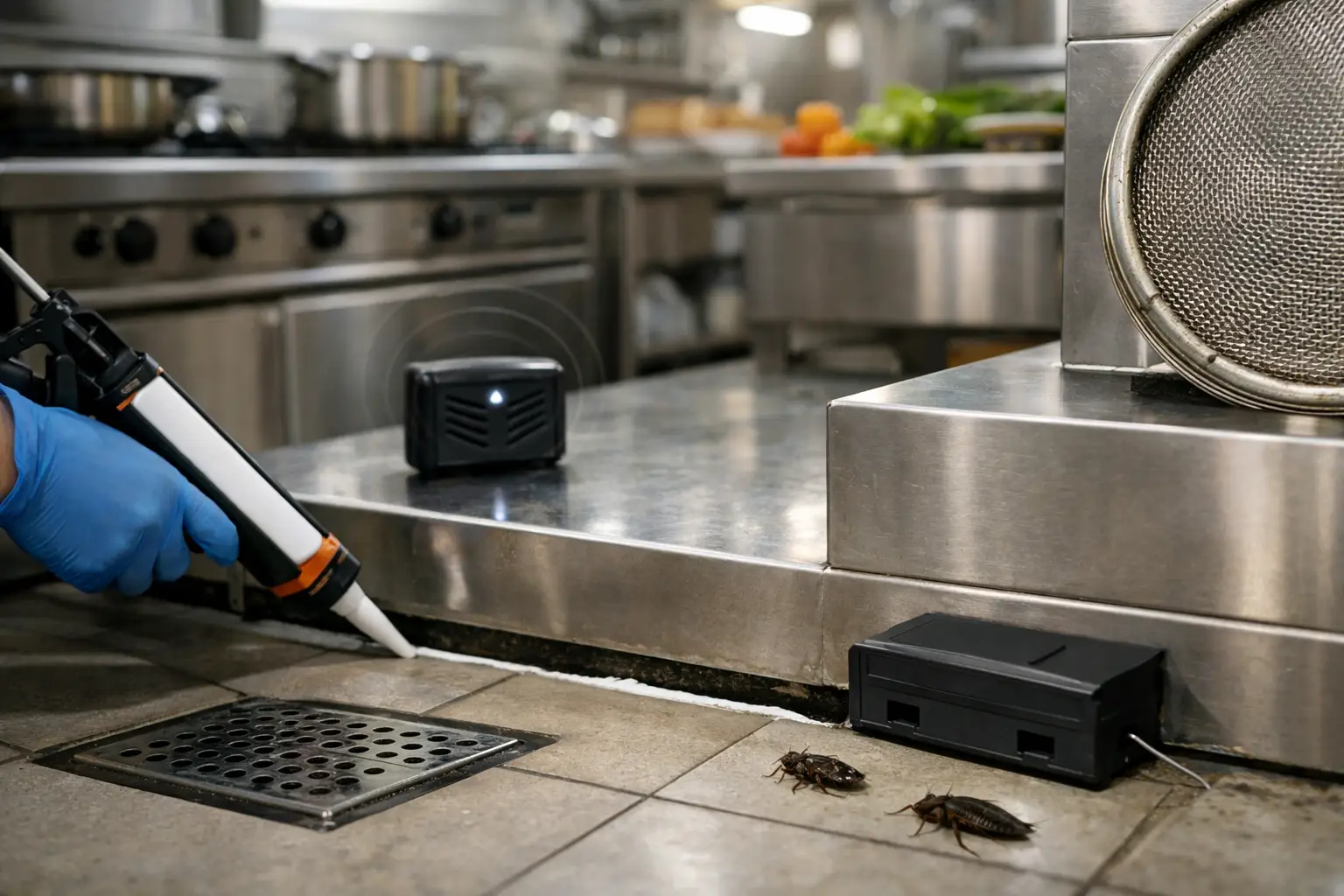
A single gap under a back door or a forgotten floor drain is often all it takes. In a busy food business, pests do not need much time, space, or encouragement. That is why pest proofing commercial kitchens is not a one-off task for inspection week. It is part of keeping your premises clean, compliant, and open for business.
For restaurant owners, catering managers, landlords, and facilities teams, the real issue is rarely just the sight of a mouse or cockroach. It is the disruption that follows – damaged stock, failed audits, staff concern, customer complaints, and urgent closures that can quickly become expensive. Prevention is always more manageable than dealing with an active infestation in the middle of service.
Why pest proofing commercial kitchens matters
Commercial kitchens naturally create the conditions pests look for. There is heat, moisture, food waste, hidden voids, equipment that is hard to move, and deliveries coming in throughout the day. Even well-run kitchens can develop weak points if maintenance slips or cleaning routines leave inaccessible areas untouched.
Rodents, cockroaches, flies, stored product insects and ants are the usual problem species in kitchen environments. Each brings a slightly different risk. Rodents can gnaw packaging, wiring, and pipework. Cockroaches spread contamination quickly and hide in tight, warm spaces close to motors and appliances. Flies are drawn to food preparation and waste areas. Stored product pests are often introduced through dry goods and then spread quietly through stock rooms.
The challenge is that pests are good at staying unnoticed until numbers build. By the time staff see obvious signs, the issue may already be established behind units, beneath flooring edges, inside wall voids, or around drainage points.
Pest proofing commercial kitchens starts with access points
Most infestations begin with access. If pests cannot get in, nesting and feeding become far less likely. This sounds simple, but in commercial kitchens entry points are often created by daily use and general wear.
External doors are a common starting point. A door that does not sit flush to the floor can be enough for mice. Loading entrances and rear exits are especially vulnerable because they are used frequently and may be left open during deliveries. Fitting proper door sweeps, repairing damaged thresholds, and making sure doors close firmly can make a major difference.
Pipe penetrations also need attention. Small gaps around gas, water, and waste pipes are often overlooked because they sit behind equipment or under sinks. These spaces should be sealed with suitable materials that pests cannot easily chew through. The same goes for cable entry points, ventilation gaps, damaged wall sections, and broken air bricks where relevant.
Windows, vents, and service hatches also deserve checking. Flying insects are a different problem from rodents, so proofing has to match the pest pressure. Mesh screens can help, but only if they are correctly fitted and kept in good condition. A torn screen or warped frame stops being protection very quickly.
Hygiene alone is not enough, but it still matters
A very clean kitchen can still get pests if the building has structural weaknesses. At the same time, poor hygiene gives pests every reason to stay once they get in. The most effective approach combines proofing, cleaning, storage control, and monitoring.
Grease build-up behind cook lines, food debris beneath fridges, and standing water under sinks are all high-risk conditions. Staff usually clean visible surfaces well, but pests rely on the places people cannot see during a quick end-of-shift tidy. Deep cleaning schedules need to cover under and behind fixed equipment, drain covers, skirting edges, and waste storage points.
Waste management is another major factor. Overflowing bins, food residue on lids, and external bin areas left unwashed will attract rodents and flies. Internal bins should be emptied regularly and external waste zones should be kept clean, closed, and positioned sensibly. If rubbish is stored too close to the building, you are effectively inviting pests to your back door.
Storage controls often decide whether pests spread
Dry goods, fresh produce, and packaging materials all create opportunities for pests. Stock should be kept off the floor and away from walls where practical, so inspection and cleaning are easier. If staff have to pull items out to check for droppings, gnaw marks, cast skins, or insect activity, they need enough space to do it properly.
Delivery checks matter more than many businesses realise. Not every pest issue starts inside the premises. Cockroaches, beetles, moths, and rodents can be introduced through incoming goods, damaged packaging, and poorly managed supply chains. A kitchen with strong hygiene standards can still end up with a problem if no one checks what is arriving at the back entrance.
Rotation also helps. Stock left untouched for long periods increases risk, particularly in dry storage. First-in, first-out systems reduce the chance of older products becoming harbourage or food sources for stored product pests.
High-risk areas that need regular inspection
Some kitchen zones repeatedly cause trouble because they are warm, dark, damp, or disturbed infrequently. These areas should be checked as part of a routine, not just when a problem is suspected.
Floor drains are a common example, especially where there is organic build-up or poor maintenance. They can attract flies and support breeding activity if cleaning is inconsistent. Voids behind dishwashers, refrigeration motors, under shelving, ceiling spaces, and boxing around pipework are also worth close attention.
Front-of-house should not be ignored either. Pest activity in a commercial kitchen often spreads into dining areas, bar spaces, washrooms, and storage cupboards. If one part of the building is vulnerable, the rest of the site can follow.
Pest proofing commercial kitchens is also about staff habits
Even good physical proofing will be undermined if day-to-day routines create openings. Doors propped open for convenience, food left uncovered during quiet periods, mop buckets not emptied, and minor leaks left unreported all increase the chance of pest activity.
Staff do not need specialist training to support prevention, but they do need clear expectations. They should know what signs to report, who to tell, and why speed matters. A few droppings in a corner, a strange odour near storage, or repeated fly activity around one drain can be early warnings that save a much bigger intervention later.
The best systems are practical. If reporting is too complicated, people ignore small signs. If cleaning tasks are vague, problem areas get missed. Clear responsibilities, realistic schedules, and regular checks work better than a long policy document no one reads.
When prevention needs professional support
There is a point where internal checks are not enough. If you have recurring sightings, unexplained contamination, signs of gnawing, insect activity around equipment, or repeated audit concerns, it is time for a professional inspection. The goal is not just to treat what is visible. It is to find the reason pests are gaining access and remove the conditions allowing them to remain.
That may involve identifying hidden entry points, recommending repairs, improving drain treatment, adjusting waste arrangements, or setting up monitoring in high-risk areas. In London commercial properties, especially older buildings and mixed-use sites, pest pressure can be more complex than it first appears. Shared walls, rear service alleys, neighbouring food businesses, and ageing infrastructure all affect the level of risk.
A responsive pest control partner should be able to assess the site quickly, explain the issue clearly, and put practical prevention measures in place without disrupting operations more than necessary. For businesses with little room for downtime, speed and clarity matter just as much as treatment.
What good kitchen proofing looks like in practice
Good proofing is not flashy. It is a kitchen where doors shut properly, drains are maintained, stock is checked, waste is controlled, gaps are sealed, and early warning signs are acted on straight away. It is also a site where management understands that prevention is part of daily operations, not an occasional extra.
There is no single fix that covers every kitchen. A takeaway unit with heavy late-night deliveries has different risks from a school kitchen or a hotel food preparation area. The right approach depends on layout, building condition, menu, trading hours, and how waste and stock move through the premises.
If you want pest issues to stay rare, small, and manageable, the best time to act is before there is something obvious to see. A kitchen that is properly protected gives staff more confidence, keeps standards stronger, and reduces the chance of urgent problems landing at the worst possible moment.