
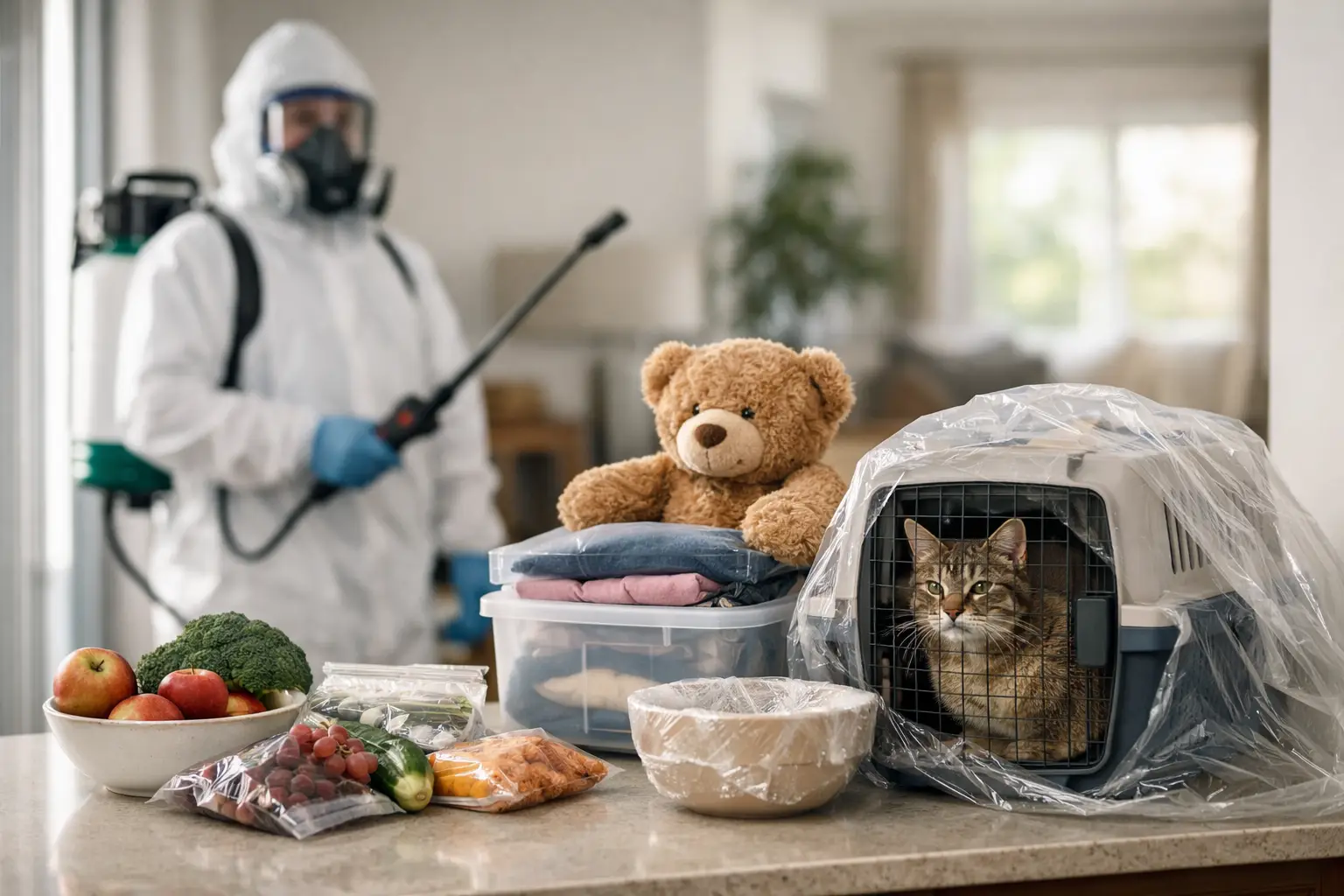
If you have a fumigation appointment booked, the work starts before the technician arrives. Knowing how to prepare for fumigation can make the treatment safer, more effective, and far less stressful on the day. A few practical steps now can also reduce the chance of pests surviving in missed areas or returning soon after.
Preparation depends on the pest, the property, and the treatment method. A small flat being treated for bed bugs will not need the same level of preparation as a larger property with a serious cockroach or stored product pest issue. That said, there are some common steps that apply in most cases, and your pest control provider should always confirm the exact instructions for your situation.
Why proper preparation matters
Fumigation and other intensive pest treatments are designed to reach pests where they hide, breed, and travel. If rooms are cluttered, cupboards are overfilled, or access is blocked, treatment may not reach key harbourage areas. That can reduce results and make follow-up visits more likely.
There is also a safety side to preparation. Food, utensils, pets, plants, and personal items may need to be removed, sealed, or protected depending on the product being used. Clear preparation helps you avoid unnecessary contamination concerns and makes re-entry to the property more straightforward.
How to prepare for fumigation before the visit
Start by reading every instruction you have been given. If anything is unclear, ask before the appointment rather than making assumptions. Different treatments have different requirements, and one of the most common problems is people preparing for the wrong type of service.
In most cases, you should begin with decluttering. Remove loose items from floors, under beds, and from treatment areas so the technician can inspect and treat properly. Clutter gives pests extra hiding places, especially bed bugs, fleas, and cockroaches, so reducing it is not just about access. It can improve the outcome.
You should also plan for time out of the property if advised. Some treatments require you, your family, your staff, or your tenants to leave for a set period. If you are arranging treatment for a commercial premises, this may mean adjusting opening hours or staff access in advance.
Remove or protect food and kitchen items
If the treatment affects kitchen areas, food preparation spaces, or storage cupboards, remove exposed food completely. Open packets, fruit bowls, bread bins, and unsealed dry goods should not be left in place unless your technician has specifically told you otherwise. Sealed tins and unopened containers are usually less of a concern, but it is still sensible to follow the exact site instructions.
Cutlery, crockery, pans, chopping boards, and small appliances on worktops may also need to be stored away or covered. In a home, that usually means emptying key cupboards and clearing surfaces. In a restaurant, café, or commercial kitchen, preparation is often more detailed because hygiene standards and operational risk are higher.
Make sure pets are safely out of the way
Pets should be removed from the treatment area, and in many cases from the property entirely for the advised period. That includes dogs, cats, rabbits, hamsters, birds, and reptiles. Fish tanks need special attention because chemicals and airborne particles can affect aquatic life, even when the tank appears enclosed.
Do not forget pet bedding, feeding bowls, litter trays, toys, and food containers. These often sit close to skirting boards, utility areas, or hidden corners where pest activity is common. Move them out before the visit unless you have been told a specific item should stay for treatment.
Prepare bedrooms and soft furnishings if required
For bed bug or flea work, bedrooms usually need more preparation than any other room. Bedding may need to be stripped, bagged, and washed on a hot cycle. Clothes from affected rooms may also need laundering, especially anything stored under beds or in open piles.
Mattresses might need to be stood upright, beds moved away from walls, and divan drawers emptied. Sofas, chairs, and upholstered items may need to be vacuumed and cleared for access. If you are unsure what needs washing and what simply needs moving, ask before bagging up the entire room. Over-preparing can be almost as inconvenient as under-preparing.
Cleaning and laundry – what helps and what does not
A light clean can help, but deep cleaning immediately before treatment is not always a good idea. For example, vacuuming around skirting boards, bed frames, or under furniture can remove dust, debris, and some pest material, which may help. But washing every surface with strong products just before treatment can interfere with residual insecticides if they are being applied.
Laundry is often important, especially for bed bugs, fleas, and fabric-associated pests. Wash and dry items at the temperature advised, then seal them in clean bags until the treatment is complete. Avoid putting freshly cleaned items back into untreated or infested areas too soon.
If you are dealing with rodents rather than insects, preparation may focus less on laundry and more on access, proofing, and hygiene. In that case, the technician may ask you to clear under sinks, behind appliances, or around storage areas so entry points and signs of activity are easier to inspect.
Access matters more than most people expect
One of the biggest reasons treatment takes longer than planned is poor access. Heavy furniture pushed tightly against walls, packed cupboards, locked lofts, or blocked utility rooms can all slow the process down. If certain areas are suspected to have pest activity, they need to be reachable.
Try to move furniture a short distance from walls where possible, especially beds, sofas, wardrobes, and kitchen appliances. You do not need to empty your property unless instructed, but you do need to make likely hiding places accessible. In offices and commercial sites, make sure plant rooms, storage spaces, suspended ceilings, and service cupboards can be opened without delay.
Tell your technician about vulnerable people and site conditions
If anyone in the property is pregnant, elderly, has respiratory concerns, or has sensitivities to chemicals, mention this in advance. The same applies if there are babies, people with limited mobility, or anyone who may struggle to follow re-entry instructions. A professional pest control team will use that information to plan treatment safely and sensibly.
Commercial customers should also flag any compliance requirements, food safety rules, shared access issues, or restricted zones. In London properties, particularly older buildings and mixed-use sites, there may be practical access issues that affect how treatment is carried out.
What to expect on the day
Before treatment starts, the technician will usually inspect the affected areas, confirm the pest issue, and check that preparation has been completed properly. If something important has been missed, they may need to adjust the treatment plan or postpone part of the visit. That is frustrating for everyone, so it is worth preparing carefully the first time.
You may be asked to leave the property for a few hours or longer depending on the method used. Make sure you know when it is safe to return and whether windows should remain closed or opened afterwards. Re-entry times are not guesswork. They are part of the safety process.
If you manage tenants, commercial premises, or multiple units, communicate clearly with everyone affected. Confusion about timing, access, and post-treatment restrictions often causes more disruption than the treatment itself.
Aftercare is part of how to prepare for fumigation success
Preparation does not end when the treatment begins. Good aftercare supports the result. Follow all instructions about cleaning, ventilation, mattress encasements, monitoring traps, laundry handling, and follow-up visits. If you clean too aggressively too soon, you may remove products that were meant to keep working.
You should also keep an eye on activity levels without expecting instant perfection. Some pests, especially bed bugs, fleas, and cockroaches, may remain visible for a short time after treatment. That does not always mean the service has failed. It can be part of the process, particularly where eggs hatch later or hidden insects are flushed out.
If you are unsure whether what you are seeing is normal, ask. A dependable pest control company will explain what to expect, what warning signs matter, and whether a second visit is part of the plan.
Common preparation mistakes to avoid
The main mistakes are simple. People leave clutter in place, forget about pet items, return too early, or wash treated areas too soon. Others bag laundry correctly but then put it back into the same untreated room, which can undo the effort.
Another common issue is not mentioning the full extent of the problem. If pests are active in more than one room, or across adjoining flats or business units, partial information can lead to partial treatment. Being upfront helps the technician treat the issue properly from the start.
For urgent infestations, especially in busy homes or trading premises, it helps to work with a company that gives clear preparation guidance before the visit. Golden Pest Control handles both residential and commercial pest issues with that practical, step-by-step approach, which makes fast treatment easier to manage when time is tight.
The best preparation is not about doing everything. It is about doing the right things for your pest problem, your property, and the treatment being used. If you are not sure, ask for exact instructions and follow them closely. A well-prepared property gives the treatment the best chance to work – and gives you the best chance of getting back to normal quickly.