
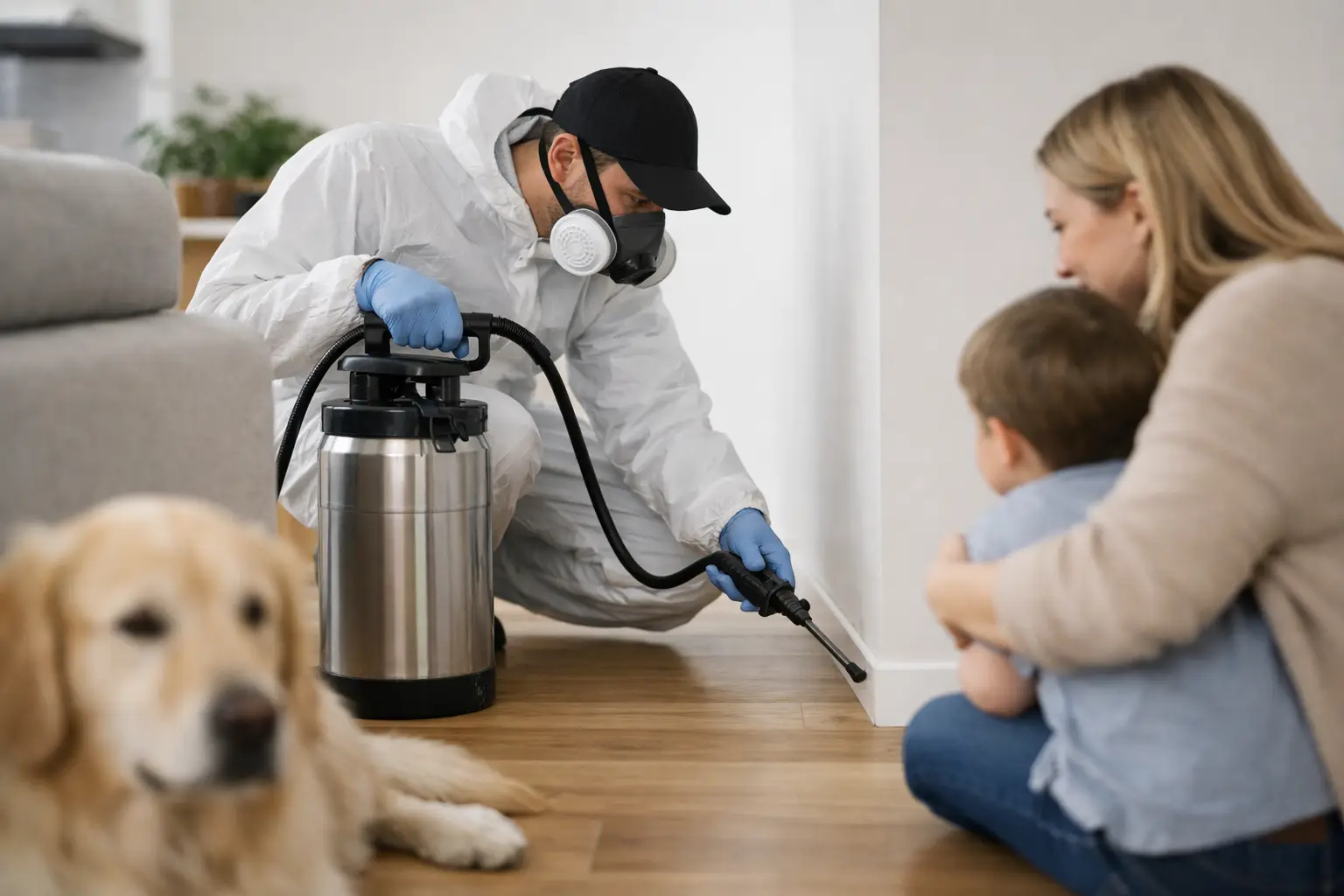
A rat under the kitchen units, bed bugs in a bedroom or wasps near a loft hatch can make any property feel unsafe very quickly. So, are pest control treatments safe? When the treatment is selected for the specific pest, applied correctly and followed by clear aftercare guidance, professional pest control is designed to manage the infestation while protecting the people, pets and property around it.
The key is not simply using a product. It is understanding where pests are active, how they are entering, who uses the space, and whether there are particular risks such as young children, pets, allergies or food preparation areas. A quick response matters, but so does a controlled one.
What safe pest control treatment really means
No pest treatment should be described as completely risk-free in every circumstance. Products used to control rodents, insects and other pests are intended to affect living organisms, which is why professional assessment, measured application and safety instructions are essential.
Safe treatment means using the least disruptive effective method for the problem. That may involve proofing gaps, removing nesting material, monitoring activity, using traps, applying gel bait in inaccessible areas, or placing a targeted residual treatment only where it is needed. In some cases, it means advising that no chemical treatment is required at all.
It also means using products in line with their label directions and relevant UK requirements. A qualified technician should explain what is being used, why it is suitable, what areas are affected and what you need to do before and after the visit. You should never be left guessing whether a room is safe to use or when surfaces can be cleaned.
Are pest control treatments safe for children and pets?
They can be, provided the right precautions are taken. Children and pets are naturally closer to floors, soft furnishings and low-level cupboards, and they may touch or mouth objects without recognising a hazard. That changes how a professional plans the work.
For example, rodent bait should be secured in tamper-resistant bait stations and positioned where children and pets cannot access it. Insect gel treatments for cockroaches or ants are generally applied in small, discreet placements inside cracks, voids or inaccessible areas, rather than spread across open surfaces. Flea or bed bug treatments may require rooms to be vacated for a stated period while treated areas dry and ventilate.
Before treatment, tell the technician if anyone in the property is pregnant, has asthma, severe allergies, a respiratory condition or heightened chemical sensitivities. Mention aquariums, reptiles, birds and free-roaming pets too. Fish tanks normally need particular care, as aquatic life can be sensitive to airborne sprays and contamination. The technician can then adapt the plan and give specific preparation advice.
Do not assume that a treatment is harmless because it has no strong smell. Equally, do not assume that any odour means danger. The important factors are the product, the application method, the treated location and the instructions you are given.
Different pests need different approaches
A reliable pest controller does not treat every infestation in the same way. The safest effective solution depends on the pest and the environment.
Rodent control often combines inspection, proofing advice, trapping or secured baiting. Removing accessible food sources and sealing entry points are as important as treatment, because a bait-only approach can leave the original access problem unresolved.
Bed bug treatment can involve detailed inspection, targeted insecticide application, heat-based methods or a combination of approaches. Residents may need to bag belongings, wash fabrics at suitable temperatures and avoid moving items into untreated rooms. This preparation helps contain the infestation and prevents unnecessary exposure to treatment.
Cockroaches and ants are commonly managed with targeted gels, baits or treatments to harbourage areas. Kitchens may need careful preparation because food, utensils and worktops must be protected. For severe infestations, more than one visit is sometimes necessary, especially where eggs or hidden nesting sites are involved.
Wasps are a different safety issue. Disturbing an active nest can lead to multiple stings, which is particularly serious for anyone with a known allergy. Trying to block a nest entrance or spray it from close range is not a safe substitute for professional control.
The steps that make treatment safer
Safety begins before the product is applied. A proper inspection identifies the pest, the level of activity and the likely source. Misidentification can lead to wasted treatment, continued infestation and avoidable disruption.
You should receive clear instructions before a visit. These may include clearing cupboard space, covering food, removing pet bowls, washing bedding, vacuuming, keeping children away from a room or leaving the property for a set time. Follow them closely, even if the task feels minor. Preparation is part of the treatment, not an optional extra.
Afterwards, do not clean treated surfaces sooner than advised. Some treatments need time to remain active, while others require wiping down before normal use. Keep pets and children away from treated areas until the stated re-entry time has passed. If a technician places traps or bait stations, do not move, open or dispose of them unless instructed.
At Golden Pest Control, the aim is to give households and businesses clear advice at every stage, so urgent pest problems can be dealt with without adding uncertainty about the treatment process.
Why DIY treatments can create extra risk
Shop-bought products can be useful for a very small, clearly identified issue, but they are often used without a full understanding of the infestation. A visible line of ants may be treated while the nest remains untouched. A rodent poison may be placed where a pet can reach it. Repeated aerosol spraying can drive insects deeper into wall voids or spread them to another room.
Mixing products, applying more than the label states or using a product intended for one pest against another can increase risk without improving results. Foggers are a common example: they may leave residue across a room but often do not reach the cracks and harbourages where cockroaches or bed bugs hide.
Professional treatment is not always the answer to every sighting, but it is strongly recommended for recurring rodents, bed bugs, cockroaches, widespread fleas, active wasp nests and any problem affecting a food business, rented property or shared building. In these cases, finding the source and preventing recurrence is usually safer than repeated DIY applications.
Safety in restaurants, offices and rental properties
Commercial premises need a treatment plan that protects staff, customers, stock and operations. In restaurants and food-handling areas, pest control must be carefully timed and applied to avoid contamination. Technicians may recommend sanitation changes, stock rotation, proofing work and monitoring alongside targeted treatment.
Landlords and managing agents should act early when tenants report pest activity. Delays can allow pests to spread between flats, damage the building or create difficult disputes about responsibility. Clear communication about access, preparation and follow-up visits protects everyone involved.
Questions worth asking before treatment
A trustworthy pest controller should be comfortable answering practical safety questions. Ask what pest has been identified, whether treatment is essential, which rooms will be affected, how long people and pets should stay away, and what follow-up is required. If you have a baby, a vulnerable resident, pets or an aquarium, raise this before the appointment rather than on arrival.
You should also ask what signs to expect after treatment. It is normal to see increased insect activity for a short period after some treatments, or to find rodent activity changes as control measures take effect. The technician should explain what is normal, what is not, and when to contact them again.
The safest pest treatment is one that solves the right problem with the right level of intervention. Get clear advice, follow the preparation and aftercare instructions, and give the treatment time to work. That approach protects your home or business while helping keep the pests from coming back.
1 Comment
Mouse Traps vs Bait: Which Works Better? - Golden Pest Control London
September 11, 2026[…] pets, young children, or wildlife nearby. Traps still need care: they should be placed where non-target animals cannot reach them, checked regularly and handled […]