
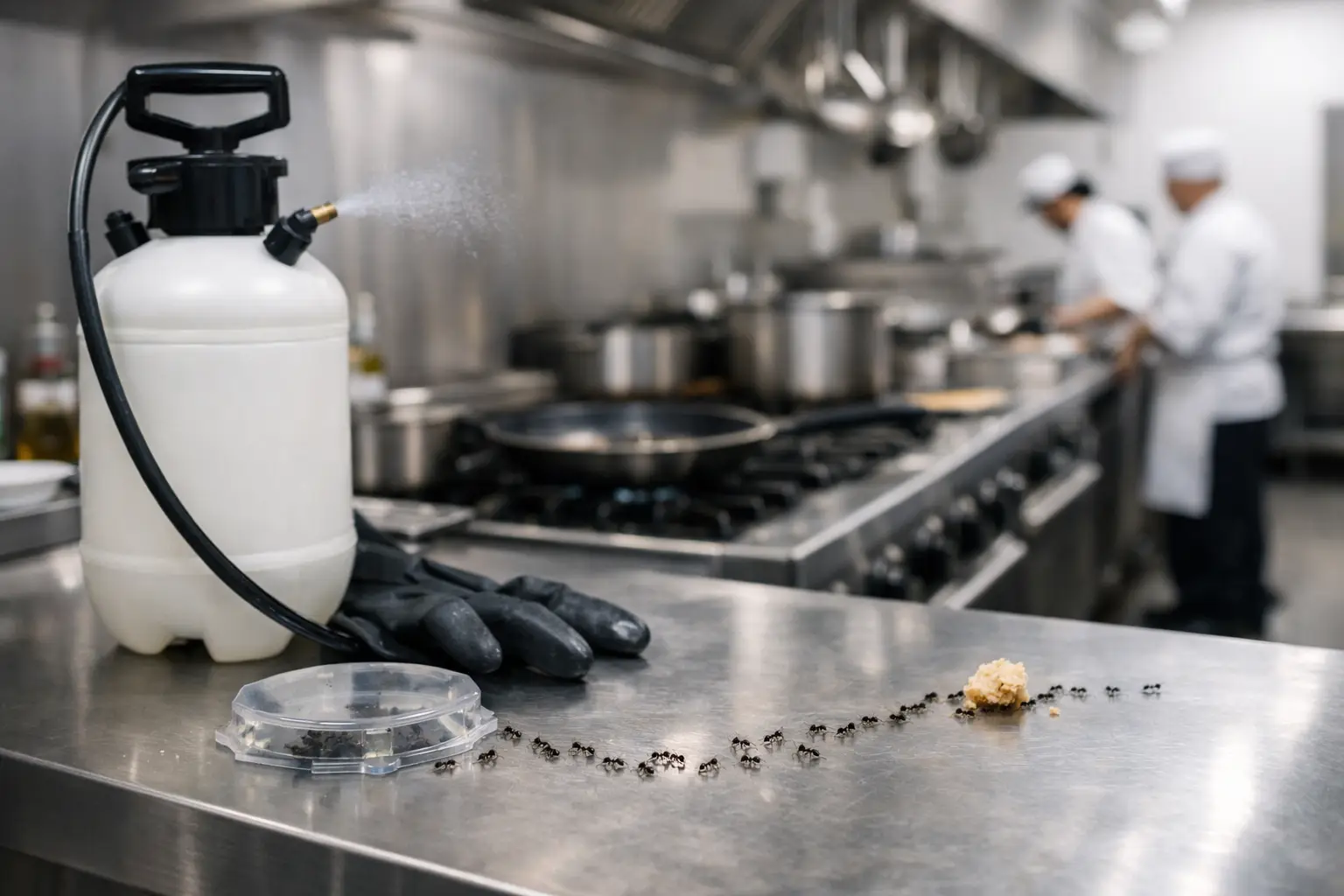
A trail of ants beside the pastry station or dry-store shelving is not a minor cleaning issue. In a working food premises, it can quickly become a hygiene concern, disrupt service and raise difficult questions during an inspection. Effective ant control for commercial kitchens starts with finding out why the ants are entering, where they are travelling and what is allowing the colony to keep returning.
Ants are persistent foragers. Once a worker ant finds sugar, grease, crumbs, moisture or an easy route indoors, it leaves a scent trail for others to follow. Wiping away the visible insects may improve appearances for an hour or two, but it rarely deals with the source. A professional response combines careful inspection, targeted treatment and practical prevention that fits around the demands of a commercial kitchen.
Why ants are a serious kitchen problem
Commercial kitchens offer exactly what ants need: regular food sources, warmth, water and sheltered gaps around pipework, floors, walls and equipment. They may appear around sinks, dishwasher areas, waste storage, beverage stations, refrigerators or under heavy appliances where cleaning access is limited.
The concern is not simply the number of ants on view. Ants can travel through drains, external ground areas, refuse points and wall voids before crossing food-preparation surfaces or storage areas. That movement creates an avoidable contamination risk. For restaurants, cafés, caterers, hotels and care facilities, even a small recurring problem can affect staff confidence and the customer experience.
It also takes time away from the team. Staff should be focused on safe food preparation and service, not repeatedly chasing trails with supermarket sprays that may be unsuitable for a food environment or simply push the problem elsewhere.
Ant control for commercial kitchens begins with inspection
The right treatment depends on the ant species, the size of the activity and the layout of the premises. A qualified technician will look beyond the obvious trail to identify entry points, feeding routes and likely nesting areas. In some cases, the nest is outdoors near paving, bins or building foundations. In others, it may be within a wall void, beneath flooring or close to a warm service duct.
Inspection should include the kitchen, dry storage, staff areas, wash-up zones, waste arrangements and accessible external areas. A good assessment also considers the operation of the business. A bakery with open ingredients has different risk points from a pub kitchen, central production unit or school canteen.
This is why a one-size-fits-all treatment is rarely the best answer. The goal is to interrupt the colony, not just remove the ants currently visible on the worktop.
Signs that need prompt attention
A single ant may have wandered in, particularly during warmer weather. Repeated activity is different. Take action if you see a defined trail, ants returning to the same cupboard or appliance area, activity around food packaging, or a sudden increase after cleaning or rainfall.
Tiny piles of disturbed material near cracks can point to nesting activity, although this is not always visible indoors. Winged ants may also indicate that a colony is established nearby. Do not wait for a large infestation before arranging an inspection. Early treatment is usually simpler, less disruptive and easier to manage around trading hours.
What a professional treatment plan should include
Safe treatment in a commercial kitchen is about control and precision. Before any product is used, food, utensils and preparation surfaces must be protected in line with the technician’s instructions. Treatments should be selected and applied only where they are needed, with clear guidance on any preparation, access restrictions and follow-up steps.
Bait-based treatments are often effective because foraging ants carry the bait back to the nest, helping to affect the wider colony. However, placement matters. Baits must be positioned where ants can access them while remaining protected from food, cleaning routines and unauthorised handling. In other situations, targeted application to entry points, cracks or external nesting sites may be appropriate.
A treatment plan may involve more than one visit. Ant colonies do not always disappear immediately, particularly when there are multiple nesting points or a large external population. Follow-up allows the technician to assess results, adjust the approach if necessary and make sure fresh activity is not being mistaken for treatment failure.
For high-pressure businesses, timing matters too. Treatment should be planned to minimise disruption to preparation and service. Golden Pest Control provides responsive support for London commercial premises, including urgent pest issues where quick, clear action is required.
Prevention that keeps ants from returning
Treatment resolves the current issue, but everyday kitchen controls reduce the chance of another trail forming. Prevention does not require perfection. It requires consistency in the areas ants exploit most.
Keep food in sealed, sound containers and deal with spills promptly, especially syrup, sugar, fruit juice, grease and residue around drinks equipment. Sweep and clean beneath movable equipment where possible, and make sure overnight cleaning includes edges, corners and gaps behind units. Cardboard deliveries should not be allowed to build up, as they can provide both shelter and a route for insects.
Waste control is equally important. Internal bins should be lined, closed and emptied regularly, while external refuse areas need to be kept clean and positioned away from accessible doors where practical. Leaking bin bags, overflowing skips and food debris around collection points can draw ants towards the building.
Moisture is another common factor. Repair dripping taps, investigate pipe leaks and avoid leaving standing water around sinks, floor drains or dishwasher areas. Ants can survive on surprisingly small amounts of food and water, so small maintenance faults can make a real difference.
Finally, look at access. Seal gaps around pipes, cable routes, door frames and damaged skirting once activity has been assessed. Door sweeps and well-maintained thresholds can help, but sealing should not be rushed before a technician has traced the likely route. Blocking one gap without treating the colony may lead ants to use another.
What kitchen staff should and should not do
Staff are often the first people to notice a pattern, so clear reporting is useful. Ask the team to note the location, time of day and direction of travel when ants are seen. A quick photograph can also help show whether activity is increasing between visits.
Avoid spraying visible trails with household insecticides in food-handling areas. These products can scatter ants, interfere with bait uptake and create unnecessary chemical-use concerns. Similarly, do not pour chemicals into drains or use boiling water near electrical equipment, flooring or pipework. Cleaning the trail with an appropriate food-safe method is sensible, but it should sit alongside professional treatment rather than replace it.
If ants are found near exposed food or a preparation surface, remove and dispose of any potentially affected food according to your internal food-safety procedure, clean and sanitise the area, then report the issue immediately. Managers should record the incident in the site’s pest-control or hygiene log, including action taken and any contractor visit.
When an ant issue needs urgent support
Some situations cannot wait for the next scheduled service. Repeated trails during operating hours, ants in food storage, activity around preparation areas, or a sudden increase in numbers all warrant prompt professional attention. This is especially true where the premises has an upcoming inspection, event or busy trading period.
A fast response does not mean cutting corners. It means assessing the risk quickly, protecting food areas properly and putting a controlled plan in place. Your technician should explain what has been found, what treatment is being used, what your team needs to do and when you can expect a review.
A clean-looking kitchen can still have a hidden access route behind a unit or beneath a floor. Acting at the first repeat sighting gives you the best chance of protecting your food standards, your service and the reputation your business has worked hard to build.