
If you switch on the kitchen light late at night and see something small dart behind the cupboards, do not ignore it. One of the clearest signs of cockroach infestation is sudden movement in dark, warm areas, especially when the property has been quiet for hours. Roaches are built to stay hidden, so by the time you notice one in the open, there is often more activity out of sight.
For homes, rented properties and commercial premises alike, early action matters. Cockroaches spread bacteria, contaminate food preparation areas and can quickly turn a minor issue into a persistent infestation. The challenge is that the warning signs are often subtle at first, particularly in busy London properties where heat, plumbing voids and shared walls give pests plenty of places to travel.
The most common signs of cockroach infestation
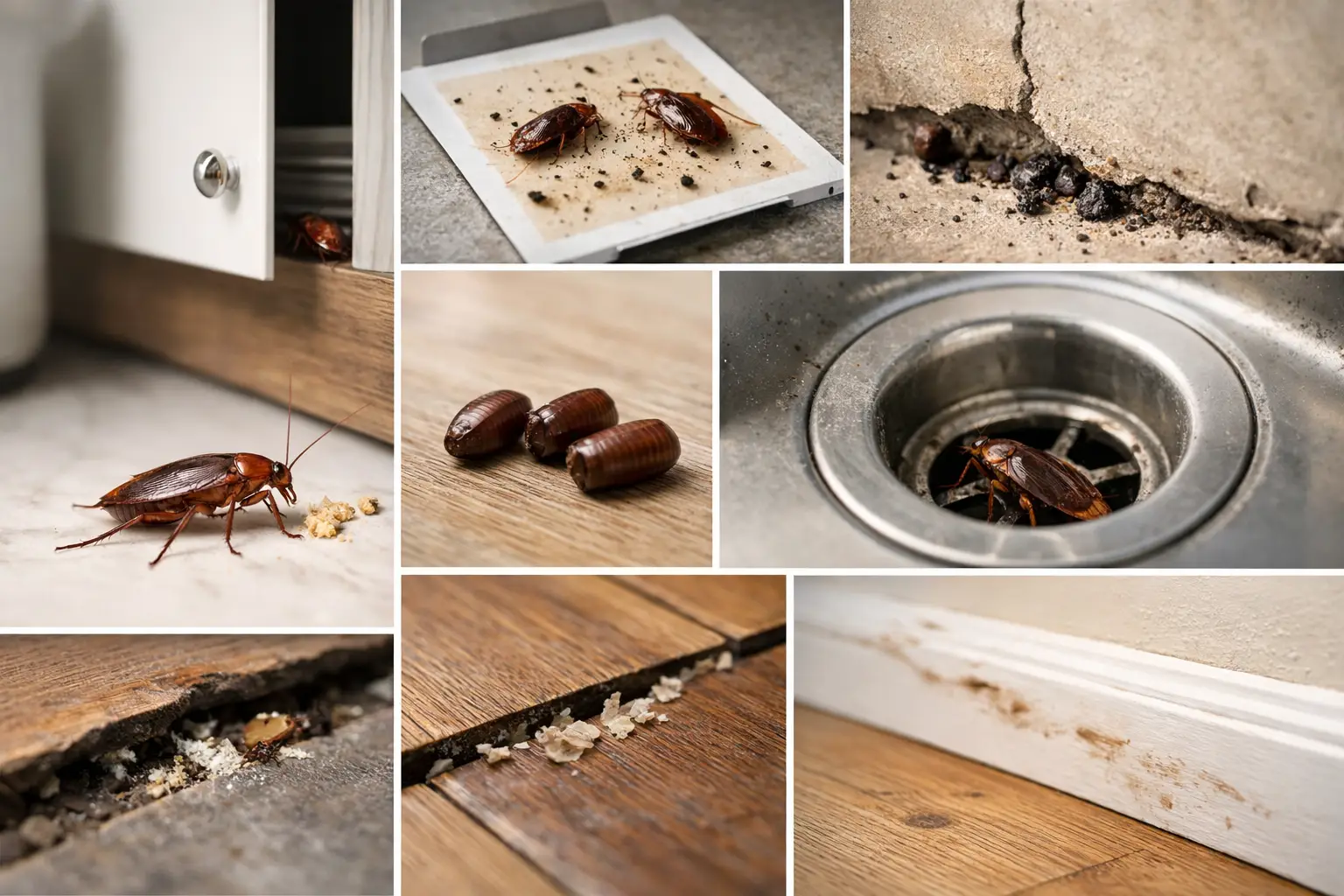
The first sign many people notice is a live cockroach. That may sound obvious, but where and when you see it matters. Roaches are nocturnal, so seeing one during the day can suggest a larger infestation or pressure in their hiding spots. If they are being forced out in daylight, numbers may already be building behind appliances, inside cupboards or within wall gaps.
Droppings are another strong indicator. Small cockroach species often leave marks that resemble black pepper, coffee grounds or tiny dark specks. Larger roaches leave more cylindrical droppings. These are commonly found along skirting boards, inside kitchen cupboards, under sinks, behind fridges and near bin storage areas. In commercial settings, droppings may also appear behind counters, beneath equipment and in stock rooms.
An unpleasant, musty smell can also point to activity. A heavier infestation tends to produce a stale, oily odour that lingers in enclosed spaces. People sometimes mistake this for general dampness or poor ventilation, especially in basements, service corridors or older kitchens. If the smell persists after cleaning, it is worth investigating further.
Egg cases are another important clue. Cockroaches lay eggs in capsule-like cases called oothecae, which may be brown, reddish-brown or dark in colour. These can be tucked into cracks, under furniture, behind white goods or inside cupboard corners. Finding one egg case is enough to take seriously, because it means breeding may already be underway.
You may also notice smear marks on surfaces. In areas with high moisture, cockroaches can leave irregular brown streaks along walls, skirting boards, worktops and floor edges where they travel regularly. These are easy to overlook during day-to-day cleaning, but they often appear repeatedly in the same routes.
Finally, shed skins can reveal an ongoing problem. As cockroaches grow, they moult and leave behind pale brown or translucent casings. These are often found in hidden harbourage areas, especially near warmth and food sources.
Where cockroaches usually hide
Knowing where to look makes detection much easier. Cockroaches prefer heat, moisture and darkness, which is why kitchens and bathrooms are common starting points. The space behind a fridge is one of the classic hiding spots because it offers warmth, low disturbance and access to crumbs. Under sinks is another high-risk area due to pipework, condensation and clutter.
In flats and shared buildings, they may also move through service ducts, drains, boiler cupboards and wall voids. This is one reason infestations can reappear even when a single unit is kept clean. Cleanliness helps, but it is not the full story. Roaches are opportunistic pests and can survive on tiny food residues, cardboard, grease build-up and water from leaks or condensation.
Commercial premises face a slightly different pattern. Restaurants, cafés, takeaways, offices with kitchenettes and storage areas are all vulnerable, particularly where heat-generating equipment runs for long periods. In these settings, sightings near dishwashers, vending machines, floor drains or electrical equipment should be treated seriously and quickly.
Why early signs are often missed
Cockroaches are good at staying out of view. They flatten their bodies to fit narrow gaps, remain active at night and tend to settle close to food and water without exposing themselves. That means an infestation can develop quietly behind a fitted kitchen, inside wall cavities or beneath flooring before there is any dramatic evidence.
There is also a common assumption that cockroaches only appear in very dirty premises. That is not true. While poor sanitation can make conditions worse, roaches also infest tidy homes, well-run restaurants and professionally managed buildings. A leaking pipe, easy access from neighbouring units or a single carried-in egg case can be enough to start the problem.
Another reason signs are missed is misidentification. Droppings may be confused with general dirt, egg cases with debris, and the odour with damp. If several minor clues appear together, it is usually wiser to assume there is a pest issue than to wait for clearer proof.
When a single sighting means more than a single roach
It depends on the circumstances. An isolated sighting near an open door in summer may not mean a full infestation, particularly in ground-floor premises. But if the sighting is indoors, at night, near food storage or close to warmth and moisture, there is a stronger chance the insect has come from an established harbourage nearby.
Repeated sightings change the picture completely. Two or three sightings over a short period, especially in the same area, usually suggest active movement rather than a one-off entry. The same applies if staff members, tenants or family members notice insects independently. Roaches are secretive by nature, so frequent reports often indicate there are far more than are being seen.
This is also why shop-bought sprays rarely solve the underlying issue. They may kill visible insects, but they do not usually reach nesting areas or egg cases. In some situations, over-the-counter treatment can even scatter the infestation, pushing cockroaches deeper into wall voids or adjacent rooms.
What to do if you notice signs of cockroach infestation
Start by reducing the conditions that help them thrive. Clear food debris, empty bins regularly, store dry goods in sealed containers and deal with leaks or standing water as soon as possible. Check behind appliances, under sinks and inside cupboards for droppings, egg cases or dead insects. If possible, move clutter away from warm, enclosed corners.
At the same time, avoid disturbing suspected hiding places too aggressively. Heavy spraying, pulling units apart without a plan or deep cleaning only one area can make the insects relocate rather than disappear. If the infestation is in a flat, restaurant kitchen or shared commercial building, that movement can spread the problem further.
The safest next step is a professional inspection. A qualified pest controller can identify the species, assess how far the infestation has spread and choose the right treatment for the property. That matters because German cockroaches, for example, behave differently from larger species and often require a more targeted approach.
For urgent situations, speed matters. If cockroaches are being seen in food preparation areas, rental accommodation, staff rooms or customer-facing premises, delays increase both health risks and reputational damage. Golden Pest Control deals with these issues quickly, with treatment plans designed for homes and businesses that need clear answers and fast action.
Signs the problem is getting worse
There are a few warning signs that suggest the infestation is no longer at an early stage. Daytime sightings are one. A strong persistent odour is another. Finding multiple droppings in different rooms, seeing young roaches as well as adults, or discovering egg cases more than once all point to established activity.
For businesses, customer sightings and staff complaints are major red flags. For households, cockroaches appearing in bedrooms, living rooms or hallways usually means the infestation has expanded beyond its original harbourage. At that stage, professional treatment is not just the easier option – it is usually the only realistic one.
If you suspect cockroaches, trust what you are seeing. The signs are often small, but they are rarely meaningless. Acting early protects your property, reduces treatment time and gives you the best chance of stopping the infestation before it spreads. If something does not feel right, it is worth getting it checked properly rather than waiting for the next late-night sighting.