
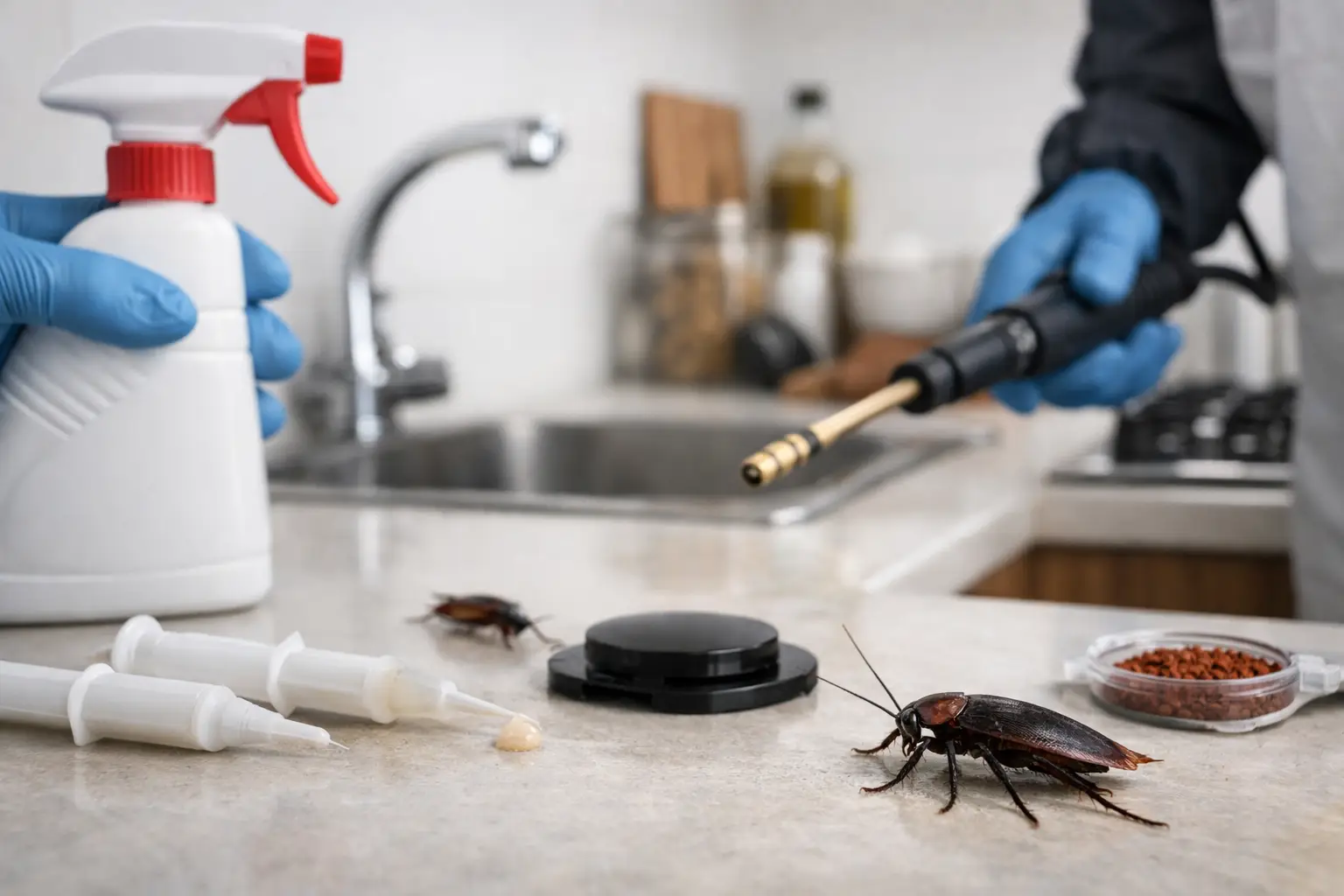
If you switch on the kitchen light and see a cockroach disappear behind the skirting board, you do not have a cleaning problem. You have a pest problem that needs the right response. The best cockroach treatment for kitchens is rarely a single spray or a quick wipe-down. In most cases, the fastest and most reliable result comes from a combined approach: targeted gel bait, careful monitoring, strict hygiene control, and sealing the places roaches use to hide and move.
That matters because kitchens give cockroaches exactly what they need – warmth, moisture, food residue, and plenty of shelter. Once they settle in, they do not stay neatly in one cupboard. They spread behind appliances, into pipe voids, under units and, in some properties, into neighbouring rooms or adjoining flats. A treatment that only tackles the insects you can see will usually miss the source of the infestation.
What is the best cockroach treatment for kitchens?
For most kitchen infestations, the best cockroach treatment for kitchens is professional-grade gel bait applied into harbourage areas, supported by insect growth control where needed and backed up by hygiene improvements and proofing work. Gel works well because cockroaches are foragers. They feed on the bait, return to hiding places, and can affect others through contact and droppings. That gives better reach than a surface spray alone.
Sprays still have a place, but mainly as part of a wider plan. They can help reduce activity quickly in exposed areas, though they are often less effective in hidden harbourages and can sometimes scatter roaches deeper into walls or units if used badly. Foggers and aerosol bombs are a common first purchase, but they rarely solve a kitchen infestation. They may kill a few visible insects while leaving eggs, nymphs, and hidden adults untouched.
The exact treatment depends on the species, the size of the infestation, and how the kitchen is being used. A domestic kitchen in a house will need a different approach from a restaurant prep area or a shared kitchen in rented accommodation.
Why kitchens are so difficult to treat
Cockroaches do not need much to survive. A drip under the sink, crumbs beneath the toaster, grease around a cooker, or cardboard packaging stored in a warm cupboard can be enough to keep them active. In kitchens, the challenge is not just killing the insects. It is removing the conditions that let them recover after treatment.
German cockroaches are the species most often linked to kitchens and food areas. They are small, fast-breeding, and excellent at hiding in cracks around cupboards, hinges, fridge motors, dishwashers, and electrical sockets. Oriental cockroaches are more likely to favour damper areas such as under sinks, floor voids, drains, and basements, but they can still move into kitchen spaces where moisture is present.
This is why one-off DIY attempts often disappoint. If the treatment does not reach the nest sites, and if food and water remain available, the activity usually returns.
The treatments that actually work
Gel bait is usually the strongest starting point. It is placed in small, controlled amounts near known harbourages rather than smeared across open surfaces. In a kitchen, that often means behind kickboards, beneath sinks, near pipe entries, around appliance voids, and inside hinge areas where safe to do so. The aim is to put the bait where roaches travel, while keeping food preparation areas protected.
Monitoring traps are also valuable. They help confirm where activity is highest and whether the treatment is working. This matters more than many people realise. Cockroaches are nocturnal, so visible sightings only tell part of the story. Traps provide a clearer picture of movement and population pressure.
In heavier infestations, insect growth regulators may be added to disrupt development and reduce the chance of the next generation maturing. This is especially useful where there are signs of breeding over a longer period.
Residual insecticide can be used in selected cracks, crevices, and voids, but it should be handled carefully in kitchens. Food safety, surface safety, and the layout of the room all matter. In commercial settings, treatment must also take account of hygiene standards and operational requirements.
What does not work well on its own
A strong-smelling spray from the supermarket can make it feel as though something has been done, but visible knockdown is not the same as control. Roaches spend most of their time hidden. If the product never reaches those spaces, the infestation continues out of sight.
Cleaning alone is not enough either. Good hygiene is essential, but once cockroaches are established, sanitation by itself rarely removes them. Equally, laying down bait without improving hygiene can reduce bait uptake because the insects have too many competing food sources.
Natural remedies, ultrasonic devices, and home mixtures are usually unreliable for established infestations. They may repel activity in one corner while pushing it into another. When the issue is in a kitchen, guesswork tends to prolong the problem.
How to prepare a kitchen before treatment
Preparation makes a real difference. Before treatment, it helps to empty the most affected cupboards, especially under the sink and around food storage. Open food should be sealed or removed, and surfaces should be cleared so harbourages can be inspected properly.
A focused clean is useful, but avoid overdoing it immediately after bait placement. If baits are removed, washed away, or contaminated with strong cleaning products, they become less effective. The better approach is to clean thoroughly before treatment, then follow the technician’s aftercare instructions closely.
Pay particular attention to grease, crumbs, spills, and standing water. Pulling out movable appliances can also reveal hidden activity. Fridges, microwaves, washing machines in kitchen areas, and freestanding cookers are common hotspots.
Preventing the infestation from coming back
Once the active population has been reduced, prevention becomes the priority. In kitchens, that usually means cutting off water, food, and access. Leaking pipework should be repaired quickly. Gaps around pipes, cable entries, and damaged skirting should be sealed. Broken seals around units and worktops can also create excellent harbourages.
Storage habits matter more than many people expect. Cardboard packaging is attractive to cockroaches because it offers shelter and absorbs food residue. Dry goods are better kept in sealed containers. Rubbish should be bagged properly and removed regularly, especially overnight.
In shared buildings, treatment may need a wider view. If cockroaches are moving through service ducts, communal risers, or neighbouring kitchens, one treated room may not be enough. This is often why landlords, managing agents, and business operators need a coordinated response rather than isolated visits.
When DIY is reasonable and when to call a professional
If you have seen one or two cockroaches and can identify a very limited area of activity, a bait-led DIY approach may help at the early stage. The key word is early. You still need to monitor, improve hygiene, and act quickly if sightings continue.
If you are seeing cockroaches in daylight, spotting them repeatedly around appliances, finding droppings in cupboards, or dealing with a food business, professional treatment is the safer option. Daytime sightings often suggest a larger infestation because overcrowding forces roaches out of hiding. In kitchens used by tenants, customers, or staff, speed and discretion matter as much as treatment itself.
A professional service should inspect first, identify the likely species, locate harbourages, explain the treatment clearly, and set out what happens next. The best results usually come from more than one visit, especially where breeding is established. That is not a sign the treatment has failed. It is often the correct way to break the lifecycle properly.
Choosing the best cockroach treatment for kitchens in busy properties
In busy homes and commercial premises, the best cockroach treatment for kitchens is the one that balances effectiveness with safety, hygiene, and follow-up. A treatment may be powerful on paper but unsuitable if it disrupts food preparation, risks contamination, or is applied without proper monitoring.
This is particularly relevant in London properties where kitchens may be compact, heavily used, or connected to older pipe runs and wall voids. Flats above shops, shared houses, takeaways, cafés, and family homes all present slightly different risks. A tailored treatment plan is usually more effective than a generic product-based fix.
For customers who need fast action, that tailored approach is exactly where an experienced pest control team adds value. Companies such as Golden Pest Control deal with these conditions regularly, which means the advice is practical, the treatment is targeted, and the focus stays on getting the kitchen back to a safe, usable standard as quickly as possible.
If cockroaches are active in your kitchen, the best step is not to keep testing products one by one. It is to act early, treat the source properly, and make the space less hospitable to them from that point on.
1 Comment
Restaurant Pest Inspections That Protect Your Kitchen - Golden Pest Control London
September 15, 2026[…] may be particularly vulnerable to rats or mice. A hot, busy takeaway kitchen may provide ideal conditions for cockroaches if grease and moisture build up behind appliances. A venue near shared commercial bins can face […]