
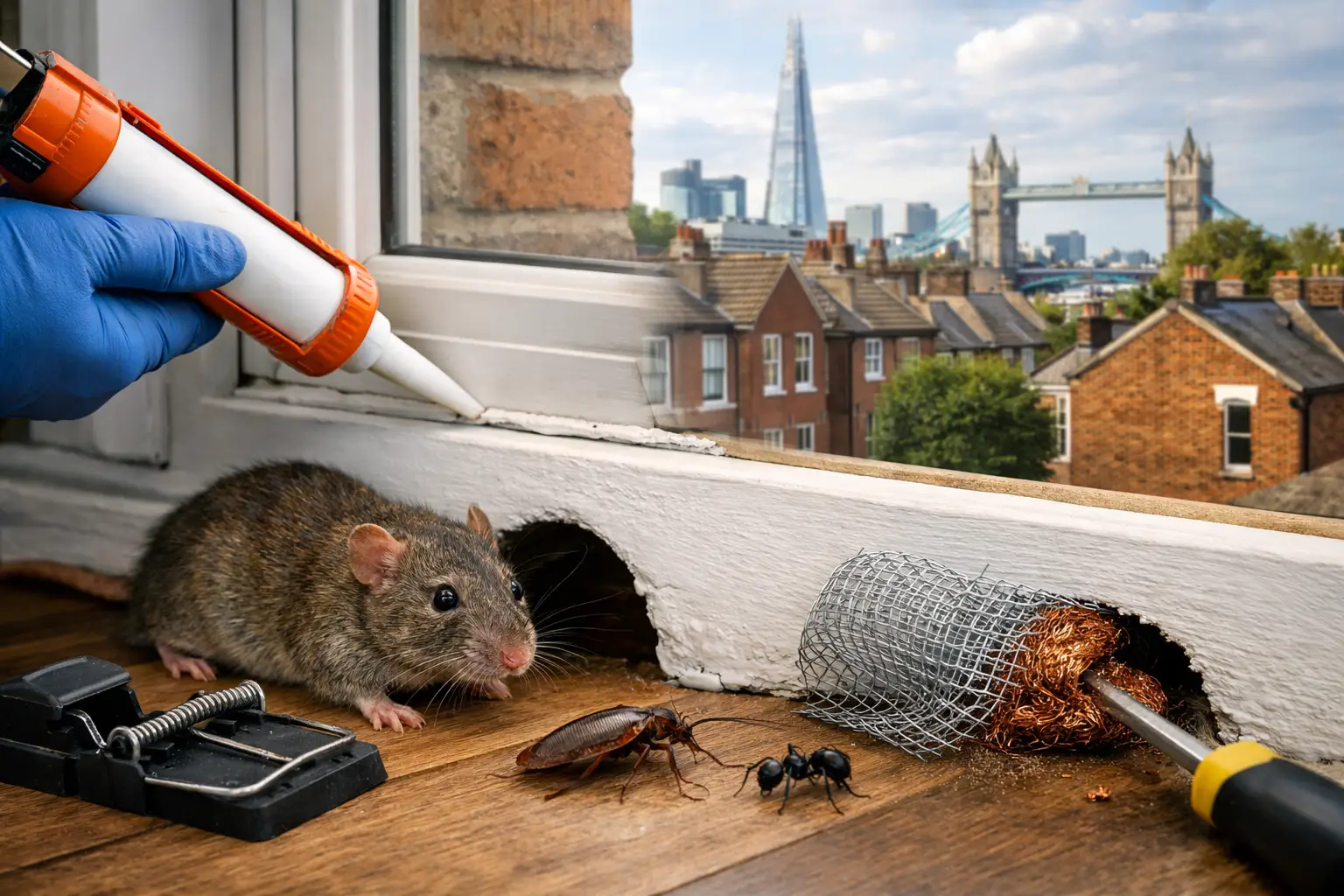
A mouse can enter through a gap no wider than a pencil, while cockroaches, ants and moths need even less invitation. The best pest proofing tips focus on removing the three things pests depend on: access, food and shelter. For homes, flats and business premises across London, a few targeted checks can prevent a minor sighting from becoming a disruptive infestation.
Start with the gaps pests actually use
Pest proofing begins outside and works inward. Walk slowly around the building at ground level, checking where pipes, cables, drains and ventilation ducts pass through walls. Look beneath doors, around window frames, at damaged brickwork and along the join between an extension and the original building. These small openings are common rodent routes, particularly in older properties.
Seal sound, dry gaps with an appropriate exterior-grade sealant. Larger holes around pipes or damaged masonry need a tougher repair, such as mortar or metal mesh, so rodents cannot chew through it. Expanding foam on its own is rarely a reliable answer for rats and mice because they can gnaw it away.
Fit brush strips or door sweeps to exterior doors, storerooms and bin areas where there is visible clearance underneath. Check that air bricks and vents remain protected with suitable fine metal grilles, but never block ventilation completely. Reducing airflow can create damp conditions, which attracts other pests and may damage the property.
Pay attention to shared spaces
In blocks of flats, terraced homes and commercial buildings, pests can travel through shared service voids, suspended ceilings, risers and neighbouring units. Proofing one room may help, but it will not solve a wider access problem. Landlords, managing agents and facilities managers should inspect communal bin stores, plant rooms, loading areas and basement spaces as part of a joined-up prevention plan.
Keep food sealed, stored and cleared away
Rodents and insects are practical rather than picky. Crumbs behind a toaster, pet food left overnight, an unwashed recycling box or a split bag of flour can sustain activity. A clean-looking kitchen can still have enough food debris to support pests if overlooked areas are not cleaned routinely.
Store dry goods in hard, sealed containers rather than original cardboard or thin plastic packaging. Wipe worktops and dining areas after use, sweep beneath appliances where possible and clean spills promptly. Do not forget the less obvious sources: bird seed, pet treats, loose tea, compost caddies and food dropped behind commercial kitchen equipment.
For restaurants, offices and other workplaces, cleaning standards need to continue beyond opening hours. Food waste should be removed regularly, containers should have close-fitting lids, and staff should know not to leave snacks in desk drawers or lockers. A pest problem can affect hygiene, customer confidence and operational continuity, so prevention is part of good premises management.
Make your bins less attractive
Overflowing or poorly managed waste is one of the fastest ways to draw rats, foxes, flies and cockroaches closer to a building. Keep external bins closed and positioned on a firm, cleanable surface. Wash bins when residue builds up, especially during warmer weather, and deal with damaged lids or cracked containers quickly.
Avoid leaving rubbish bags beside bins overnight. If collections are delayed, keep waste as secure as possible and do not allow bags to split. Commercial premises should also check the area behind bins and compactors. Food waste, grease and standing water can collect out of sight and create a recurring pest hotspot.
Remove moisture and shelter
Water is often the missing piece in a pest problem. A leaking pipe beneath the sink, condensation in a bathroom, a blocked gutter or standing water near a property can give rodents and insects a dependable place to drink. Cockroaches in particular are strongly associated with warm, damp areas around plumbing, kitchens and utility spaces.
Repair leaks promptly and dry wet cupboards or flooring thoroughly. Make sure extractor fans are working in kitchens and bathrooms, and report persistent damp to a landlord or property manager rather than covering it up. Outside, clear blocked gutters and make sure water drains away from the building rather than pooling next to walls.
Clutter also provides shelter. Cardboard boxes, unused furniture, dense storage and piles of materials make it harder to spot early signs of pests and easier for them to nest. Keep lofts, garages, cupboards and stock rooms orderly, with stored items raised where practical so floors and wall edges can be inspected.
Manage the garden, patio and perimeter
Outdoor areas can either buffer a property from pests or guide them towards it. Trim back shrubs, climbing plants and tree branches that touch walls, roofs or windows. Rats can use overgrown vegetation as cover, and branches can create an easy route to roof spaces.
Keep firewood, building materials and garden storage away from external walls where possible. Lift stored materials off the ground and avoid creating dark, undisturbed gaps beneath decking or sheds. If you have a compost bin, use a secure model and avoid adding cooked food, meat, dairy or oily leftovers.
Wasps need a slightly different approach. In spring and early summer, check sheds, eaves, rooflines and loft areas for early nest activity. A small developing nest is easier and safer to deal with than a large, active colony. Do not block an entrance hole while wasps are active, as they may find another route into the property.
Know the warning signs before numbers grow
Pest proofing is most effective when backed by quick action. Fresh droppings, gnaw marks, grease smears along skirting boards, chewed packaging, unusual smells and scratching in walls can point to rodent activity. Small dark specks around mattresses, bites after sleeping and shed skins may suggest bed bugs, while cockroaches can leave droppings, egg cases and a persistent musty smell.
Do not rely on a single sign alone. For example, one ant in a kitchen may simply be scouting, but a visible trail usually means a food source or nest route needs attention. Repeated fly activity around drains, or insects appearing from the same crack, deserves closer investigation.
Take clear notes on where and when you see activity. This helps identify whether the issue is linked to waste, plumbing, a structural gap or a particular room. It also gives a pest professional useful information if treatment becomes necessary.
Avoid proofing mistakes that make the problem worse
There is a trade-off between sealing access points and trapping pests inside. If rats or mice are already active in walls, lofts or kitchens, closing every gap immediately may push them deeper into the building or force them into living areas. The right order is usually inspection, targeted control, monitoring and then permanent proofing once activity has reduced.
Avoid scattering poisons or insect sprays without understanding the pest, location and risks. This can be unsafe around children, pets, food preparation areas and wildlife, and it may not reach the source of the problem. Bed bugs, cockroaches and fleas are especially difficult to resolve with random shop-bought treatments because eggs and hidden harbourages are easily missed.
Also resist the temptation to fill every crack indoors without checking its purpose. Some gaps relate to services, drainage or ventilation and need professional assessment. Effective proofing is careful, not rushed.
When professional help is the sensible next step
Call for support when you see daytime rat activity, repeated mouse signs, a wasp nest, bed bug evidence, cockroaches, or pest activity in a food business or communal building. These situations can escalate quickly and often need treatment alongside proofing. A professional inspection identifies the species, likely entry routes and conditions keeping the problem active, then sets out practical steps to stop recurrence.
Golden Pest Control provides rapid, tailored pest management for homes and businesses, including urgent issues that cannot wait for normal working hours. The aim is not simply to remove the pests you can see, but to address the access points and conditions that brought them in.
A well-proofed property is easier to maintain, safer for occupants and far less likely to face a costly surprise. Start with one careful inspection today, and act on any signs before pests have time to settle in.