
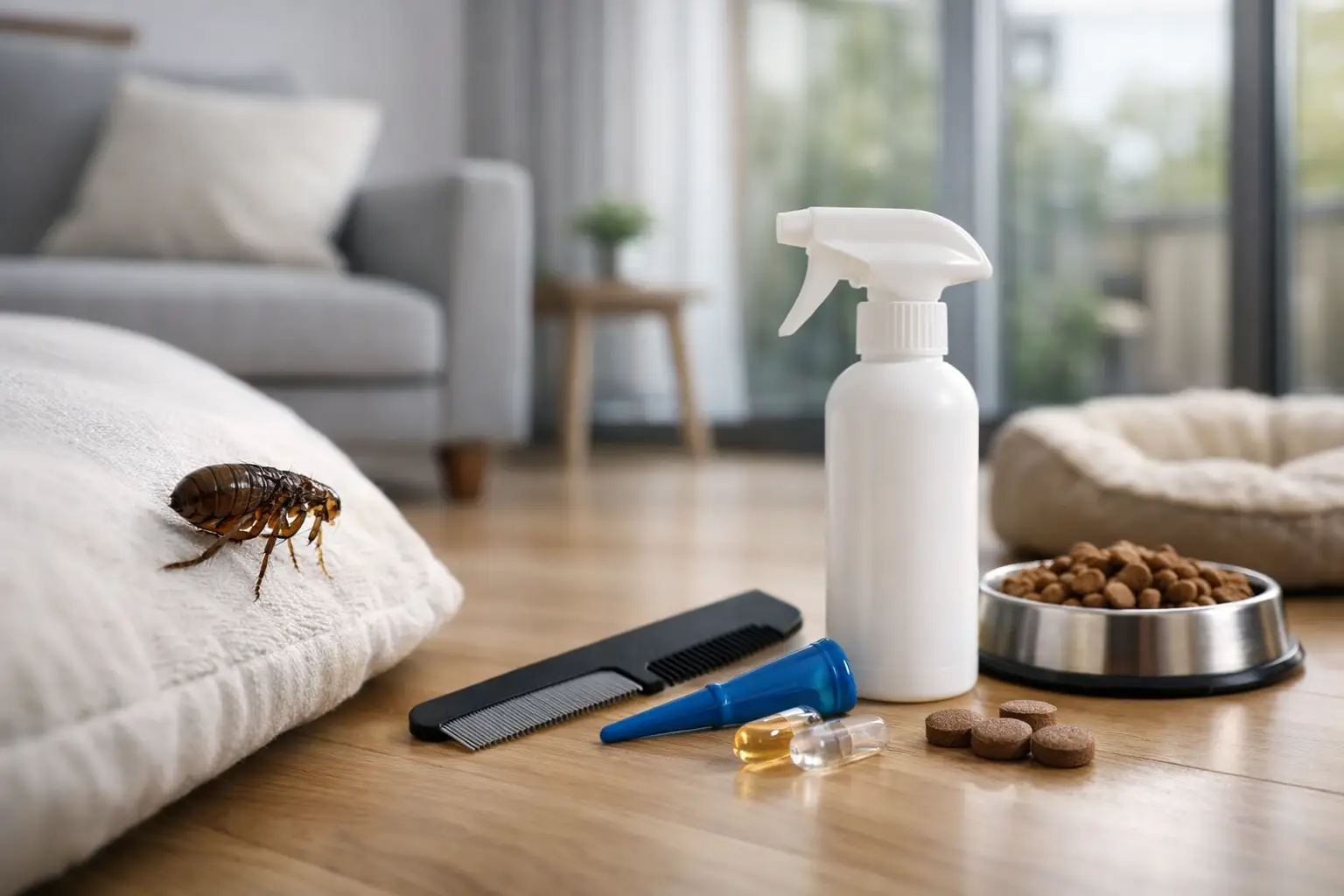
A flea problem in a flat rarely stays confined to the pet’s bed. Eggs can fall into carpet edges, sofa seams and gaps beneath furniture, while adult fleas may keep biting long after you believe the source has gone. This flea treatment for flats guide explains what to do first, what treatment needs to cover and when professional help is the sensible next step.
Confirm that fleas are the problem
Flea bites are often small, itchy red bumps around the ankles, lower legs or waistline. They may appear in clusters, especially after sitting on a sofa or walking across carpet. You might also spot tiny dark insects jumping on rugs, pet bedding or soft furnishings.
However, bites alone do not prove fleas. Bed bugs, mites and skin irritation can look similar. If you have pets, use a flea comb over white paper or a light-coloured towel. Dark specks that turn reddish-brown when damp can be flea dirt, which is digested blood.
A clear diagnosis matters. Treating for the wrong pest wastes time, and a small flea issue can become more established while the real cause is missed.
Why fleas can be difficult to clear from flats
Adult fleas are only part of the infestation. They lay eggs that drop from an animal or person into the home. Those eggs develop into larvae and then pupae, often deep in carpet fibres, under skirting boards or beneath furniture. Pupae are particularly well protected and may emerge later when they detect warmth, movement or carbon dioxide.
That is why bites can appear again after an initial treatment. It does not always mean the treatment has failed. It can mean newly emerged adults are contacting the treated areas. A successful approach must break the life cycle, not simply kill the fleas you can see today.
Flats also bring extra considerations. Fleas can be introduced by a pet, a visiting animal, second-hand furniture, a previous occupant or wildlife near balconies, loft spaces and communal areas. In a block, treating one home may not be enough if the source remains close by.
Flea treatment for flats guide: the first 24 hours
Start by reducing the number of eggs, larvae and adult fleas in the property. Vacuum carpets, rugs, upholstered furniture, cushions, mattress edges and along skirting boards thoroughly. Pay particular attention to the rooms where pets sleep or where bites are most frequent.
Empty the vacuum outside the flat immediately. Seal the contents in a bag before placing them in an external bin. Do not leave the vacuum bag or canister indoors, as collected fleas may escape.
Wash pet bedding, throws, washable cushion covers and clothing left on the floor at the highest temperature the fabric safely allows. A hot wash followed by a hot tumble dry, where suitable, is helpful. If an item cannot be washed, seal it in a bag until it can be properly cleaned or treated.
If you have a cat or dog, arrange flea treatment through a vet or use a product specifically suitable for that animal. Never use a dog flea product on a cat. Some ingredients that are safe for dogs can be extremely dangerous to cats. Every animal in the household usually needs treatment at the same time, even if only one appears to be scratching.
Prepare properly before treatment
Whether you use a household product or book a professional service, preparation affects the result. Fleas hide where people and pets rest, so treatment needs access to these areas.
Move lightweight furniture away from walls where possible and clear floors of toys, bags, clothing and loose items. Vacuum before treatment, but do not shampoo carpets immediately beforehand unless advised. Deep cleaning straight after an insecticide treatment can remove the residual product before it has had time to work.
Tell the technician or product manufacturer about pets, young children, pregnancy, respiratory conditions and fish tanks. Fish and reptiles can be especially sensitive to insecticides. Tanks often need to be covered and filtration arrangements may need specific attention, so follow the preparation instructions you are given.
You should also identify the likely source. If a pet has fleas, treating the home without treating the pet will not solve the problem. If foxes, squirrels or feral cats are nesting close to the building, property management may need to address access points or nesting areas. In rented accommodation, report the issue promptly and keep a record of when bites began, what you have found and the action already taken.
Is DIY flea control enough?
For a very recent, localised problem, careful vacuuming, laundering and suitable pet treatment can sometimes be enough. This is more likely when there are no ongoing bites, no heavy carpeted areas and the source has been removed quickly.
The trade-off is that shop-bought sprays are easy to apply unevenly. Foggers are also commonly misunderstood. They may kill exposed insects but often do not reach flea larvae and pupae hidden low in carpets, under furniture or in cracks. Using more product than directed does not make treatment safer or more effective.
Professional treatment is usually the better option when bites continue for more than a week, several rooms are affected, there is no obvious pet source, or the flat has been vacant and fleas are emerging when people enter. It is also advisable for landlords, letting agents and facilities managers who need a clear treatment plan and dependable documentation.
What a professional flea treatment should involve
A professional service should begin with an inspection and practical questions about pets, bite locations, recent occupants and possible wildlife activity. The technician can assess whether fleas are the likely pest and whether there are conditions that could support reinfestation.
Treatment normally focuses on carpets, rugs, upholstered furniture, skirting edges, pet resting areas and cracks around the floor. The product and method should be selected for the property, occupancy and level of activity. A residual insecticide may be combined with an insect growth regulator, which helps prevent immature fleas from developing into breeding adults.
You may need to leave the flat for a stated period while treatment dries and ventilates. Follow the re-entry advice exactly. Once back inside, avoid intensive vacuuming or washing treated floor edges for the period recommended by the technician. This gives the residual treatment time to affect fleas that emerge later.
A follow-up visit is sometimes needed because of the flea life cycle. That is not a sign of poor service. It is often the safest and most effective way to target newly emerged adults before they can lay more eggs.
Aftercare: expect activity before it stops
It is common to notice flea activity for a short period after treatment, particularly where pupae were already present. Continue to vacuum regularly after the advised waiting period. The movement and vibration can encourage pupae to emerge, bringing adult fleas into contact with treated surfaces.
Keep pets on their prescribed flea control programme. Do not stop because scratching has eased for a few days. Ask your vet how long the product should be continued and whether other animals that visit the flat need attention.
Watch for patterns rather than reacting to a single bite. If new bites are increasing, you see live jumping fleas after the expected treatment window, or a pet remains heavily affected, contact the treatment provider. The source may be ongoing, or another pest may need to be ruled out.
Responsibilities in rented flats
Responsibility depends on the tenancy agreement, the cause of the infestation and the condition of the property. A tenant may be responsible where fleas were brought in by their pet or belongings. A landlord may need to act where the issue is linked to disrepair, a previous infestation, wildlife access or conditions affecting multiple flats.
The practical priority is to act quickly rather than argue while the problem grows. Notify the landlord or managing agent in writing, share photographs or evidence where available, and ask how they will coordinate any wider inspection. If communal areas, voids or neighbouring properties are involved, a joined-up response protects everyone better than separate treatments.
Preventing fleas from returning
Regular vacuuming and washing pet bedding are simple but effective habits. Keep pets on vet-approved preventative treatment, particularly if they go outdoors or mix with other animals. Inspect second-hand soft furnishings before bringing them into the flat, and do not allow wildlife to nest near vents, balconies or accessible storage areas.
For London tenants, landlords and property managers, speed makes a real difference. Early treatment is usually less disruptive than waiting until fleas have spread through every carpeted room. If the bites are continuing or you need a safe, coordinated response, Golden Pest Control can assess the problem and provide a tailored treatment plan. The sooner the source and life cycle are addressed together, the sooner your flat can feel comfortable again.