
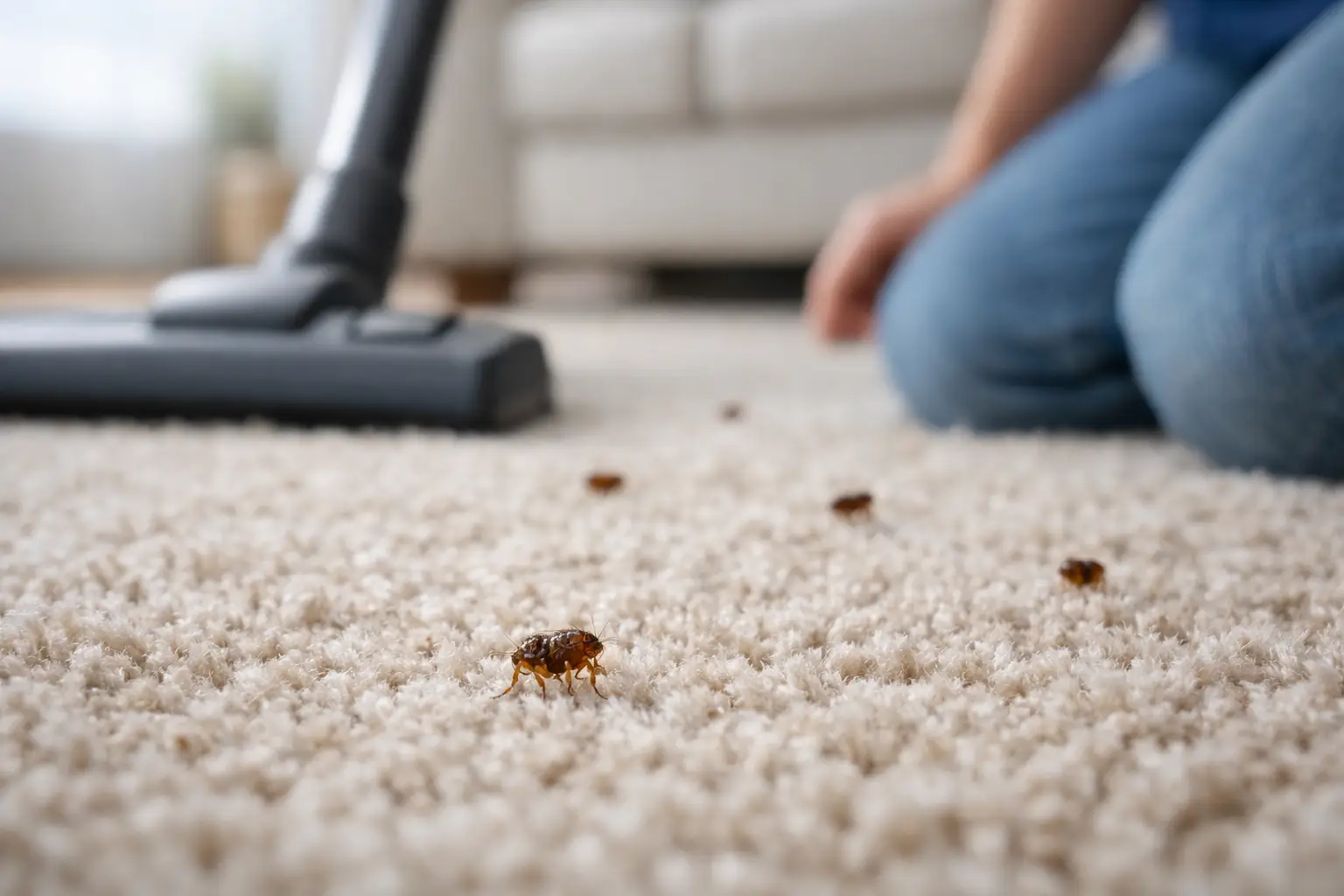
A flea problem often becomes obvious when people start getting bites around their ankles, yet the pet that brought fleas indoors may no longer be scratching. That is because the answer to can fleas live in carpets is yes – although carpets are more of a shelter and breeding ground than a permanent food source. Eggs, larvae and pupae can settle deep within carpet fibres, along skirting boards and beneath furniture while adult fleas emerge to feed.
For homes, rented flats and commercial premises, dealing with only the visible adult fleas is rarely enough. Effective flea control needs to interrupt the whole life cycle, treat the source and prevent newly emerging fleas from restarting the problem.
Can fleas live in carpets for long?
Adult fleas need a blood meal from a host, usually a cat, dog, fox, rodent or person, to survive and reproduce well. They may rest in carpeted rooms between feeds, particularly in darker, undisturbed areas, but they do not live exclusively in the carpet.
The immature stages are the greater concern. Adult fleas lay eggs on an animal, but the eggs are not sticky. They drop into carpets, rugs, pet bedding, sofa cushions and cracks in flooring as the animal moves about. Larvae hatch from those eggs and avoid light, moving down into protected parts of the carpet where they feed on organic debris. They later form cocoons known as pupae.
A pupa can stay protected in its cocoon for weeks or, in less favourable conditions, longer. Movement, warmth, vibration and carbon dioxide can trigger adults to emerge. This is why a property can seem flea-free after cleaning, then suddenly have new adult fleas appearing when people return from a holiday or begin using a room again.
Warm centrally heated homes provide favourable conditions, so flea activity can continue well beyond the warmer months. The timeline varies with temperature, humidity, access to hosts and the size of the infestation.
Why carpets make flea infestations harder to clear
Carpet fibres create cover from light and disturbance. A thick carpet, especially one beneath a bed, sofa or pet sleeping area, gives eggs and larvae plenty of protected spaces. Flea dirt – the digested blood passed by adult fleas – also falls from an infested animal and becomes food for larvae.
Hard floors are not automatically flea-proof. Fleas and their developing stages can still gather in gaps between boards, under fitted furniture, in fabric rugs and around soft furnishings. However, carpets can make a problem more persistent because they hold debris and are harder to clean thoroughly.
It also depends on the source. If a cat or dog has untreated fleas, or wildlife and rodents are entering a property, carpet treatment alone will not deliver lasting results. The fleas will simply be brought back in.
Signs fleas may be established in your carpet
Bites alone do not confirm fleas, as bed bugs, mites and skin conditions can cause similar irritation. Flea bites are often small, very itchy and grouped around the lower legs, but reactions vary from person to person.
Look for pets scratching more than usual, small dark specks in their bedding or tiny insects that jump when disturbed. Flea dirt may turn reddish-brown when placed on damp white tissue because it contains digested blood. Check the carpet edges, under furniture, pet resting spots and the area around skirting boards.
If you have no pets but are seeing likely flea activity, consider other routes. Fleas can arrive on visiting animals, through a previous tenant’s belongings, or via rodents and foxes close to the building. In a block of flats, the source may not be confined to one home.
What to do when fleas are in the carpet
Start by treating every part of the problem at the same time. If there is a pet in the household, speak to a vet about a suitable flea treatment. Do not use household insecticides directly on an animal unless the product is specifically approved for that purpose. Some treatments that are safe for dogs can be dangerous for cats.
Vacuum carpets carefully and repeatedly, paying particular attention to edges, stairs, under furniture and upholstered seating. Empty the vacuum outside immediately afterwards, sealing the contents in a bag before placing them in an outdoor bin. Vacuuming removes debris and can encourage pupae to emerge, making follow-up treatment more effective.
Wash pet bedding, throws and washable soft furnishings at the highest temperature permitted by the care label. Where the fabric allows, a hot wash can help remove fleas and their eggs. Drying thoroughly is equally useful. Items that cannot be washed should be vacuumed carefully and assessed for treatment.
A practical household response includes four actions:
- Treat pets with veterinary-approved flea control.
- Vacuum floors, rugs, furniture and cracks daily at first.
- Wash bedding, pet blankets and removable covers.
- Treat affected rooms with an appropriate residual product or professional service.
Do not rely on a single clean or one aerosol spray. Flea eggs and pupae may survive the first stage of treatment, and new adults can emerge over the following days or weeks. A planned follow-up is often necessary.
Are flea foggers enough?
Foggers and total-release aerosols are often tempting because they appear quick. Their weakness is that the product may not penetrate beneath furniture, into carpet fibres or along edges where flea stages are protected. They can also expose the whole room to insecticide without properly treating the areas that need attention most.
Targeted products, used exactly according to the label, are usually more useful than relying on a fogger alone. Many professional treatments include an insect growth regulator, which helps stop immature fleas developing into breeding adults. This works alongside a suitable adult flea treatment rather than providing an instant result on its own.
Safety matters. Keep children and pets away during treatment and re-entry periods stated on the product label. Cover or remove food items, food preparation equipment and pet bowls. Fish tanks need particular care, as insecticides can be harmful to aquatic life. Never mix products or apply more than directed in the hope of speeding up results.
When professional flea treatment is the sensible choice
Professional help is worthwhile when bites continue after cleaning, fleas are appearing in several rooms, the property has heavy carpeting, or the source is unclear. Landlords and facilities managers should act promptly, particularly where tenants, staff or customers may be affected. Delays can allow the life cycle to continue and make the infestation more difficult to manage.
A qualified technician can inspect likely harbourage areas, identify whether fleas are the probable cause and apply a treatment plan suited to the property. They can also advise on preparation, pet management, repeat visits and prevention. If rodents or other animals are contributing to the issue, that cause needs addressing as part of the work.
Golden Pest Control provides responsive flea control for homes and businesses across London, with clear treatment guidance and follow-up support where needed.
Preventing fleas from returning to the carpet
Keep pets on a vet-recommended preventative programme and wash their bedding regularly. Continue vacuuming after treatment, even if bites have stopped, because this helps remove developing stages and encourages dormant pupae to emerge while residual treatment remains active.
Reduce opportunities for wildlife and rodents to enter or nest around the property. Seal accessible gaps where practical, keep outdoor waste managed and address rodent activity quickly. For a rented property, report persistent pest concerns in writing so that the source and responsibility can be properly investigated.
Fleas in a carpet are frustrating, but they are a manageable problem when every stage is addressed. Acting early, treating the host and following through with careful cleaning gives your home the best chance of becoming comfortable again.
1 Comment
Professional Flea Treatment Versus Sprays - Golden Pest Control London
September 13, 2026[…] conditions. Fleas do not stay neatly in one place. They collect where pets sleep, but eggs can drop into carpets, under sofas, around skirting boards, inside cracks and beneath furniture. Miss part of the […]