
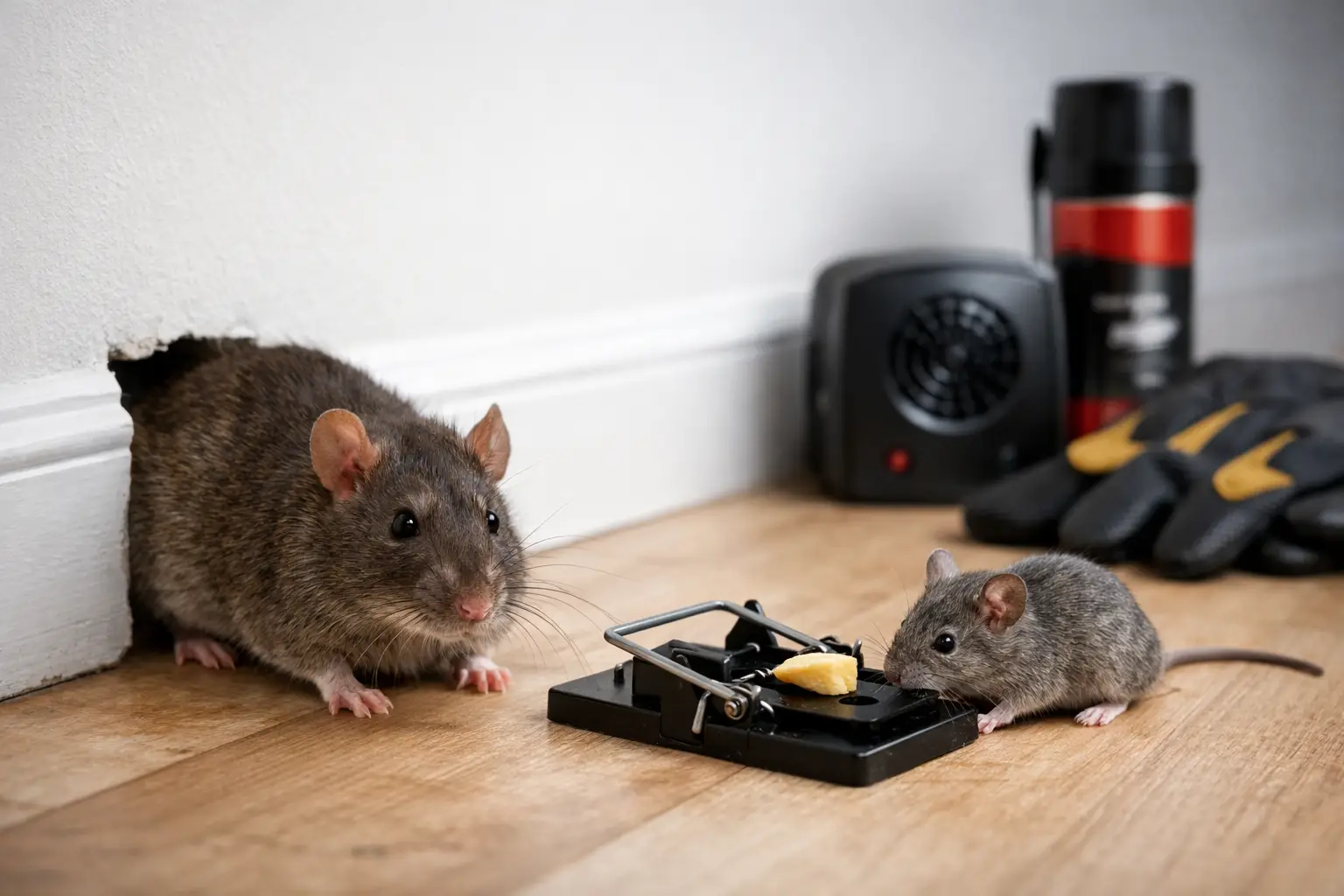
You usually know something is wrong before you see a rodent. It starts with scratching behind a wall at night, droppings under the sink, a torn food packet in the cupboard, or a sharp, unpleasant smell in a loft or stock room. That is when rat and mouse control stops being a minor concern and becomes a matter of health, hygiene and property protection.
In London properties, rodents are rarely a one-off problem. A single sighting can point to a wider infestation, especially in older buildings, shared walls, busy commercial premises and areas with easy access to bins, drains or food waste. Acting quickly matters because rats and mice breed fast, move quietly and often stay hidden until numbers increase.
Why rat and mouse control needs fast action
Rats and mice are more than a nuisance. They contaminate food surfaces, leave urine and droppings in hidden areas, and can damage insulation, plasterboard, pipework and electrical wiring. In homes, that means stress, odour, disturbed sleep and real concern about cleanliness. In businesses, it can mean reputational damage, failed inspections, customer complaints and disruption to normal operations.
The challenge is that rodents are adaptable. They do not need much space to gain entry, and once they find warmth, shelter and a food source, they settle in quickly. Mice can enter through gaps that seem too small to matter, while rats are strong enough to exploit weak points around drains, air bricks, damaged doors and pipe entries. If the conditions remain, the activity usually continues.
That is why delay often makes treatment more difficult. What starts as a few droppings in a kitchen can become nesting in wall voids, roof spaces or under floorboards. The earlier the issue is identified, the easier it is to control and prevent repeat activity.
Common signs of rats and mice
The clearest sign is often droppings. Mouse droppings are small and dark, while rat droppings are larger and more blunt at the ends. You may also notice gnaw marks on wood, cable coverings, food packaging or skirting boards. Rodents need to chew regularly, so fresh damage is a useful clue that activity is current rather than historic.
Noise is another common sign, especially at night. Scratching, scurrying or light movement in ceilings, lofts or partition walls often points to rodents travelling between nesting and feeding areas. Grease marks along walls, shredded materials used for nesting, and a stale, musky smell can also indicate a well-established problem.
In commercial settings such as restaurants, cafés, offices and storage areas, signs can be more subtle. A missing bag of dry goods, disturbance around bins, or activity near service ducts may be the first indication. For landlords and facilities managers, complaints from tenants or staff should never be brushed aside. Rodents move quickly through multi-occupancy buildings, and one untreated area can affect several units.
What attracts rodents to a property
Rodents are drawn by three things – food, shelter and access. Food does not have to mean obvious waste. Pet food, crumbs beneath appliances, dry goods in damaged packaging and overflowing external bins can all support an infestation. In commercial properties, even small gaps in cleaning routines can be enough.
Shelter is just as important. Cluttered lofts, understairs cupboards, suspended ceilings, storage rooms and cavity walls all give rodents somewhere to nest out of sight. Outdoor overgrowth, sheds and poorly maintained bin areas can also support activity before it moves indoors.
Access is the final part of the picture. Gaps around pipes, broken air vents, damaged drain covers, ill-fitting doors and cracks in brickwork can all provide entry points. This is where many DIY efforts fall short. You might remove a few rodents, but if the access route stays open, the problem often returns.
Why DIY rodent treatment often falls short
Traps and shop-bought bait can help in very minor cases, but they rarely solve the full issue on their own. The main reason is simple – most people are treating what they can see, not what is happening behind walls, under floors or in external approach routes.
There is also the question of placement, safety and follow-up. Poorly positioned traps can miss active runs entirely. Bait used without a clear plan may be ineffective, especially if competing food sources are still present. In homes with children or pets, safety becomes even more important. In commercial settings, treatment must also account for hygiene standards, staff safety and public access.
Some infestations are also more complex than they first appear. Mice in a kitchen may be entering from a loft void. Rats in a garden may actually be linked to a drain issue. Without identifying the source, treatment can become repetitive and costly.
Professional rat and mouse control in practice
Effective rodent control starts with inspection. A qualified technician will look for signs of activity, nesting areas, feeding points, access routes and environmental factors that are supporting the infestation. That first stage matters because the right treatment depends on the species, the scale of activity and the layout of the property.
From there, a treatment plan can be tailored to the site. That may involve secure baiting, trapping, proofing recommendations and hygiene advice. In some cases, follow-up visits are essential to monitor results and adjust the approach. A small domestic infestation may be resolved relatively quickly, while a larger commercial issue may need staged treatment and closer monitoring.
For many customers, reassurance is just as important as the technical side. You want to know what is being done, how long it is likely to take, and what you can do to reduce the chance of rodents returning. Clear communication makes a real difference, particularly when the problem feels urgent.
Rat and mouse control for homes and businesses
Residential and commercial rodent problems are not identical, and treatment should reflect that. In homes, the priority is often speed, safety and peace of mind. Families want the issue dealt with discreetly and thoroughly, especially when rodents are active near kitchens, bedrooms or children’s spaces.
In commercial properties, there are wider pressures. Hygiene, compliance, staff welfare and customer confidence all come into play. A restaurant, shop, warehouse or office may need treatment that fits around operating hours and minimises disruption. Property managers may also need records, recommendations and ongoing prevention support across multiple units.
This is where a responsive service matters. For urgent issues in areas such as Wembley, Harrow, Ealing or wider London, a fast attendance can prevent a manageable problem from becoming a serious one.
Preventing rodents from coming back
Good prevention is never just about blocking one hole and hoping for the best. It works when proofing, housekeeping and monitoring are treated as part of the same plan. Entry points should be sealed properly with suitable materials, not temporary fillers that rodents can chew through. Food should be stored securely, waste managed carefully and clutter reduced where possible.
Outside, bin areas should be kept tidy, drains checked if rat activity is suspected, and vegetation cut back from building edges. Inside, regular checks behind appliances, in cupboards and around service entries can help spot early warning signs.
Prevention does depend on the property. A terraced house, a ground-floor flat, a takeaway and a warehouse all have different risk points. The right advice should reflect the building, the use of the space and the level of previous activity.
When to call for urgent help
If you have seen a rat indoors, heard repeated activity in walls or ceilings, found fresh droppings in food areas, or noticed signs of gnawing on cables or pipework, it is time to act. The same applies if staff, tenants or customers have reported sightings. Waiting to see if the problem disappears on its own rarely ends well.
A professional response is particularly important where there are children, pets, vulnerable occupants, food handling areas or signs of a larger infestation. Speed matters, but so does accuracy. The aim is not just to reduce activity for a few days. It is to find the source, treat it safely and help stop it returning.
At Golden Pest Control, that practical, responsive approach is what customers expect when rodents appear without warning. If there is one useful rule to keep in mind, it is this: the sooner you deal with rats or mice, the simpler the solution is likely to be.