
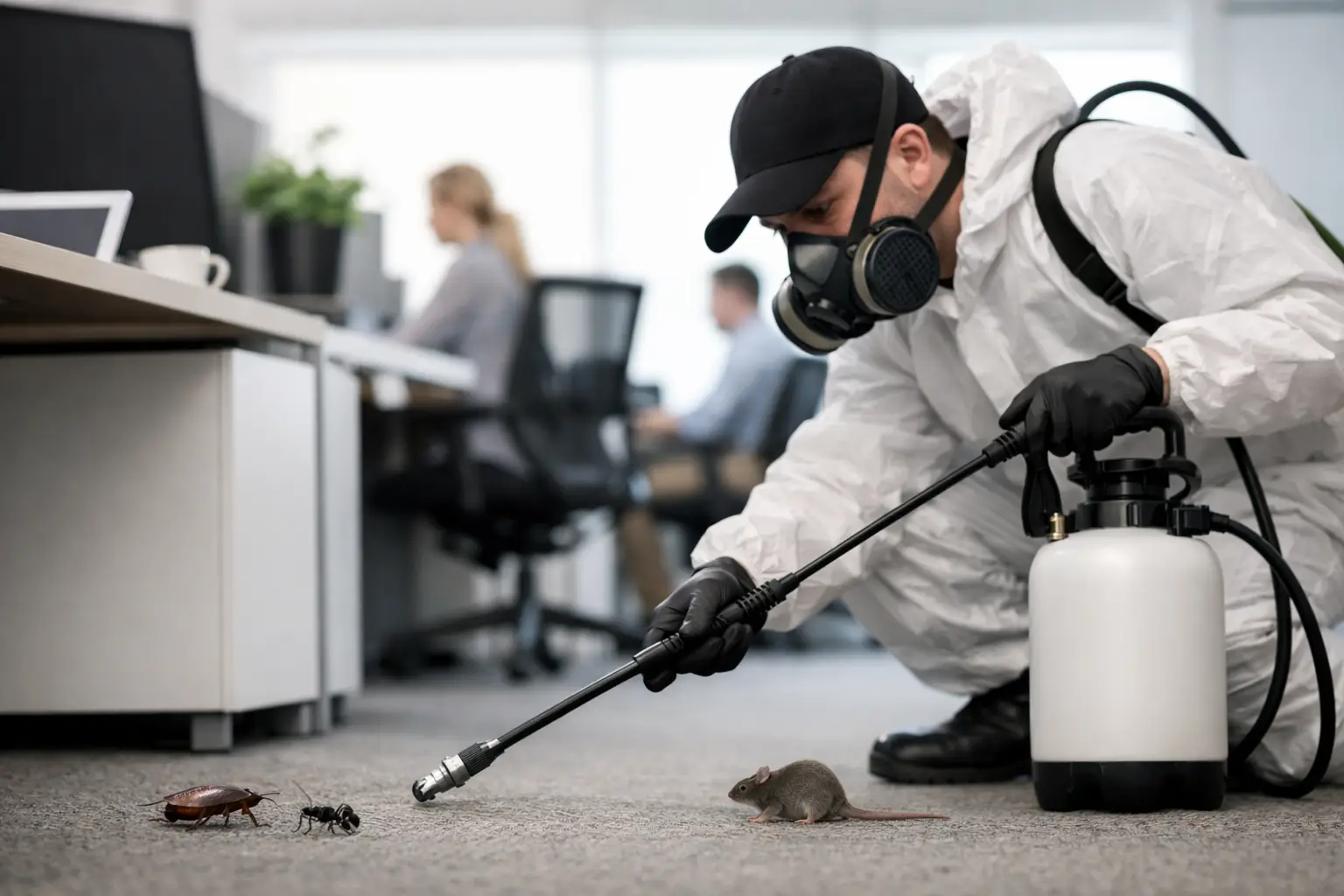
A single mouse sighting in the office kitchen can turn into a facilities problem by lunchtime. Staff start talking, clients notice, and what looked minor suddenly becomes a hygiene, safety and reputation issue. That is why office pest control services matter – not just when pests are visible, but when you need fast action, clear advice and a plan that stops the problem returning.
For offices, pest control is rarely just about removing one pest. It is about protecting working conditions, avoiding disruption and keeping the building suitable for staff, visitors and contractors. In a busy London workplace, where shared kitchens, bin stores, deliveries and older buildings can all create access points, pests do not need much encouragement.
Why office pest problems escalate quickly
An office is full of the things pests look for. There is warmth, shelter, water, food residue and regular movement through doors and service areas. Even well-run premises can become vulnerable if cleaning schedules slip, waste builds up, or a small structural gap goes unnoticed.
Rodents are one of the most common concerns because they travel through wall voids, ceiling spaces and service routes with very little warning. Cockroaches and ants tend to appear where food is handled or stored, while fleas and bed bugs can be introduced on soft furnishings, staff belongings or visitors’ items. Wasps can also create serious disruption around entrances, rooflines and outdoor seating areas in warmer months.
The real issue is speed. A pest issue in an office does not stay contained for long. It can affect morale, lead to complaints and raise difficult questions about cleanliness and building management. For some businesses, particularly those with client-facing spaces, one visible pest is enough to cause immediate concern.
What good office pest control services should include
Not every treatment approach suits every office. A small private office has different risks from a co-working site, a call centre or a multi-tenant commercial building. Effective office pest control services start with inspection, because guessing wastes time and often misses the source.
A proper service should identify the pest, assess how active the infestation is, locate likely entry points and explain what treatment is actually needed. In some cases, a one-off visit is enough. In others, especially with rodents, cockroaches or recurring insect problems, follow-up visits and preventive proofing are just as important as the initial treatment.
Clear communication matters as much as the treatment itself. Facilities teams and office managers need to know what has been found, what will happen next, whether staff need to avoid any areas temporarily and what practical changes will reduce the chance of recurrence. Vague advice is not helpful when you are responsible for a working building.
A dependable provider should also understand urgency. If pests are active during business hours, in meeting areas, kitchens or reception spaces, delaying treatment can make the situation harder to control. Fast response is not a luxury in those cases. It is part of protecting the business.
Common pests found in office buildings
Rodents are usually top of the list because mice and rats adapt easily to commercial buildings. They can contaminate surfaces, damage materials and create ongoing problems through droppings, gnawing and nesting. A mouse in the kitchen often means more activity behind walls or beneath units.
Cockroaches are another serious issue, particularly in buildings with shared facilities or food preparation areas. They are resilient, they hide well and they spread quickly if the source is not properly treated. Ants may seem less severe, but once a trail is established, they can become a constant nuisance in break rooms and deskside areas.
Bed bugs and fleas are less common in offices than in homes, but they do appear. Soft seating, quiet corners and high footfall can create the right conditions for these pests to be introduced and spread. Wasps and bees are different again. Their presence may be seasonal, but when nests form near access points, they can create a genuine risk for staff and visitors.
Signs your office should not ignore
Pest activity is often noticed in fragments. Someone hears scratching above a ceiling tile. A cleaner reports droppings in a cupboard. Staff mention bites, or there is an unusual smell near a kitchenette. On their own, these signs are easy to dismiss. Together, they usually point to a growing problem.
If pests are seen during the day, that often suggests a higher level of activity. Rodents and cockroaches, in particular, are less likely to appear openly unless pressure within the infestation is increasing. Repeated signs in the same area also matter. Cleaning away evidence without addressing the cause may make the building look better temporarily, but it does not solve the issue.
There is also the compliance side to consider. Businesses have a responsibility to maintain safe, hygienic premises. Even in a standard office, pest presence can affect staff wellbeing and confidence in the workplace. In buildings with food areas, shared amenities or regular visitors, the reputational risk rises quickly.
Why prevention matters as much as treatment
A fast treatment is essential, but prevention is what keeps a short-term problem from becoming a regular one. The best office pest control services do not stop at removal. They look at how pests got in, why they stayed and what changes will make the building less attractive.
That might mean sealing gaps around pipework, improving waste storage, reviewing cleaning around desks and kitchens or checking how stock and supplies are stored. In some offices, the issue comes from neighbouring units, communal bin areas or building-wide maintenance gaps. That is where practical advice becomes valuable, because not every cause sits neatly within one office suite.
Prevention also needs to be realistic. Staff are not pest control technicians, and office managers already have enough to oversee. Recommendations should be straightforward and achievable. If a plan relies on perfect behaviour from every person in the building every day, it probably will not hold up.
Choosing a provider for office pest control services
When selecting a contractor, speed and professionalism should come first. You need a team that can assess the situation quickly, explain the treatment clearly and work with minimal disruption to the business. That is especially important if your office is open long hours, has sensitive equipment or receives clients on site.
Experience across common urban pests is also important. Offices can face anything from mice and rats to cockroaches, ants, fleas and wasps, sometimes in the same property over time. A provider should be able to adapt the approach rather than forcing every problem into the same treatment model.
It also helps to choose a company that understands the pressure commercial clients are under. Facilities managers and business owners do not want drama. They want qualified professionals who arrive when they say they will, treat the issue safely and give practical next steps. In areas such as Wembley, Harrow, Ealing and across wider London, where buildings vary from modern office blocks to older converted premises, that local understanding can make a real difference.
If your business needs urgent support, 24/7 availability is worth considering. Some pest problems can wait for a scheduled appointment. Others cannot. Active rodents, a wasp nest near an entrance, or a visible cockroach issue in a staff kitchen usually need immediate attention.
What to expect during treatment
The first visit should focus on inspection and diagnosis, not assumptions. Once the pest and extent of activity are confirmed, the technician should explain the treatment plan, expected timescale and any precautions required. Good service is clear and calm. It should reduce uncertainty, not add to it.
Depending on the issue, treatment may involve baiting, trapping, targeted insecticidal applications, nest treatment or proofing recommendations. Follow-up visits are often necessary for monitoring and confirmation. That is not a sign the treatment has failed. In many cases, it is the correct way to make sure the infestation is fully controlled.
For office environments, discretion and safety are also part of the service. Treatments should be planned around staff access, shared spaces and business continuity wherever possible. A professional team will know how to balance urgency with minimal disruption.
Golden Pest Control works with this approach in mind – rapid response, clear communication and treatment plans shaped around the property rather than generic fixes. That matters when the goal is not only to remove pests, but to restore confidence in the workplace quickly.
Pests in an office are rarely just a maintenance issue. They affect people, routines and how your business is perceived. The right response is prompt, practical and thorough, so the problem is dealt with properly and your team can get back to work without second-guessing what is happening behind the walls.