
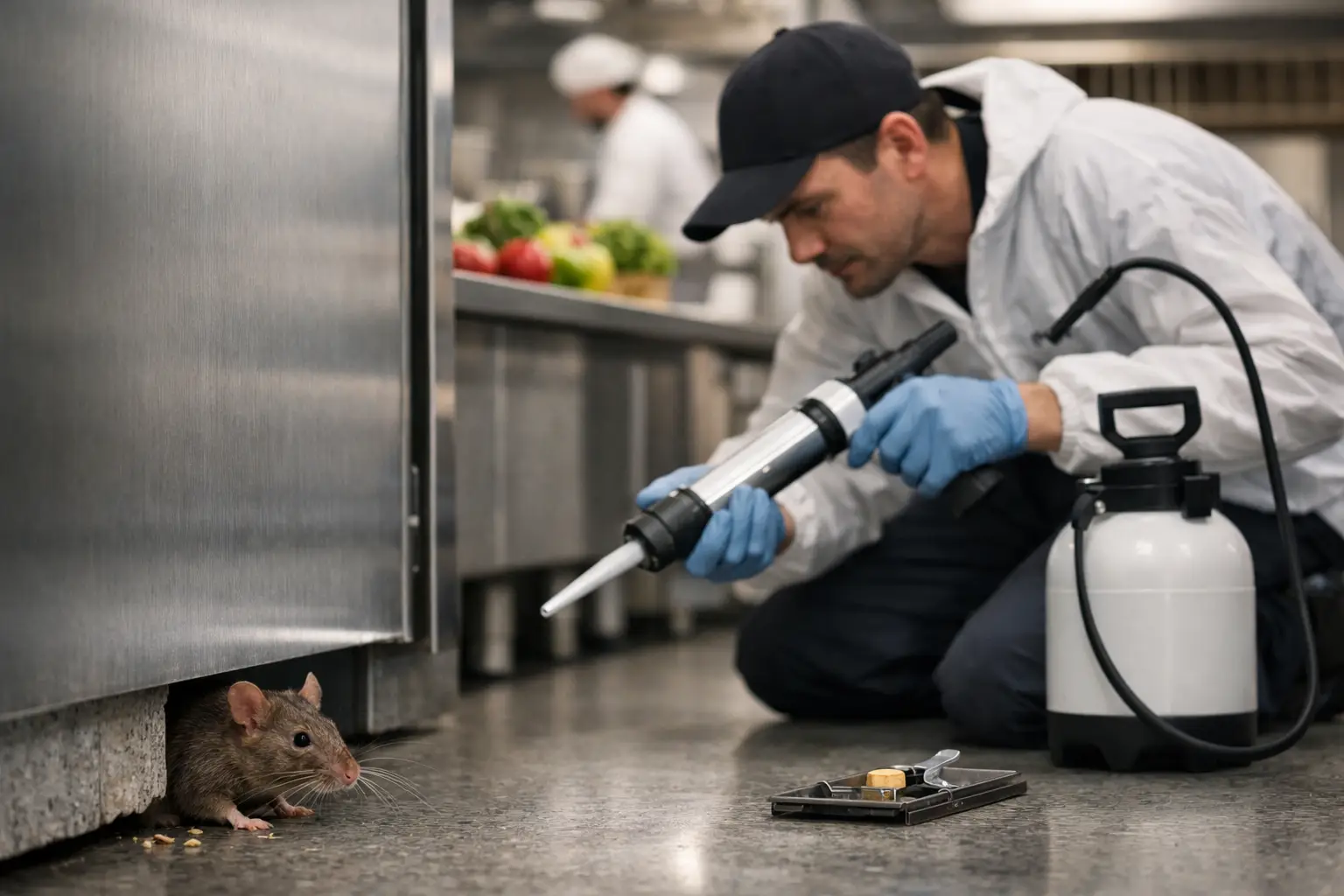
A single gnawed cable, dropping beneath a shelf or chewed food packet can become far more than an unpleasant discovery. For a food business, it can interrupt service, put stock at risk, damage customer confidence and raise serious hygiene concerns. Effective rodent proofing for food businesses is therefore not a one-off job after a sighting. It is a practical routine that keeps rats and mice outside, removes what attracts them and spots problems before they grow.
Rats and mice are common across London, particularly around busy high streets, shared commercial blocks, bin stores and older buildings. They need only a small opening, a reliable food source and somewhere quiet to nest. A clean-looking kitchen can still have a rodent problem if gaps around pipework, rear delivery doors or drains give them access.
Start with the routes rodents use
Proofing begins outside and works inwards. A mouse can enter through a gap roughly the width of a pencil, while rats can exploit damaged vents, broken drains, poorly fitted doors and openings around service pipes. Looking only inside the kitchen often misses the source of the issue.
Walk around the full perimeter of the premises, including rear yards, bin areas, basements, staff entrances and delivery points. Check for holes in brickwork, gaps beneath doors, loose air bricks, damaged drain covers and spaces where cables or pipes enter the building. Signs such as grease marks along walls, droppings, burrows or gnawing should be treated as evidence of activity, not simply cleaned away and forgotten.
The right proofing material depends on the opening and its location. Metal mesh, purpose-made drain guards, brush strips and properly fitted door seals can all help when installed correctly. Expanding foam alone is rarely a lasting answer because rodents may chew through it. Any repair also needs to maintain ventilation, fire safety and access for essential building services. In rented units or shared buildings, responsibility for external fabric and drains may sit with the landlord or managing agent, so raise defects promptly and keep a written record.
Pay particular attention to doors and deliveries
Back doors are one of the most common weak points in food premises. They are opened frequently, may be held open during deliveries and are sometimes poorly aligned after years of use. Fit close-fitting brush strips or threshold seals where appropriate, repair damaged frames and make sure staff know not to prop doors open.
Deliveries need a sensible balance. You cannot stop stock arriving, but you can limit exposure. Keep loading areas clear, inspect outer packaging for damage or droppings before it enters storage, and move goods indoors without leaving them in a rear yard overnight. Cardboard provides hiding places, so break down and remove surplus boxes regularly.
Remove the food, water and shelter rodents expect
Proofing works best alongside disciplined housekeeping. Rodents are persistent, but they are also practical. If one unit offers easy crumbs, leaking water and undisturbed clutter while another does not, they will favour the easier option.
Store all ingredients, dry goods and disposable food packaging in sound containers with tight-fitting lids, or on shelving that is raised from the floor and set away from walls where possible. This makes cleaning easier and allows staff to inspect behind stock. Do not rely on unopened sacks or cardboard cartons as rodent-proof storage. Mice can damage packaging quickly, and contamination can occur even where the food itself has not been visibly eaten.
At close of business, clean beneath equipment, shelving and preparation counters, not just the visible floor. Grease, spillages and crumbs around cookers, fridges and drink stations are enough to support regular feeding. Rubbish should be placed in lidded bins, with external bins kept closed and positioned away from doors where practical. Bin-store doors, damaged lids and overflowing waste deserve the same attention as the kitchen itself.
Water is another overlooked attraction. Repair dripping taps, leaking waste pipes and faulty refrigeration drainage. Check for pooled water beneath sinks and appliances. In cafés, restaurants and takeaways, a small, recurring leak can sustain rodents even when food storage is otherwise well managed.
Do not create harbourage indoors
Unused equipment, stacked packaging, old menus, cleaning materials and storage stored directly on the floor can create protected nesting areas. Keep storerooms orderly and make checks possible. This does not mean a food business must look bare or impractical. It means each item should have a place, and inaccessible clutter should not be allowed to build up behind equipment or in rarely used cupboards.
Build rodent checks into everyday food safety
A strong prevention plan gives staff clear tasks rather than relying on someone noticing a problem by chance. Opening and closing checks can include looking for droppings, torn packaging, gnaw marks, unusual smells, disturbed stock and new gaps around doors or pipework. Staff should know to report findings immediately, without embarrassment or delay.
Keep a simple pest log that records what was found, where it was found, the date, action taken and follow-up required. This supports your wider food safety management procedures and shows that concerns are being handled responsibly. It also helps identify patterns. Repeated signs near one wall, for example, may point to a concealed access route, a drain issue or activity in a neighbouring unit.
Monitoring points and traps may be appropriate as part of a professional pest management plan, but they are not a substitute for proofing. A trap can show that activity is present; it does not close the hole that allowed the rodent in. Likewise, placing poison without proper assessment can create avoidable risks for staff, customers, non-target animals and food areas. Food businesses should use treatments carefully, with clear records, correct placement and professional guidance where activity is confirmed.
Act quickly when there are signs of activity
If you find fresh droppings, damaged food packaging, nesting material or see a rat or mouse, isolate any potentially contaminated food and packaging. Do not sell or use items that may have been contaminated. Clean affected surfaces using appropriate hygiene procedures and avoid dry sweeping or vacuuming droppings, which can spread contaminated dust.
Then investigate the reason, not only the evidence. Check nearby wall voids, pipe entries, floor drains, under-counter spaces and external waste areas. The first sighting may not tell you where the rodents entered, especially in a multi-occupancy building where they can move through ceiling voids, service risers and connected drainage.
For active infestations, prompt professional inspection is the safest route. A qualified technician can identify the species, likely access points, nesting areas and level of activity, then recommend treatment and proofing that fits the premises. This is particularly valuable for restaurants, commercial kitchens, bakeries, cafés and food warehouses, where operational disruption and hygiene risks need to be controlled quickly.
Golden Pest Control provides responsive support for food businesses across London, including inspection, targeted rodent treatment and practical proofing recommendations. Where urgent activity is affecting service or food safety, rapid action can prevent a small issue becoming a closure-worthy problem.
Keep proofing effective after the first repair
Rodent proofing is not permanent if doors wear down, contractors create new service gaps, drains deteriorate or waste arrangements change. Recheck vulnerable areas after building work, severe weather, new equipment installations and changes to your waste collection routine. A quarterly inspection is useful for many premises, while businesses with busy rear access, shared bins or a history of activity may need more frequent checks.
The most effective approach is consistent rather than complicated: secure the building, protect food and waste, keep storage accessible for cleaning, and respond to signs immediately. That routine protects more than stock. It helps protect the people who eat your food and the reputation you have worked hard to build.