
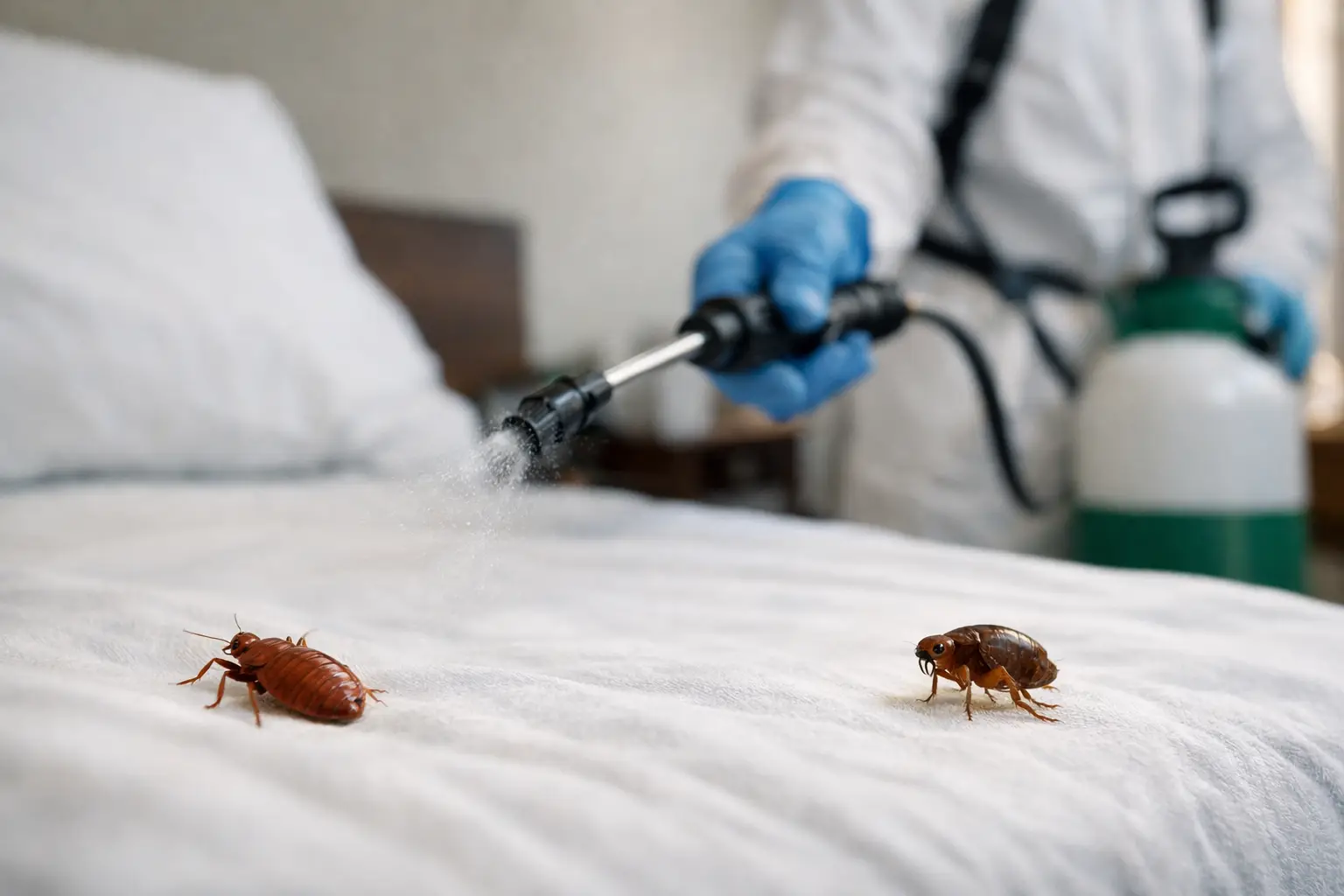
Waking up with bites is bad enough. Realising they could be coming from two different pests at once is worse. Bed bug and flea treatment needs a clear plan from the start, because these pests behave differently, hide in different places, and need different control methods to remove them properly.
For households, landlords, and businesses, the main concern is usually speed. You want the problem identified, treated safely, and brought under control before it spreads to other rooms, neighbouring properties, guests, or staff. That is exactly why a professional inspection matters. It prevents guesswork and makes sure the treatment matches the infestation.
Why bed bugs and fleas are often confused
Bed bugs and fleas both bite, both can spread quickly, and both create stress out of proportion to their size. But they are not the same problem. If the signs are misread, people often waste time treating the wrong areas and the infestation continues.
Bed bugs tend to stay close to where people sleep or rest. They hide in mattress seams, bed frames, headboards, sofas, skirting board gaps, and nearby furniture. Their bites often appear in clusters or lines, although bite patterns alone are never enough to confirm the pest.
Fleas are usually linked to pets, soft furnishings, and carpets, though properties without pets can still be affected. Eggs and larvae can settle deep in fibres, cracks, and upholstered furniture. Adult fleas are more likely to jump, while bed bugs crawl and stay hidden.
This difference matters. A bed bug problem centred around bedrooms needs a different treatment focus from a flea infestation spread through carpets, rugs, and pet sleeping areas. When both pests are present, the approach must be layered and thorough.
What proper bed bug and flea treatment involves
Effective bed bug and flea treatment starts with inspection, not assumptions. A trained technician will look at where bites are happening, where activity is concentrated, whether pets are involved, how far the infestation has spread, and what conditions inside the property are helping pests survive.
For bed bugs, treatment usually targets beds, surrounding furniture, cracks, joints, soft furnishings, and areas close to sleeping spaces. The goal is to treat active insects as well as hidden harbourages where they rest between feeds.
For fleas, treatment is broader across floors and fabric surfaces. Carpets, rugs, pet bedding, sofas, and room edges all need attention. Because flea life cycles include eggs, larvae, pupae, and adults, one visit may not always be enough on its own. Follow-up is often part of getting lasting control.
A professional service will also explain preparation clearly. That may include laundering bedding and clothing at high temperatures, reducing clutter, vacuuming specific areas, and making rooms accessible for treatment. Preparation is not a side issue. Poor preparation can reduce results and delay control.
Why shop-bought products often fall short
A quick spray from the local shop can feel like action, but these infestations rarely respond well to half measures. One of the biggest problems is that over-the-counter products tend to reach only visible insects. Bed bugs are experts at hiding in narrow cracks and behind fittings. Flea eggs and larvae can be buried in carpets and upholstery where surface sprays do little.
There is also the issue of misuse. Too little product does not solve the problem. Too much, or applying it in the wrong places, can create safety risks for children, pets, and residents. In some cases, people drive pests deeper into the property, making professional treatment more difficult later.
The other trade-off is time. If the infestation is active in multiple rooms or affecting a rental property, hotel room, office rest area, or shared accommodation, delays can turn a manageable problem into a larger one. Fast, targeted treatment is usually more cost-effective than repeated failed attempts.
Signs you should act quickly
Some infestations are obvious. Others are easy to dismiss until they become established. If you are seeing repeated bites, spotting insects, finding dark marks on bedding, noticing pets scratching more than usual, or seeing flea activity around carpets and furniture, it is sensible to arrange an inspection.
For landlords and property managers, speed is especially important between tenancies or when a complaint has been raised. For commercial premises, the risk is not just discomfort. Pest activity can affect staff welfare, customer confidence, hygiene expectations, and operational reputation.
In busy parts of London, where properties are close together and occupancy changes regularly, pest issues can move faster than people expect. Acting early protects both the property and the people using it.
What to expect from professional treatment
A reputable pest control service should make the process straightforward. First comes identification and assessment. Then the technician explains the treatment plan, likely timescales, any preparation needed, and whether follow-up visits are recommended.
Treatment methods vary depending on severity, property type, and where the activity is found. In some cases, a single issue in one room is relatively contained. In others, especially where pests have spread through multiple bedrooms, lounges, communal areas, or furnished rental units, a broader programme is needed.
Good service is not just about applying treatment. It is also about clear communication. Clients should know what has been found, what has been treated, how long to wait before re-entering if required, and what steps will help prevent recurrence. That clarity matters just as much for a family home as it does for a managed property or business.
Bed bug and flea treatment aftercare matters
Treatment does not end the moment the technician leaves. Aftercare plays a major role in final results. You may need to continue laundering fabrics, vacuuming carefully, monitoring activity, and avoiding actions that interfere with treated surfaces.
With fleas in particular, some activity after treatment can still happen for a short period as emerging stages come into contact with treated areas. That does not always mean the treatment has failed. It often reflects the pest life cycle. Bed bugs can also require monitoring and repeat attention depending on infestation size and how long the problem has been present.
This is where realistic advice matters. Anyone promising instant, permanent results in every case without follow-up should be treated with caution. Good pest control is effective, but it is also honest about what different infestations require.
Preventing the problem from returning
No treatment plan is complete without prevention. For bed bugs, that means being cautious with second-hand furniture, checking sleeping areas after travel, reducing clutter around beds, and responding quickly if signs reappear. In rented or managed properties, prompt reporting is essential. Waiting usually increases spread.
For fleas, pet care is part of the picture where animals are present. Regular veterinary flea control, washing pet bedding, vacuuming soft furnishings, and dealing with hotspots early all help reduce the chance of reinfestation. In commercial settings, cleaning routines and staff awareness can make a real difference.
It also helps to think beyond the obvious room. A sofa where someone naps, a pet blanket in the corner, a skirting gap beside the bed, or a carpeted office rest area can all support pest activity. Effective prevention is practical, not complicated. It is about knowing where the risk sits and not leaving it unchecked.
When urgent help is the right call
There are times when waiting a few days is the wrong decision. If bites are increasing rapidly, children are being affected, guests or tenants are complaining, pets are uncomfortable, or the infestation is disrupting business operations, urgent treatment is the sensible option.
Professional support is particularly valuable when the source is unclear, more than one pest may be involved, or previous DIY efforts have not worked. Golden Pest Control regularly assists homes and businesses that need a fast, dependable response without confusion or delay.
The priority is simple: identify the pest, treat it properly, and reduce the risk of it coming back. That approach protects comfort, hygiene, and peace of mind.
If you suspect bed bugs, fleas, or both, the best next step is not to keep guessing. A calm, professional response now is often what stops a smaller issue turning into a much bigger one.
1 Comment
Are Pesticides Pet-Safe Around Your Home? - Golden Pest Control London
September 23, 2026[…] voids and inaccessible areas. This can limit exposure compared with treating open floor areas. For fleas or bed bugs, treatment may involve targeted insecticide application, detailed preparation and a defined […]