
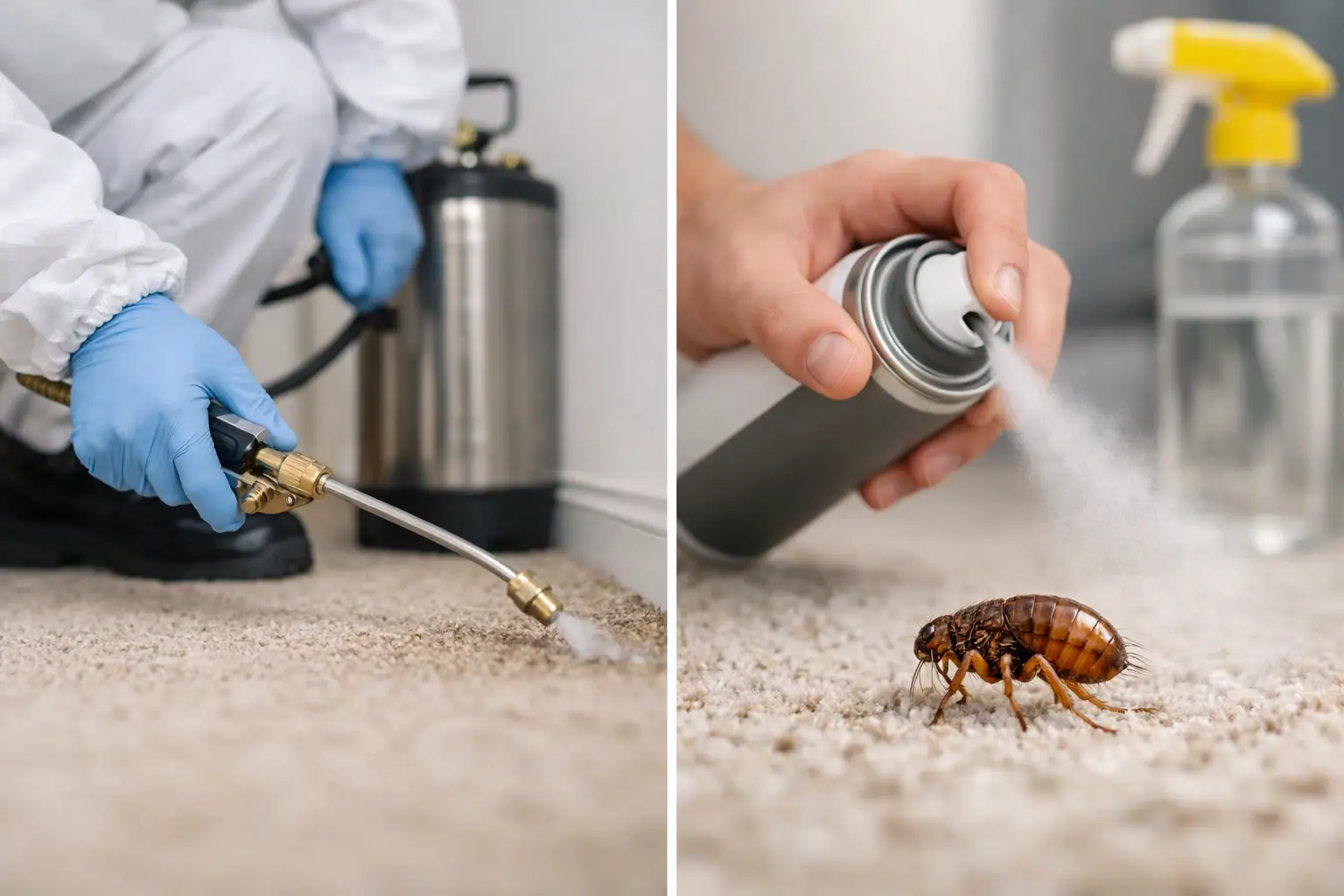
Finding bites on your ankles is frustrating. Finding fleas jumping from the carpet after you have already used a shop-bought product is worse. When weighing up professional flea treatment versus sprays, the real question is not simply which option kills adult fleas today. It is which option gives your household, tenants or business the best chance of ending the full infestation safely and preventing it from returning.
A flea problem can build quickly in a London flat, family home, rental property or commercial premises with animals passing through. Fleas are small, but their life cycle is not simple. Adults feed on a host, while eggs, larvae and pupae can remain in carpets, floor gaps, soft furnishings and pet bedding. That is why a single spray treatment can appear to work, only for fresh activity to emerge days or weeks later.
Professional flea treatment versus sprays: the key difference
Over-the-counter flea sprays can be useful for a very limited, early problem. They are readily available, inexpensive at the point of purchase and can help reduce visible adult flea activity when used exactly as directed. For example, a recently introduced flea on a pet blanket may be manageable with veterinary-approved pet treatment, careful cleaning and an appropriate household product.
However, household sprays rely on the user identifying every affected area, applying the correct amount and allowing the product to work under the right conditions. Fleas do not stay neatly in one place. They collect where pets sleep, but eggs can drop into carpets, under sofas, around skirting boards, inside cracks and beneath furniture. Miss part of the harbourage, and the infestation may continue.
Professional treatment starts with diagnosis rather than a can of insecticide. A trained technician assesses where activity is concentrated, considers likely sources and selects a treatment approach suited to the property. This may include targeted residual insecticide application and an insect growth regulator, which interrupts flea development rather than only dealing with active adults. The aim is controlled, lasting reduction across the life cycle.
Why flea sprays often seem to fail
Sprays do not always fail because the product is poor. More often, the treatment plan is incomplete. Flea pupae are particularly difficult because they are protected within cocoons and may not be affected immediately by an application. Movement, warmth and vibration can then encourage emerging adults to hatch after the initial treatment.
This can make it look as though a treatment has created more fleas. In reality, previously hidden pupae are emerging. A professional will explain what activity to expect after treatment, whether a follow-up visit is advisable and what cleaning steps support the result. Clear expectations matter, particularly for landlords trying to return a property to a suitable condition or business operators who need to protect staff and customers.
Another common issue is treating the home but not the animal. Pets are usually the source of a domestic flea problem, although fleas can also arrive through visiting animals, shared communal areas or a recently vacated property. Household treatment and an effective flea treatment plan from a vet need to happen together. Treating one without the other often leads to a cycle of reinfestation.
What a professional flea service provides
The value of professional flea control is not just stronger products. It is the process around them. A proper service considers the level of infestation, the property layout, the presence of pets, children or vulnerable occupants, and the practical requirements of the site.
Before treatment, you will receive preparation guidance. This commonly includes vacuuming carpets and upholstered furniture, washing pet bedding on a suitable hot cycle, clearing floor areas and arranging veterinary treatment for pets. Preparation is not an optional extra. It exposes areas where eggs and larvae may be present and allows the treatment to reach the places fleas hide.
During the visit, the technician treats identified risk areas methodically rather than applying product at random. They will also provide safety information, including when occupants and pets can re-enter treated rooms and whether any items need to be protected or removed. For commercial clients, this clarity helps minimise disruption while maintaining hygiene standards.
Afterwards, professional advice is equally important. You may be asked not to vacuum for a specified period so the residual treatment can remain effective, then to resume regular vacuuming later to encourage flea pupae to emerge into treated areas. The exact instructions depend on the treatment used, so following the technician’s guidance is essential.
When a shop-bought spray may be enough
There are occasions when a spray is a reasonable first response. If you have noticed a single flea, have no ongoing bites or evidence of breeding, and can treat your pet promptly through a vet, thorough cleaning may resolve the issue. The same can apply to a small, contained area after a short visit from an animal.
Be realistic, though. A spray is less likely to be enough if bites are continuing, several rooms are affected, you can see fleas on soft furnishings, or the problem has returned after previous DIY treatment. It is also not the best choice when you are unsure whether the pest is actually fleas. Bed bugs, carpet beetles and other biting insects can be mistaken for fleas, and applying the wrong product delays a proper solution.
Do not mix multiple insecticides in the hope of improving results. This can create unnecessary exposure and makes it harder to understand what has or has not worked. Always read the label, keep products away from food and aquariums, and never use a household flea spray directly on a pet unless it is specifically approved for that animal and purpose.
When professional treatment is the sensible choice
Professional help is usually the better route when the infestation is established, persistent or affecting more than one room. It is particularly valuable in shared buildings, rental homes and workplaces, where the source may not be confined to one household or where a reliable record of action is needed.
Consider booking a professional flea treatment if you are dealing with any of the following:
- Repeated bites despite cleaning and using household products.
- Fleas seen in carpets, sofas, pet sleeping areas or multiple rooms.
- A recent move into a property with signs of previous animal occupancy.
- A landlord, tenant or managing agent needing a clear treatment plan.
- A business where pest activity could affect hygiene, customer confidence or operations.
Speed also matters. The longer fleas have to breed, the wider the affected area can become. For urgent concerns in London, Golden Pest Control can assess the situation, explain the recommended treatment clearly and arrange a prompt response appropriate to the property.
Cost, safety and long-term value
A flea spray costs less upfront than a professional visit. That comparison is understandable, but it is not the whole cost. Several unsuccessful products, repeated laundering, time away from work and ongoing discomfort can soon outweigh the price of a targeted treatment. For landlords and businesses, delays may also lead to complaints, void periods or reputational damage.
Professional treatment is not automatically necessary for every suspected flea. The right decision depends on the evidence, the size of the affected area and whether pets have been treated properly. But once fleas are established indoors, professional control is often better value because it addresses more than the insects you happen to see.
Safety should be considered in the same practical way. Responsible professional treatment uses products and methods selected for the situation, alongside clear instructions for occupants. DIY sprays can also be used safely when labels are followed, but they place the burden of identification, coverage, application and aftercare on the householder. If there are babies, children, pets, allergies or sensitive environments involved, getting informed advice is especially worthwhile.
The steps that make any flea treatment work
Whether you choose a professional service or begin with a limited DIY response, treatment only works well when the wider problem is managed. Treat all pets in the household under veterinary guidance on the same day, even if only one appears to be scratching. Wash bedding, throws and removable pet covers, and vacuum carpets, rugs, skirting edges, furniture and vehicle interiors where pets travel.
Empty the vacuum outdoors or seal and dispose of the contents promptly. Keep up the cleaning routine according to the treatment guidance, because the gradual emergence of fleas from pupae is a normal part of breaking the cycle. If bites or sightings continue beyond the timeframe you were given, do not simply keep spraying. Arrange an assessment so the cause can be identified properly.
The most reassuring outcome is not a room that smells of aerosol. It is a property where the source has been dealt with, the treatment plan is clear and everyone can get back to using the space comfortably.