
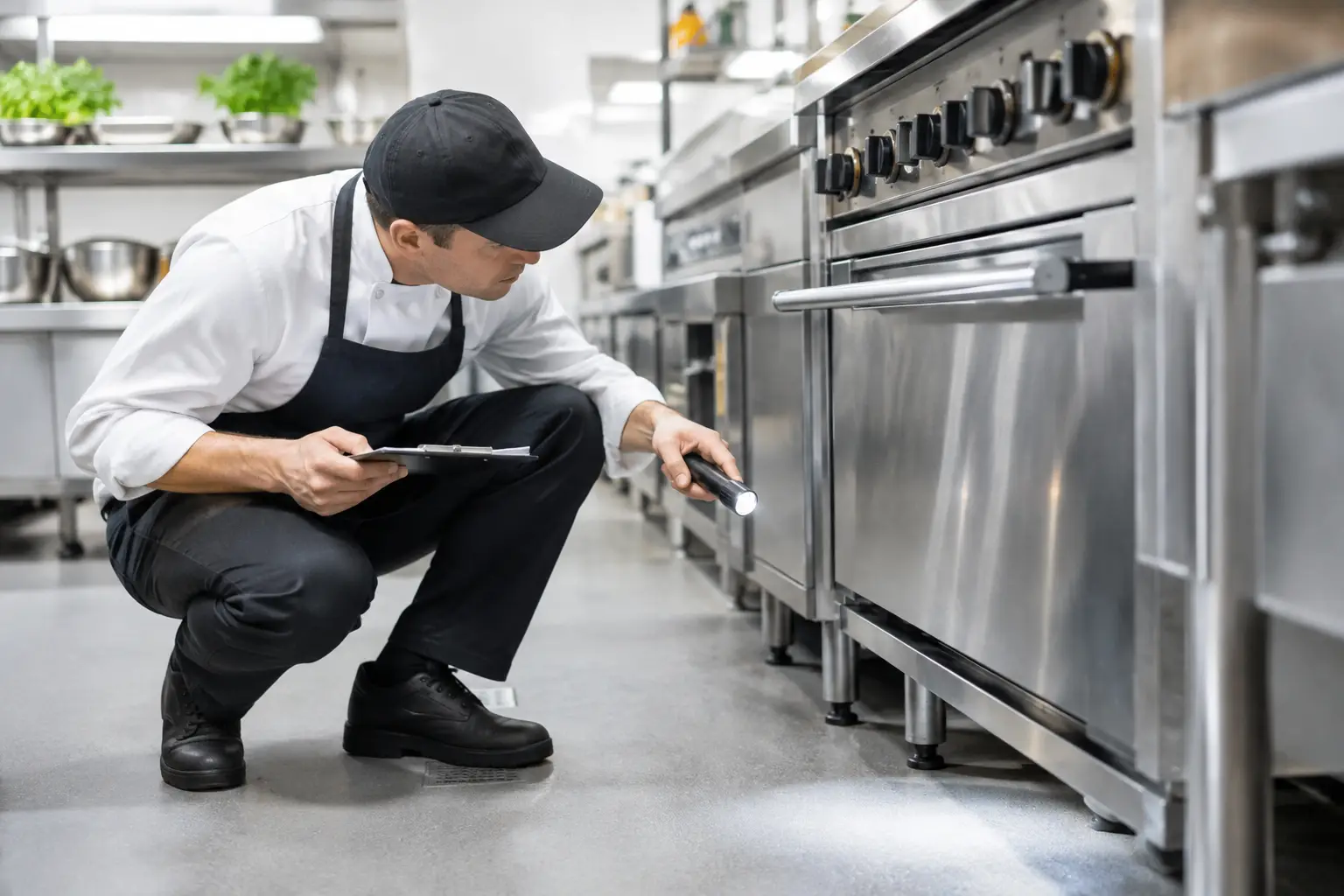
A customer spotting a cockroach near the counter, or a member of staff finding droppings in the dry store, can turn a busy service into an urgent problem. Regular restaurant pest inspections give you the chance to identify warning signs early, protect food hygiene standards and deal with an issue before it affects customers, stock or your reputation.
For restaurants, cafés, takeaways and commercial kitchens, pest control is not simply about responding when something is seen. It is about keeping vulnerable areas under review, correcting the conditions that attract pests and having clear evidence that problems are being managed responsibly.
What a restaurant pest inspection should cover
A professional inspection looks beyond the dining area. Pests are drawn to warmth, food residue, water and quiet harbourage points, so the highest-risk locations are often behind equipment, beneath sinks, inside service voids and around external access points.
An inspector will assess the kitchen, food storage, preparation areas, bin stores, delivery entrances, staff facilities and customer areas where relevant. They will look for live pests, droppings, gnaw marks, grease trails, damaged packaging, nesting materials and unusual odours. They should also check for gaps around pipework, damaged door seals, poorly fitted vents and other routes that allow pests to enter.
The findings matter as much as the inspection itself. A useful report clearly records what has been found, the likely pest activity, the areas affected and the practical actions needed. That may include treatment, proofing work, improved cleaning routines or changes to food and waste storage.
The common risks in London food premises
Rodents, cockroaches, flies and stored-product insects are frequent concerns in food businesses, but the risk varies by premises. A basement restaurant with ageing pipework may be particularly vulnerable to rats or mice. A hot, busy takeaway kitchen may provide ideal conditions for cockroaches if grease and moisture build up behind appliances. A venue near shared commercial bins can face recurring fly pressure during warmer months.
Ants can also become a problem where spills, sugary drinks or unsealed ingredients are left accessible. The right response depends on the pest and its source. Treating visible activity without finding the entry point, nesting site or food source can lead to repeat issues.
Why inspections protect more than hygiene scores
A pest issue can place pressure on every part of restaurant operations. Food may need to be disposed of if packaging is contaminated or damaged. Staff can lose time moving stock, deep-cleaning affected areas or dealing with disrupted deliveries. If customers see pests, the impact can quickly extend to online reviews and repeat custom.
Food businesses are expected to maintain clean, hygienic premises and effective pest control procedures. Environmental Health Officers may review how you monitor risks, respond to activity and keep records. A documented inspection programme helps demonstrate that pest management is being taken seriously, rather than left until an issue becomes obvious.
There is a practical trade-off to consider. Inspections and preventive treatments involve a planned cost, but emergency pest activity can bring wasted stock, interrupted trading and reputational damage. For most food premises, prevention is the more controlled option.
How often should restaurant pest inspections take place?
There is no single schedule that suits every kitchen. The right frequency depends on the type of food operation, the size and age of the premises, nearby businesses, waste arrangements and any past pest activity.
A low-risk café with limited food preparation may need less frequent visits than a high-volume restaurant, takeaway or shared commercial kitchen. Premises with external bin storage, basement areas, frequent deliveries or a history of rodents and cockroaches may need closer monitoring. Seasonal fly activity can also justify additional checks during warmer periods.
Many restaurants benefit from scheduled inspections at regular intervals, supported by monitoring devices and clear reporting. If there has been a recent infestation, more frequent follow-up visits are often necessary until activity has stopped and proofing measures are complete. An emergency visit is appropriate where live rodents, cockroaches, bed bugs, wasps or other active pests pose an immediate concern.
What happens when pests are found?
Finding evidence does not always mean a restaurant must stop trading, but it does mean the issue needs a prompt, proportionate response. The first step is to identify the pest, the scale of activity and whether food, preparation surfaces or packaging may have been affected.
Food that may be contaminated should be isolated and disposed of safely. Staff should clean and sanitise affected areas following the correct procedures, while exposed ingredients and damaged packaging should not be used. The inspector can then recommend a treatment plan suited to the premises, such as targeted baiting for rodents, gel treatment for cockroaches or fly control measures.
Treatment should be carried out with care around food, utensils and customer areas. A professional technician will explain any preparation required before treatment, whether an area needs to be kept clear for a period, and what staff should do afterwards. This clear communication is especially valuable during a busy service week, when managers need to minimise disruption without cutting corners.
Prevention measures your team can manage daily
A pest control visit is most effective when it is supported by consistent site routines. Staff do not need to become pest experts, but they should know what to report and how small habits can reduce risk.
Keep food in sealed, labelled containers and avoid leaving ingredients out overnight. Clean spillages promptly, including beneath equipment where grease and crumbs collect. Empty internal bins regularly, keep lids closed and ensure external bins are positioned and managed properly. Cardboard should not be allowed to accumulate in storage rooms, as it can provide harbourage for cockroaches and rodents.
It is also worth making pest awareness part of opening and closing checks. A team member who notices fresh droppings, gnawed packaging, insects near drains or a damaged door brush should report it straight away. Early reporting gives your pest control provider more options and usually makes the work faster to resolve.
Do not overlook maintenance and proofing
Cleaning alone cannot solve an access problem. Mice can enter through very small gaps, while rats may exploit damaged drains, broken air bricks or openings around utility pipes. Flies can enter through poorly screened windows and doors left open during deliveries.
Regular maintenance is therefore part of pest prevention. Repair damaged seals, fill gaps around pipework, fit suitable door brushes and make sure drains are in good condition. Where a problem is connected to a neighbouring unit, shared bin area or structural defect, document the issue and raise it quickly with the landlord, managing agent or site owner.
Choosing a pest control partner for a restaurant
Restaurant pest control needs to work around food safety, trading hours and the practical realities of a live kitchen. Look for a provider that can identify the source of the issue, explain treatment clearly and provide written reporting after each visit. Fast availability also matters when activity is discovered just before service or outside normal hours.
Ask how follow-up visits are handled, what monitoring will be used and whether proofing recommendations are included. The cheapest initial visit is not always the best value if it only removes visible pests and leaves the underlying cause untouched. A tailored plan should reflect your premises, pest pressures and operating schedule.
Golden Pest Control supports London food businesses with prompt inspections, targeted treatments and practical prevention advice, including urgent help where pest activity cannot wait. The aim is to restore control quickly while helping your team keep the premises protected between visits.
If you have noticed even a small sign of activity, record where and when it was found, protect any affected food and arrange an inspection promptly. Acting early is one of the simplest ways to protect your kitchen, your customers and the standards your business has worked hard to build.