
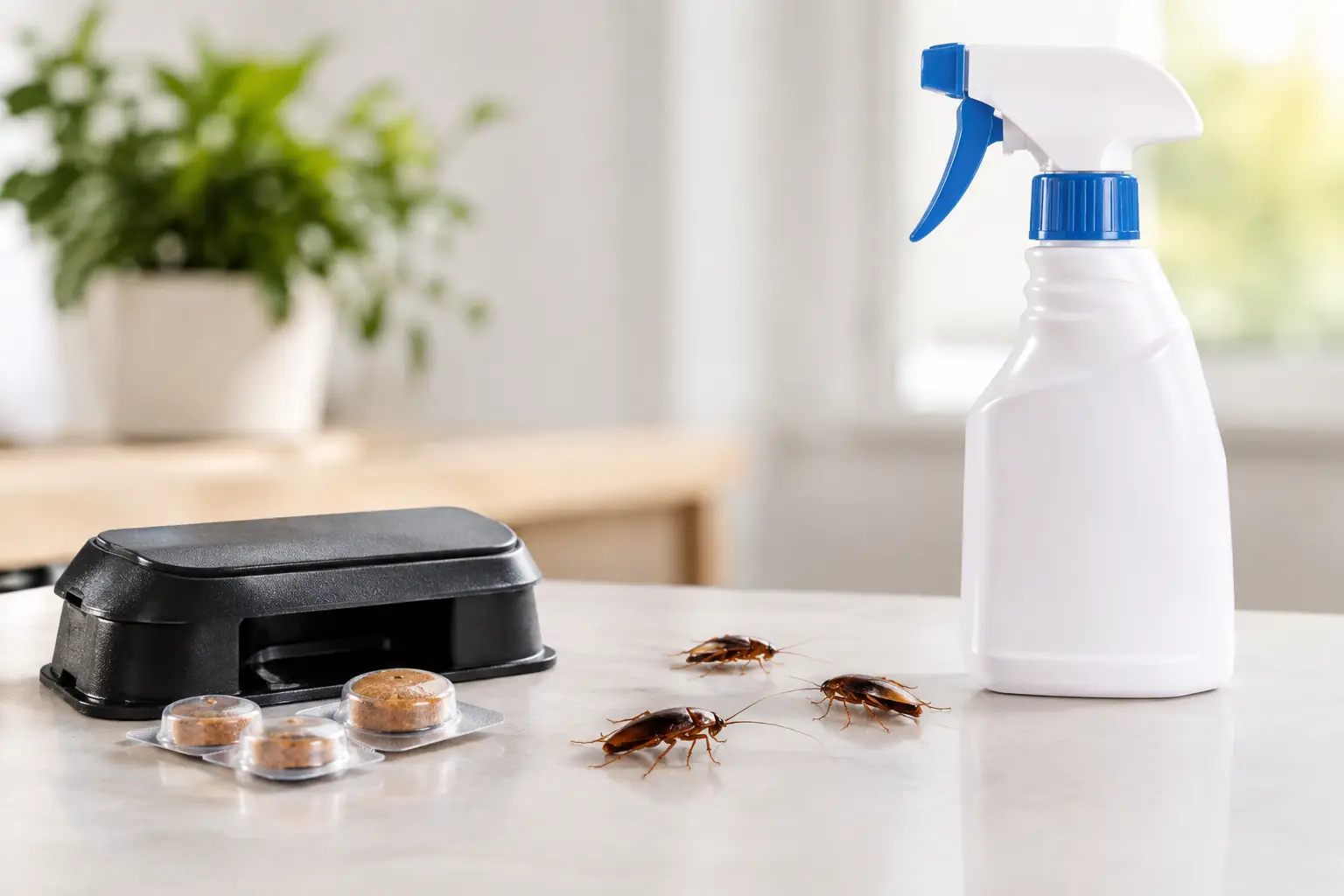
A line of ants across the kitchen worktop or cockroaches appearing after dark can make a property feel unclean very quickly. When choosing insect bait versus spray treatments, the right answer depends on the pest, where it is hiding, how established the infestation is and who uses the space. A product that kills visible insects quickly is not always the product that reaches the source of the problem.
For homes, rented flats, restaurants, offices and communal buildings, effective control starts with an accurate diagnosis. Bait and spray treatments do different jobs. Used correctly, they can be highly effective. Used at the wrong time, or combined without a plan, they can leave the infestation active and make it harder to monitor.
What insect baits are designed to do
Insect bait is a food-based gel, granule, station or liquid that attracts a pest to feed. The insect then carries the active ingredient back to its harbourage or nest, where it can affect others in the population. This makes bait particularly useful when the insects are social, such as ants and cockroaches.
The key advantage is that bait works beyond the insects you can see. Ant trails may lead to a nest in a wall void, beneath paving, behind kitchen units or outside the property. Cockroaches often remain in cracks around pipework, appliances and cupboards during the day. A carefully placed bait gives them a route back to those hidden areas.
Bait is not an instant solution. You may still see activity for several days, and sometimes a little more activity at first as insects are drawn to the treatment. That does not necessarily mean it has failed. For a bait to work, pests must feed on it and return to their harbourage. The process can take time, particularly where there are several nesting points or plentiful alternative food sources.
Where bait is often the stronger choice
For ant problems, bait is usually more useful than repeatedly spraying the visible trail. Spraying may kill worker ants on the surface, but it rarely reaches the colony. Bait placed along active routes can be carried back to the nest, helping to address the problem at its source.
For cockroaches, professional gel baits are often a central part of treatment. They can be placed precisely in sheltered areas without coating food preparation surfaces or filling a room with chemical spray. However, success depends on sanitation, removing competing food, fixing leaks and treating every affected area. In blocks of flats or commercial premises, neighbouring units and shared service ducts may also need assessment.
Bait can also be suitable where a broad spray application would be disruptive, provided it is positioned safely and kept away from children, pets and food. Tamper-resistant bait stations may be appropriate in some settings, but they are not a substitute for identifying the pest or finding its entry points.
When spray treatments make better sense
Sprays are generally used for fast knockdown, direct treatment of visible insects, or creating a residual barrier on suitable surfaces. A residual insecticide remains active for a period after application, killing insects that cross the treated area. This can be valuable where pests travel predictable routes or where immediate reduction is needed.
A professional spray treatment can reach cracks, crevices, skirting edges, voids and other harbourage areas that a shop-bought aerosol cannot treat effectively. The technician will select the product and application method based on the insect, the building layout and the risks within the property.
Sprays are often useful for fleas, bed bugs and certain crawling insects, although no single spray should be viewed as a complete answer. Bed bugs need a thorough inspection and a structured treatment plan because they hide in bed frames, furniture joints, electrical fittings and luggage. Flea control also requires treating pet bedding, carpets and soft furnishings while addressing the source, which may include pets or visiting animals.
For flying insects, a targeted spray can be appropriate where there is an immediate risk. Wasp nest treatment, for example, requires a different approach from treating ants in a kitchen. Never block a nest entrance or attempt to spray an active nest at close range. Disturbing it can lead to stings and drive wasps into internal spaces.
Insect bait versus spray treatments: the key trade-offs
The most visible difference is speed. Sprays can reduce insects on contact, which is reassuring when activity is heavy. Baits work more slowly but may provide better colony-level control for ants and cockroaches. Neither option is automatically superior.
Sprays may be less effective if they are used only on open surfaces while insects are breeding in inaccessible areas. Some insects may also avoid repellant sprays, causing them to move deeper into wall voids or spread to new rooms. This is one reason a quick aerosol response can sometimes turn a contained cockroach problem into a harder investigation.
Baits can fail when there is too much alternative food available. Crumbs, open bins, pet food, grease behind appliances and leaking pipes all make a property more attractive to pests and less attractive to bait. Incorrect placement can also prevent insects from finding it. A bait station left far from an active trail will not solve the problem simply because it is present.
It is also unwise to spray directly over bait placements unless a pest professional has instructed you to do so. The spray may repel insects from the bait or contaminate it. A coordinated treatment plan will specify where products are used, what to clean, what not to clean and when to expect results.
Safety and preparation matter as much as the product
Any insect treatment should protect people, pets, food and business operations. Read labels carefully, avoid applying domestic products to food-contact surfaces and do not exceed the stated dose. More product does not mean better control. It can create unnecessary exposure and make professional assessment more difficult.
Before a treatment, clear accessible worktops and floors where requested, store food in sealed containers and keep children and pets away from treatment areas. In commercial kitchens, preparation must also account for food safety procedures and operating hours. A professional service will explain re-entry guidance, ventilation requirements and any cleaning restrictions clearly.
Preparation also means removing what pests need. Seal food, empty indoor bins regularly, clean beneath appliances, reduce clutter and repair dripping taps. Where possible, seal gaps around pipes, damaged seals and cracks that provide access. These measures do not replace treatment during an active infestation, but they make treatment far more likely to hold.
When a professional inspection is the sensible next step
Call for professional help when insects keep returning after treatment, when you see cockroaches in daylight, when ants are appearing from several locations, or when the infestation affects a restaurant, rental property, nursery, care setting or shared building. These situations need more than a product choice. They need a clear picture of the pest, its harbourage, its food source and its likely route through the building.
A qualified technician can decide whether bait, residual treatment, monitoring traps, exclusion work or a combination is required. They can also distinguish insects that are easily confused, such as flying ants and termites, or carpet beetles and bed bugs. Correct identification prevents wasted time and unnecessary chemical use.
Golden Pest Control provides tailored insect treatment plans for homes and businesses across London, including urgent situations where prompt action matters. The aim is not just to remove the insects currently in view, but to reduce the conditions that allow them to return.
If you are facing an active infestation, resist the urge to use several products at once. Keep a note of where and when you see activity, protect food and pets, and arrange expert advice. A well-chosen treatment, applied in the right place, gives you the best chance of restoring a clean, comfortable and pest-free property.