
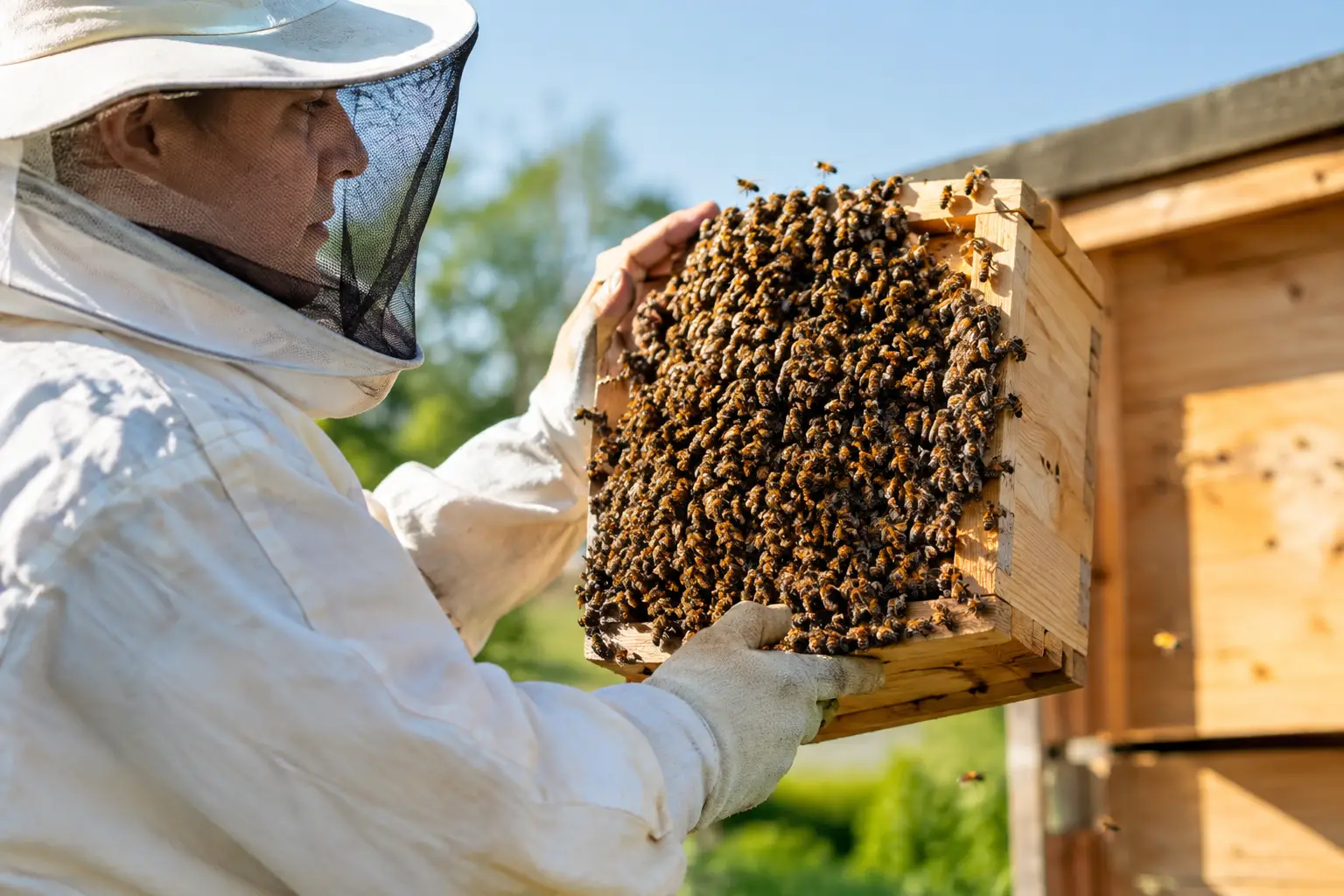
A cluster of bees on a garden fence, chimney, shed or window frame can look alarming, particularly when children, pets or customers are nearby. Yet a visible mass of bees is not always an infestation that needs destroying. Humane bee relocation can often remove honey bees from the property while giving the colony a chance to survive and establish elsewhere.
The right response depends on what type of insect is present, where it has settled and how immediate the risk is. A swarm resting in the open may be temporary and relatively calm. Bees entering and leaving a gap in a wall, roof or loft may indicate an established colony that needs a more considered plan. Quick action still matters, but so does choosing a method that protects people, property and, where practical, the bees.
What humane bee relocation involves
Humane bee relocation is the careful removal of a honey bee swarm or colony without routine pesticide treatment. For a swarm, a suitably trained beekeeper or pest professional may collect the bees into a secure box and move them to an appropriate new location.
An established colony is more complex. The bees may have built comb inside a cavity, beneath roof tiles or behind a soffit. Proper removal can involve accessing the colony, transferring the bees and comb where possible, then clearing remaining wax, honey and openings that could attract further insects. Leaving comb inside a wall can create problems later, including honey leakage, odours, wax moth activity and a new swarm moving into the same space.
This work is not simply about moving visible bees. It is about dealing with the source of the activity and leaving the area safe and secure afterwards.
First, make sure they are actually bees
Many calls about bees turn out to involve wasps. The difference matters because the treatment approach is not the same. Honey bees tend to appear furry and more rounded, and workers often move in a steady line between flowers or a nest entrance. Wasps have a smoother body, narrower waist and brighter yellow-and-black markings. They are also more likely to investigate food, bins and sweet drinks.
Bumblebees are larger and fluffier than honey bees. Their nests are often low to the ground, such as beneath decking, in compost areas or in an old rodent hole. In many cases, a bumblebee nest can be left alone because it is seasonal and the colony naturally dies back later in the year. That is not always practical, especially if the nest is directly beside a doorway or poses a sting risk, but unnecessary disturbance should be avoided.
A clear photograph taken from a safe distance can help a professional identify the insect before attending. Do not get close to obtain it, and never block a nest entrance for a photo.
A swarm is different from a colony
A swarm is often seen as a dense, hanging cluster on a branch, fence, railing or external wall. It is usually a group of honey bees that has left an overcrowded hive with a queen to find a new home. While it can look dramatic, a swarm is often focused on protecting the queen and locating shelter rather than defending a built nest.
That does not mean it should be handled casually. Shaking, spraying or knocking a swarm down can provoke the bees and scatter them around the area. Keep windows near the swarm closed, bring pets indoors and give the bees space until professional advice is available.
A colony is different because bees are repeatedly entering one point in a building. You may notice this activity over several days or weeks, often in warm weather. Relocation is still possible in some situations, but access, height, the structure of the building and the age of the colony all affect whether it is a practical option.
When relocation is usually the best option
Relocation is often the preferred route when a honey bee swarm is accessible and has settled in an open area away from an immediate danger zone. It may also be appropriate for a reachable colony where careful removal can be completed without disproportionate damage to the building.
For households, this might mean bees gathered in a garden before a weekend barbecue, or entering a visible gap near a loft. For businesses, it can mean bees around an entrance, outdoor seating area, delivery point or staff car park. In each case, the priority is to reduce the risk of stings and disruption without automatically treating the bees as a pest to be eliminated.
The outcome depends on access. A low swarm on a hedge is far easier to collect than a colony deep inside a chimney breast. A reputable professional should explain the realistic options, including what work may be needed to access the nest and make the site secure afterwards.
When immediate control may be necessary
There are situations where the safety of people must come first. If stinging insects are active inside a living space, around a school entrance, in a food-handling area or near someone with a known severe allergy, urgent professional attendance is sensible. A person showing signs of a serious allergic reaction, such as breathing difficulty, swelling of the face or throat, or faintness, needs emergency medical help immediately.
Humane relocation may not be suitable where the insects are wasps rather than honey bees, where a colony cannot be safely accessed, or where the location creates an unacceptable risk during removal. For example, work at height, unstable roof materials or bees in a sensitive electrical void can change the safest course of action.
Good pest control is not about promising the same solution for every call. It is about inspecting the circumstances, managing the immediate risk and recommending the least harmful effective treatment that will actually resolve the problem.
What not to do while you wait
Do not spray household insecticide, pour water over the bees or attempt to smoke them out. These methods can make bees defensive, drive them further into the structure or leave dead insects and comb inside the property. Avoid sealing the entrance hole while bees are active as well. Trapped bees may find another route indoors, while trapped honey and wax can create a separate building maintenance issue.
Keep a sensible distance and avoid sudden movement around the area. If bees are gathered near a path or entrance, temporarily direct people away from it. In a workplace, inform staff rather than allowing someone to investigate or attempt a DIY removal.
If the bees are indoors, close the door to the room if possible, open an external window only if it can be done without approaching the cluster, and keep children and pets out. Individual bees that have flown inside can sometimes leave through a bright open window, but a larger group requires professional assessment.
Protecting the property after removal
Removal is only half the job. Once the bees have been relocated or the issue has been resolved, the original access point should be assessed. Small gaps around pipework, roofline joins, vents, damaged brickwork and loose fascia boards can all provide attractive shelter.
Any proofing must be timed correctly. Sealing too early can trap bees inside, so the professional carrying out the removal should advise when the opening can safely be closed. Where comb has been present, cleaning and removing residue is equally important. Bees are drawn to old nest scents, and wasps or other insects may also be attracted to remaining honey.
For landlords and facilities managers, record the location, treatment method and any recommended repairs. This creates a clear maintenance trail and helps prevent repeat issues at the same site.
Choosing a professional for bee problems
Ask whether the provider has identified the insect before recommending treatment and whether relocation is available for accessible honey bee swarms. You should also receive clear information about access requirements, likely timescales, any proofing work and what happens if bees return to the same area.
Golden Pest Control supports households and businesses across London with prompt assessment of bee and wasp concerns, including urgent situations where activity is affecting safety or day-to-day operations. The aim is always a clear, proportionate response: protect people first, preserve honey bees where a safe relocation route exists, and address the conditions that allowed the problem to develop.
A calm response now can prevent a small outdoor concern becoming a difficult indoor or structural problem later. Give the bees space, avoid DIY treatments and arrange an expert assessment while the situation is still manageable.