
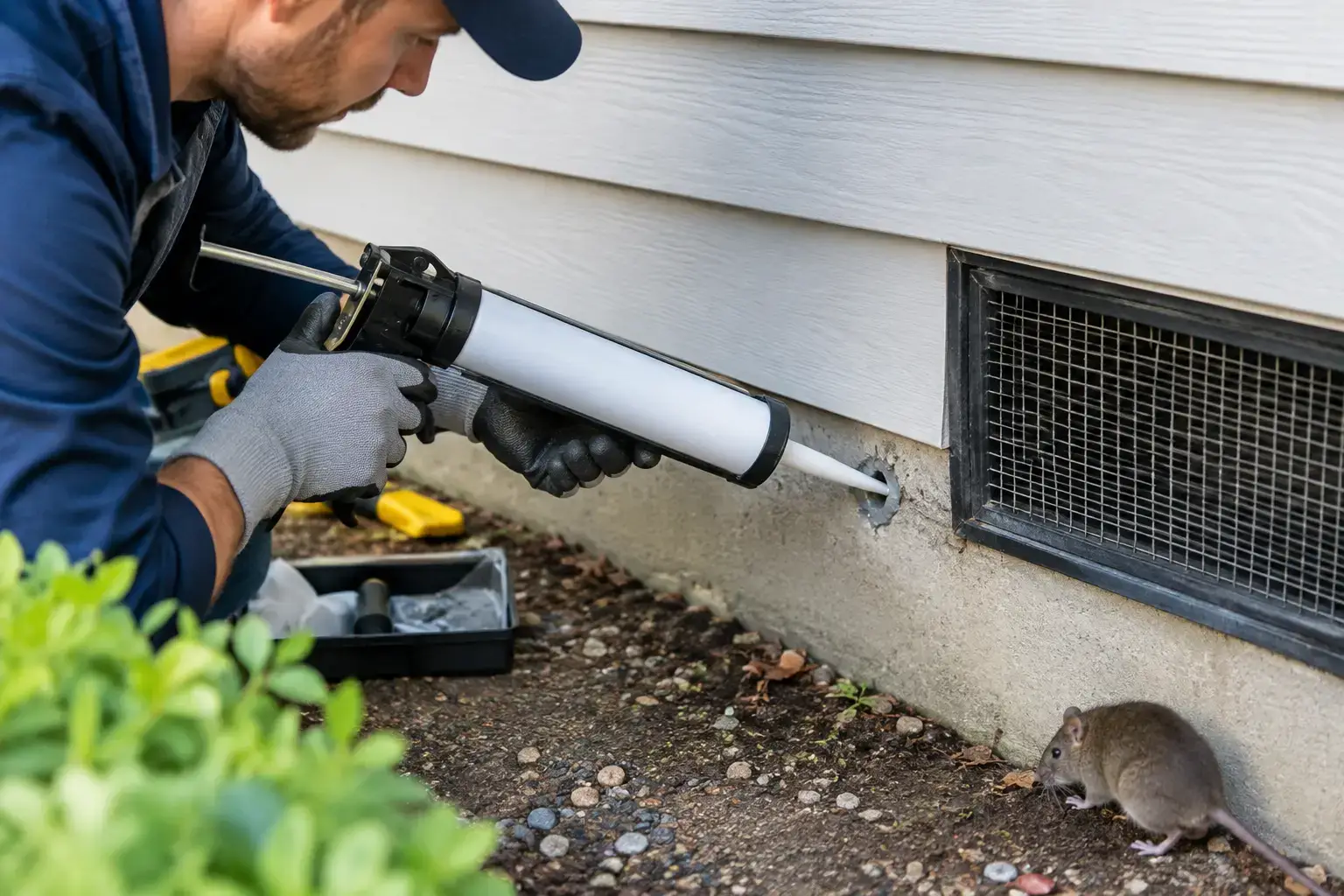
A mouse can enter through a gap of around 6mm – about the width of a pencil – while rats can exploit surprisingly small breaks around pipes, drains and brickwork. To seal rodent entry holes properly, you need to find the access points, use materials they cannot chew through, and make sure rodents are not still living inside the property.
Blocking a visible hole is a useful first step, but it is rarely the whole answer. Rodents often have several routes into a house, flat, shop or commercial premises. A lasting result comes from inspection, proofing and active rodent control working together.
Find Every Rodent Entry Point Before Sealing
Start outside, because most rodent problems begin at ground level. Walk slowly around the full perimeter of the building and check where walls meet the ground, particularly behind bins, sheds, decking, stored materials and dense planting. Look for gaps in mortar, air bricks with broken covers, damaged vents and holes around utility pipes.
Then inspect the less obvious places. Mice commonly enter through gaps beneath external doors, behind kitchen units, around boiler pipework and through voids where cables pass through walls. Rats may use broken drain covers, damaged soil pipes, gaps near extensions, basements and poorly sealed service ducts. In London properties, shared voids, neighbouring buildings and ageing brickwork can make tracing the original route more complicated.
Fresh droppings, greasy rub marks, scratching noises and gnawing are useful clues. A hole with smooth, darkened edges may be used regularly. Outside, look for disturbed soil, burrows near walls, chewed plastic and a clear run along fences or behind storage areas.
Do not rely on one inspection in daylight. Rodents are most active at night, so it can help to check for sounds after dark or place a small amount of tissue loosely near a suspected gap to see whether it is disturbed. Avoid blocking an opening immediately if you have clear signs of activity indoors. You could trap rodents in a wall, loft or floor void, leading them to chew new routes out or die in inaccessible areas.
What to Use to Seal Rodent Entry Holes
The right material depends on the size and position of the gap. The main rule is simple: use a chew-resistant barrier, then finish it with a durable surface material suited to the building.
For small gaps around pipes and cables, stainless-steel wire wool or copper mesh packed tightly into the opening can work well when finished with a suitable sealant. Ordinary wire wool is not ideal outdoors because it can rust, and sealant on its own can be chewed or pulled away.
For holes in brickwork, concrete or foundations, use mortar, cement or a repair compound reinforced where necessary with metal mesh. Larger openings may require galvanised mesh fixed securely over the area before the repair is finished. This is particularly useful around air bricks and vents, where airflow must remain available.
Door gaps need a properly fitted brush strip or metal threshold, not a temporary strip of foam. Damaged air bricks should be protected with purpose-made rodent-proof mesh covers that do not restrict ventilation. For broken vents, use an appropriate external grille with a fine, secure mesh.
Avoid treating expanding foam as a permanent rodent barrier. It can be helpful as a backing material in some repairs, but rats and mice can chew through it. Plastic mesh, fabric, wood filler and duct tape are also short-term fixes at best.
Treat Active Rodent Activity Before Full Proofing
If you are seeing rodents, finding fresh droppings or hearing movement in walls, deal with the infestation before completing all proofing work. The timing matters. Closing every route while rodents remain inside may create a more difficult problem rather than solve it.
A professional inspection can establish whether you are dealing with rats, mice or both, where they are travelling, and whether there is evidence of a drain defect. Treatment may involve targeted trapping, monitoring and safe baiting where appropriate. The approach should be tailored to the property, especially where children, pets, food preparation areas or vulnerable occupants are present.
Once activity has reduced and the likely routes are confirmed, proofing can be completed in a controlled order. In some cases, a technician may temporarily leave an outward-only exit route while monitoring the property. This helps prevent rodents becoming trapped indoors while stopping new ones from entering.
Commercial premises need particular care. Restaurants, offices, warehouses and retail units may have multiple service penetrations, delivery areas and shared waste points. Sealing one unit without addressing neighbouring access routes or bin storage can leave the problem unresolved.
Do Not Forget Drains, Bins and Gardens
A well-sealed wall will not stop rats if a damaged drain gives them direct access beneath the building. Warning signs include recurring rat activity, foul smells, sinkholes, slow drainage or rodents appearing near inspection chambers. A drain survey may be needed where the source is unclear or infestation returns after treatment.
Waste management also matters. Keep bin lids closed, clean spillages promptly and avoid leaving bags beside bins overnight. Bird feeders should be managed carefully, as fallen seed can attract rodents. Compost heaps, overgrown vegetation and clutter against external walls create sheltered routes and hiding places.
This does not mean every garden must be bare. It means creating a clear inspection strip around the building where possible, keeping stored items raised from the ground and trimming back plants that touch walls, fences or rooflines.
When a DIY Repair Is Enough – and When It Is Not
A small, isolated gap around a pipe can often be repaired safely by a confident property owner. This is most suitable when there are no fresh signs of rodents and the opening is easy to reach. Wear gloves, avoid direct contact with droppings, and clean affected areas carefully before beginning repairs.
Professional help is the better choice when there are repeated sightings, signs of rats, suspected drain damage, activity in lofts or wall cavities, or multiple entry points. It is also advisable for landlords and businesses that need clear records of inspection, treatment and preventative work.
For tenants, report gaps and rodent activity to the landlord or managing agent promptly. Do not alter shared drainage, structural walls or communal areas without permission. Landlords should act quickly: rodent issues can affect hygiene, tenant wellbeing and the condition of the property if left unchecked.
A Practical Proofing Checklist
After treatment, inspect the property again every few weeks, then seasonally. Focus on the points most likely to shift or deteriorate with weather and use:
- Pipe and cable penetrations, including new utility installations
- Air bricks, vents, door thresholds and damaged window surrounds
- Cracks in external brickwork, foundations and basement walls
- Drain covers, gullies, soil pipes and inspection chambers
- Bin areas, sheds, garages and clutter stored against the building
A repair that looks sound from a distance may still have a small opening behind a pipe or beneath a fitting. Check closely and use a torch for shaded areas.
If rodents are already active, rapid action is usually less costly than repeated temporary repairs. Golden Pest Control can inspect the problem, treat current activity and identify the proofing work needed to help protect your home or business. The aim is not simply to block the hole you can see, but to remove the route that keeps bringing rodents back.