
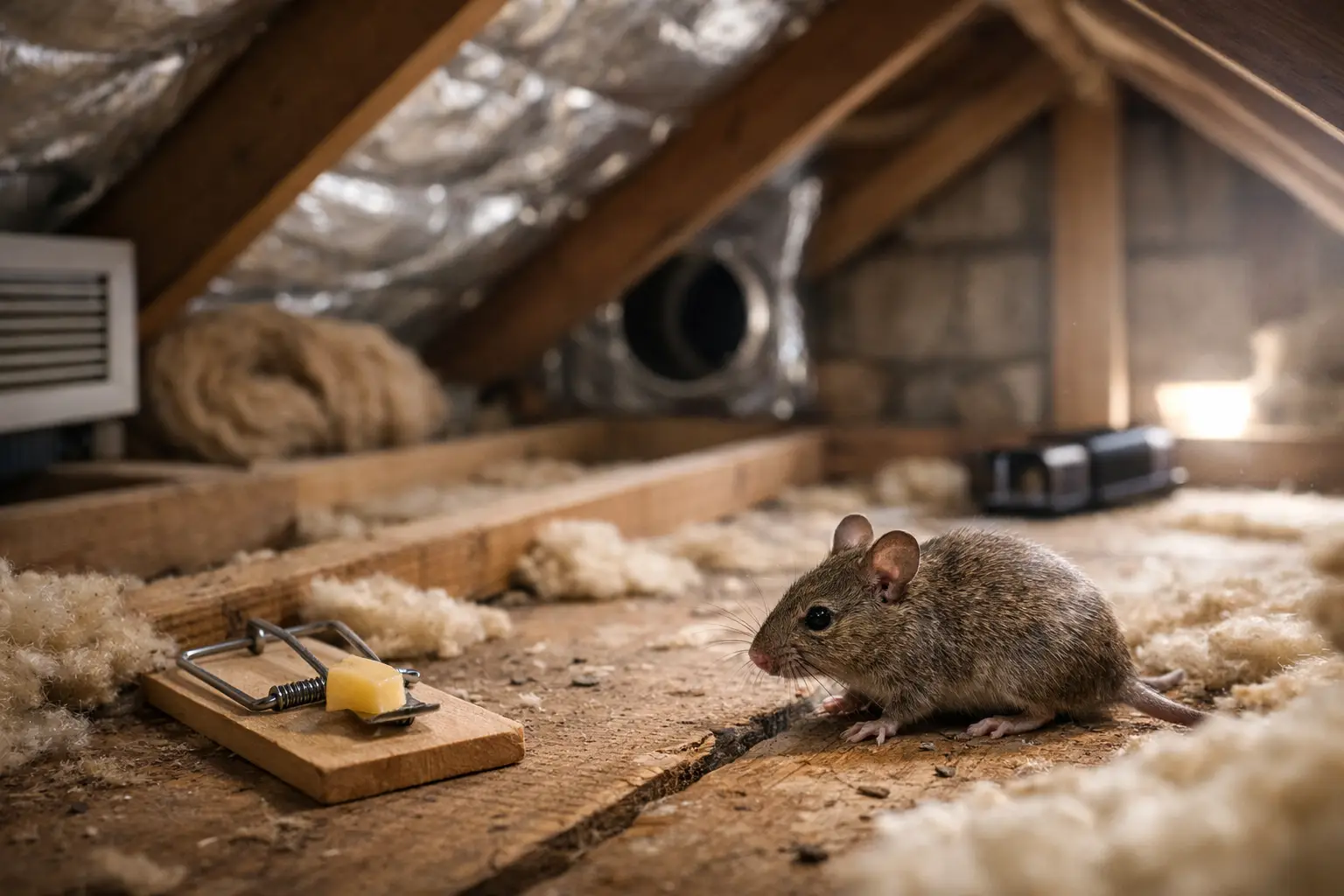
If you have heard scratching above the ceiling at night, you are not imagining it. For many London property owners, the loft is where a mouse problem starts quietly and then spreads into wall cavities, kitchens and storage areas. Knowing how to prevent mice in loft spaces early can save you from damaged insulation, contaminated belongings and a much larger infestation later.
Why mice choose lofts
A loft gives mice three things they look for straight away – warmth, shelter and easy nesting material. Insulation is particularly attractive because it holds heat and can be torn apart for nests. Cardboard boxes, stored fabrics and undisturbed corners make the space even more inviting.
In urban areas, mice do not need much encouragement. If there is a small access gap around the roofline, pipework or eaves, they can move in quickly. Once inside, they breed fast. What starts as one or two mice in the loft can turn into a wider property issue in a short space of time.
How to prevent mice in loft areas before they settle
Prevention works best when you deal with access, food, nesting material and routine checks together. Focusing on only one part, such as placing traps, often gives limited results if mice can still enter freely.
Seal entry points properly
Mice can squeeze through gaps that look too small to matter. A hole around 6mm can be enough. That is why loft prevention starts outside the loft itself.
Check around the roof edge, eaves, fascia boards, air vents, pipe entry points and cable openings. Look for cracks in brickwork, gaps around poorly fitted vents, and damaged sections where roofing materials meet the wall. If you find openings, they need to be proofed with suitable materials. Sealants alone are not always enough because mice can gnaw through weaker fillers. In many cases, a combination of wire wool, metal mesh or rodent-proof materials is the safer option.
This is one area where care matters. Blocking the wrong vent or covering an area that still needs airflow can create moisture problems. If access points are difficult to identify or the loft connects to older roof voids, a professional inspection is often the quicker and safer route.
Keep loft storage tidy and less attractive
A cluttered loft is much harder to inspect and much easier for mice to use. They prefer hidden routes and undisturbed nesting areas, so loosely stacked boxes and piles of fabric work in their favour.
Use strong plastic storage boxes with secure lids rather than cardboard. Avoid leaving pet food, bird seed or food overflow from the kitchen in the loft, even temporarily. It may seem obvious, but mice are opportunistic and any accessible food source increases the chance they stay.
If you store soft furnishings, clothing or Christmas decorations, keep them off the floor where possible and spaced in a way that still allows visual checks. You do not need a perfectly empty loft. You do need a loft that can be inspected without guesswork.
Check insulation for signs of activity
Insulation often shows the first clear signs of a mouse issue. Look for shallow tunnels, shredded material, droppings and dark smears along regular routes. A stale, musky smell can also point to activity that has gone on for longer than expected.
If the insulation has been heavily contaminated, prevention alone may not solve the problem. Soiled insulation can continue to attract activity and creates hygiene concerns. In that case, you may need treatment first and replacement afterwards.
There is also a trade-off here. Loft insulation is essential for energy efficiency, but thick insulation can make spotting mice harder in the early stages. That means regular checks matter more in well-insulated lofts, not less.
Control what attracts mice from the rest of the property
Loft infestations are rarely just about the loft. Mice move through a building in search of food and water, so the rest of the property plays a part in prevention.
Keep food in sealed containers, clear crumbs quickly and avoid leaving rubbish indoors for long periods. Check under kitchen units, around boiler cupboards and behind appliances for gaps or droppings. If mice are feeding downstairs and nesting upstairs, you will need to address both patterns.
Water sources matter too. A small leak in pipework, condensation around tanks, or moisture build-up in poorly ventilated loft areas can make the space more viable for rodents. Dry, well-maintained lofts are less attractive than warm, damp ones.
Spot the warning signs early
The earlier you catch activity, the easier it is to stop. In lofts, people often miss the first signs because they do not go up there often. A quick check every few weeks can make a real difference, especially during autumn and winter when mice look for shelter indoors.
You should take notice if you find droppings, gnaw marks on wood or cables, shredded insulation, scratching sounds after dark, or a strong stale odour. Grease marks along beams or edges can also suggest repeated movement.
Do not assume the noise is always birds or just the house settling. Mice are light, but in quiet loft spaces their movement is often noticeable at night.
Are traps enough?
Traps can help monitor or reduce activity, but they are not a full prevention plan on their own. If entry points remain open, new mice can replace the ones removed. That is why households sometimes feel they are dealing with the same problem for months.
If you choose to use traps, placement matters. They need to go along known travel routes rather than in random open areas. But where there are children, pets, tenants in shared properties or commercial hygiene concerns, a more controlled approach is often better.
There is also the question of scale. A single mouse sighting is one thing. Ongoing noise, repeated droppings or evidence in multiple areas usually means the issue is already established. At that point, treatment and proofing should happen together.
When prevention becomes a pest control job
There is a clear difference between sensible prevention and trying to manage an active infestation alone. If mice are already nesting in the loft, simply tidying up and sealing one visible gap will not be enough.
Professional pest control is usually the right next step when:
- you can hear regular activity in the loft or walls
- droppings keep appearing after cleaning
- insulation or stored items are contaminated
- you cannot identify where the mice are getting in
- the property is tenanted, commercial or needs a documented response
In these cases, speed matters. Mice breed quickly, and the longer they remain active, the more likely they are to spread through the property. A proper visit should identify access points, assess the level of activity, carry out treatment where needed and advise on proofing to reduce the chance of return.
For homes and businesses across London, that joined-up approach is usually far more effective than piecemeal fixes.
Prevention for landlords and commercial premises
If you manage rented property or business premises, loft prevention is not just about comfort. It is also about hygiene, reputation and avoiding repeat call-outs.
Voids above ceilings in offices, restaurants, shops and HMOs can allow mice to move unseen between units. In those settings, a loft or roof void should be part of any wider pest assessment. Waiting until activity is obvious in occupied areas usually means the problem has been active for some time.
Routine inspections, basic proofing and fast action after the first report are usually more cost-effective than repeated treatments after the fact. It depends on the building layout, but older properties and multi-occupancy sites tend to need a more proactive approach.
A practical maintenance routine that works
The most reliable way to prevent mice is to build loft checks into ordinary property maintenance. Inspect the loft regularly, especially after roof work, cold weather or signs of rodent activity elsewhere. Check for new gaps, disturbed insulation and droppings. Keep storage contained, remove nesting-friendly clutter and deal with damp or leaks promptly.
If you live in an older property, or in areas where adjoining buildings and garden access increase rodent pressure, you may need more frequent inspections. In parts of London, that extra caution is sensible rather than excessive.
Prevention is always easier when the loft is still quiet. Once there is scratching overhead, the job is no longer just about keeping mice out – it is about removing them properly and stopping them coming back. If you are unsure what you are hearing or what you have found, getting it checked early is often the safest next step.