
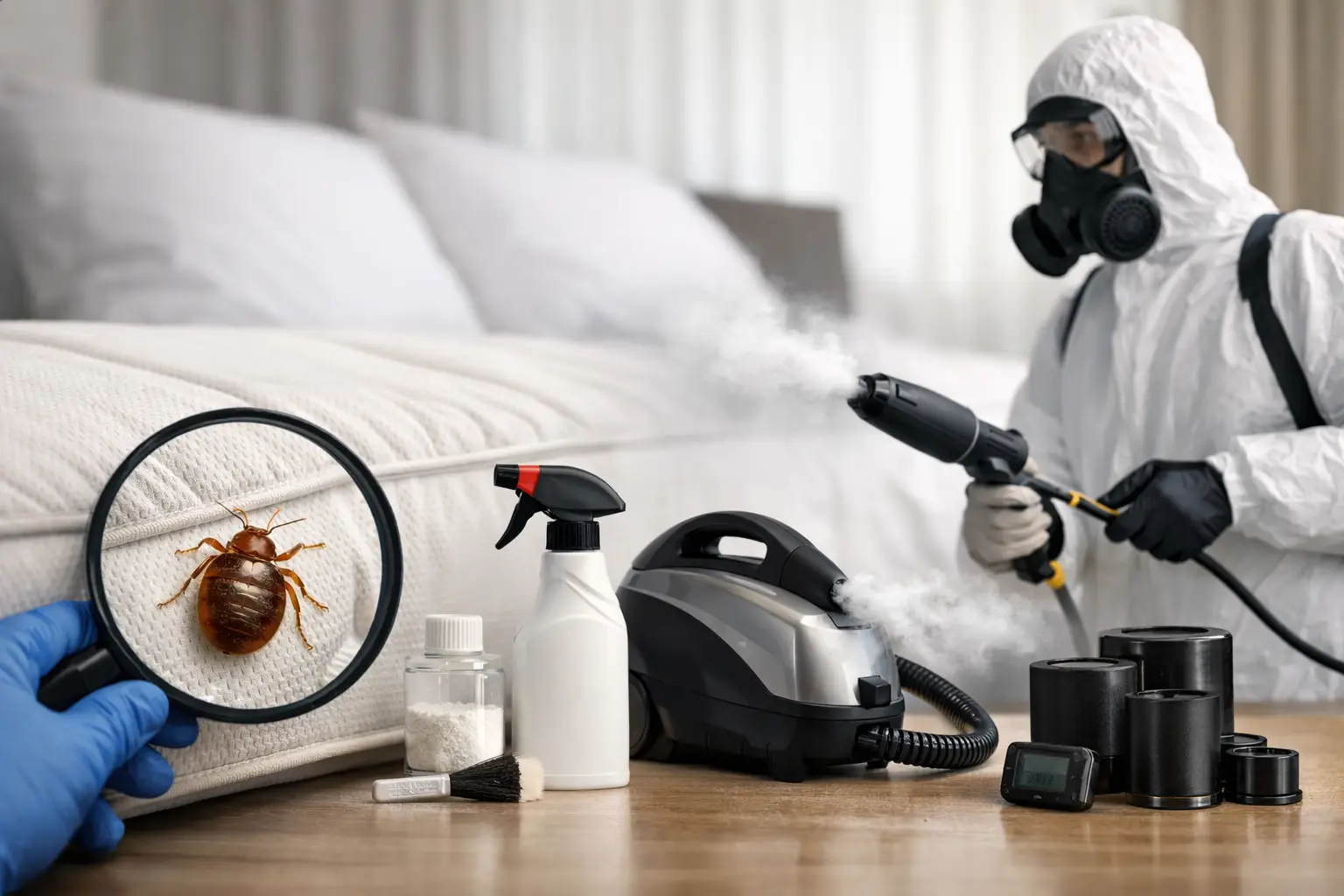
A few unexplained bites can quickly become a serious problem when bed bugs are involved. This bed bug treatment comparison looks at the options property owners, tenants, landlords and businesses are most likely to consider, and where each one can fall short. The right answer depends on the size of the infestation, the property layout, who uses the space and how quickly it needs to be back in service.
Bed bugs are difficult because they hide in mattress seams, bed frames, skirting boards, sofas, luggage and small gaps around furniture. They can also survive for long periods without feeding. A treatment that only reaches the visible insects may leave eggs and hidden adults behind, allowing the infestation to return.
Bed bug treatment comparison: the main options
Professional heat treatment, targeted insecticide treatment and DIY measures all have a place. They do not offer the same speed, cost or level of certainty, however.
Professional heat treatment
Whole-room or whole-property heat treatment raises the temperature in affected areas to a level that kills bed bugs at all life stages, including eggs. Specialist equipment is used to heat the room evenly, while technicians monitor temperatures and move or protect items where necessary. When carried out correctly, heat can deal with a heavy infestation in a single treatment day.
The main advantage is reach. Heat can penetrate many of the places bed bugs use for shelter, including cracks in furniture and areas around the bed where sprays may not fully reach. It is also a useful option where insecticide resistance is suspected or where a rapid result is needed, such as a hotel room, serviced accommodation or a busy household.
Heat treatment is usually the higher-cost option. It also requires careful preparation and professional management. Heat-sensitive belongings, aerosols, candles, medicines, certain electronics and items that could be damaged need to be removed or handled correctly. The room may be unavailable for several hours, and neighbouring rooms may need inspection where bed bugs could have travelled.
For a contained but established infestation, heat is often the fastest route to control. It is not a substitute for inspection and prevention. If bed bugs are being reintroduced through untreated belongings, an adjoining flat or frequent guest turnover, the problem can still recur.
Professional insecticide treatment
Professional insecticide treatment uses approved products applied carefully to bed bug harbourages, rather than broad spraying of every surface. A technician may treat bed frames, joints, skirting boards, furniture, cracks and other identified hiding places. Residual products can continue working after the visit, helping to control bed bugs that emerge from concealed areas.
This approach is often more affordable than full heat treatment and can be highly effective when the infestation is identified early and preparation is completed properly. It is particularly practical for homes and flats where the affected areas are limited, or for larger buildings where a room-by-room treatment plan is required.
The trade-off is time. Insecticide programmes commonly need more than one visit because eggs may hatch after the first application. Residents must follow re-entry instructions, avoid cleaning treated areas too soon and complete laundering or bagging of affected items. Treatment also needs to account for resistance, as some bed bug populations respond poorly to certain active ingredients. This is why a professional inspection and product selection matter.
In a property with children, pets or vulnerable occupants, the focus should be on correct application, clear safety instructions and only treating the areas that genuinely require it. A reputable pest controller will explain what preparation is needed and when the space can be used again.
Steam treatment and targeted physical removal
Steam can kill bed bugs and eggs on contact when applied at the correct temperature and pace. It can be useful on mattress seams, upholstered furniture, bed frames and other accessible surfaces. Vacuuming can also remove live insects, shed skins and some eggs when carried out methodically.
These methods are valuable parts of an integrated treatment plan, especially for people who want to reduce insect activity before a professional visit. They leave no residual protection, though. Steam only works where it reaches, and fast movement over a surface may not deliver enough heat. Vacuuming does not solve the problem if the bag or contents are not sealed and disposed of immediately outside.
Steam and vacuuming are best viewed as support measures, not a complete response to a well-established infestation. They are useful for reducing numbers, but bed bugs hidden behind skirting boards, inside divans or in adjacent rooms can remain untouched.
DIY sprays, foggers and home remedies
Over-the-counter bed bug sprays can seem like the quickest and cheapest answer. In practice, they often provide limited control because bed bugs spend much of their time hidden. Incorrect use can drive insects deeper into walls, furniture or neighbouring rooms, making professional treatment more difficult.
Foggers and smoke bombs are especially unreliable for bed bugs. The product may not reach the narrow harbourages where they are hiding, while unnecessary pesticide exposure can create avoidable risks. Household remedies such as essential oils, alcohol sprays or leaving a room empty are not dependable treatments. Alcohol is also flammable and should never be sprayed around beds, sockets or furnishings.
DIY action is still worthwhile when it is focused on containment. Wash bedding, clothing and washable fabrics at the highest safe temperature permitted by their care label, then dry thoroughly if suitable. Keep cleaned items sealed in bags or boxes until treatment is complete. Avoid moving loose belongings from an affected room to another room, as this can spread the infestation.
How to choose the right treatment
The first question is not simply which method is cheapest. It is whether the infestation is localised, established or spreading. A small number of bed bugs around one bed may be manageable with a targeted programme. Evidence in several rooms, repeated bites after DIY treatment, bugs in sofas or signs in a communal building point to a more thorough response.
Heat treatment may be the stronger choice when speed is critical, the infestation is substantial or prior insecticide attempts have failed. A professional insecticide programme can be a sensible and cost-effective option where the infestation is limited and occupants can follow the preparation and follow-up requirements. In many cases, the best results come from a combined approach: inspection, careful preparation, physical removal and a targeted professional treatment plan.
For landlords and facilities managers, coordination is crucial. Tenants need clear instructions, access must be arranged, and adjoining rooms or flats may need inspection. In hotels, care homes, offices and short-let properties, quick action protects guests, staff and reputation, but rushing without a proper assessment can lead to repeat treatments.
Preparation affects the result
Even the most effective treatment can be weakened by poor preparation. Bed bugs should not be allowed to hitchhike through the property in laundry baskets, bin bags or moved furniture. Items should be sorted within the affected room where possible, sealed before transport and treated according to the technician’s instructions.
Do not throw away a bed or sofa automatically. Disposal can be expensive, may spread bed bugs through shared areas and does not address insects left elsewhere in the room. Furniture should only be removed when its condition, construction or level of infestation makes treatment impractical. If disposal is necessary, it should be wrapped or clearly marked to prevent someone taking it home.
After treatment, monitor for signs of activity and report any bites, live insects, dark spotting or shed skins. Bites alone are not proof of bed bugs, as skin reactions vary and can have other causes, but visible evidence should be investigated promptly.
A bed bug problem is stressful, not a reflection on cleanliness. The most reliable response is early inspection, honest preparation and a treatment matched to the property rather than a one-size-fits-all fix. For urgent infestations across London, Golden Pest Control can assess the situation and provide clear, safe next steps before the problem spreads further.