
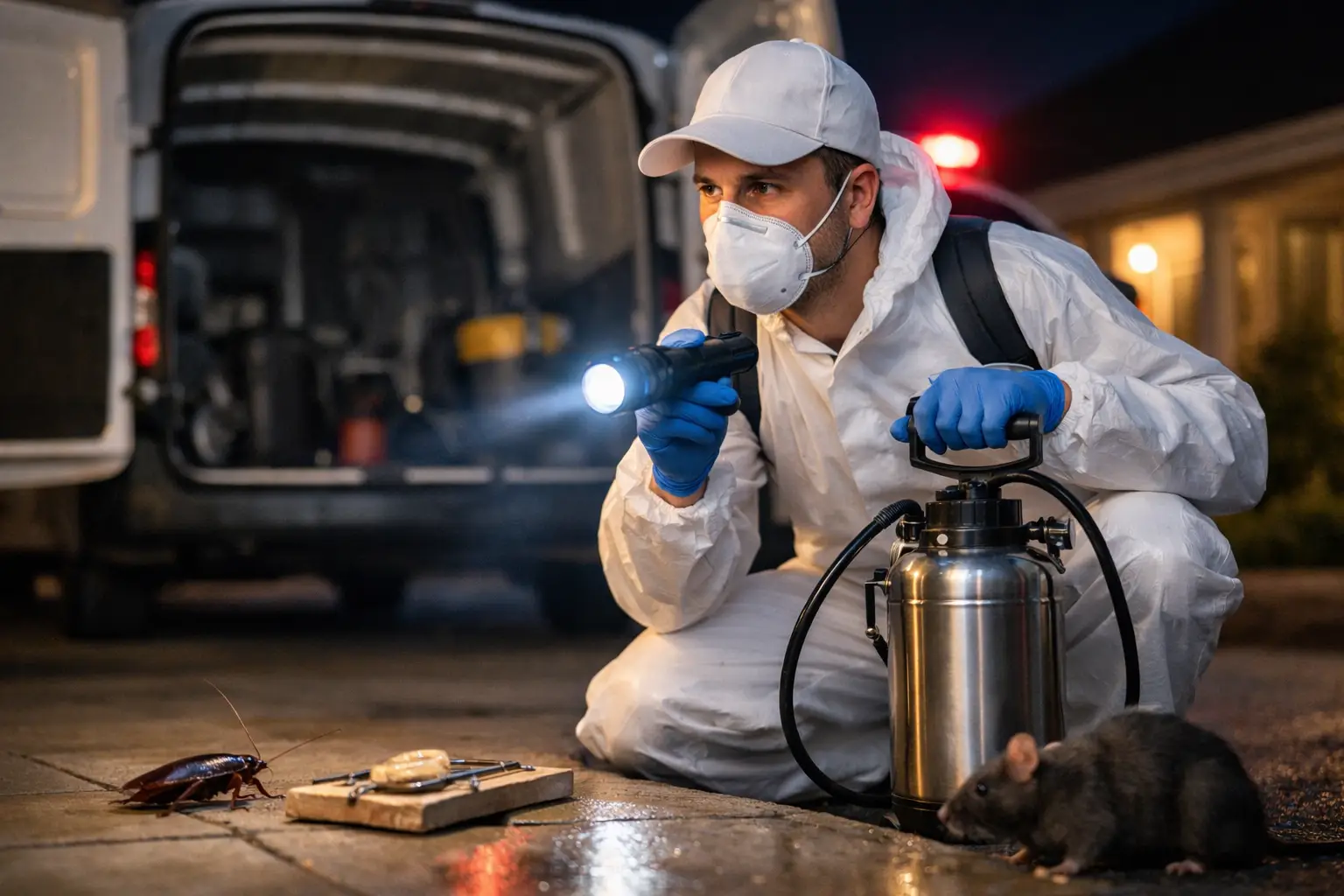
A rat moving through a kitchen at midnight, a wasp nest beside a busy entrance, or bed bug bites appearing after a guest stay can make waiting until morning feel impossible. A 24/7 emergency pest control service gives London households and businesses a clear route to professional help when an infestation is affecting safety, hygiene, sleep, trading or peace of mind.
Not every pest sighting requires an overnight visit. However, delaying the right problem can allow pests to spread, damage property or put people at risk. The key is knowing what counts as urgent, what you can safely do while help is arranged, and what a proper emergency response should involve.
When is pest control an emergency?
An emergency is not defined only by the number of pests you have seen. It is defined by the risk and the setting. One rat in a restaurant kitchen, for example, needs immediate attention because of food hygiene requirements. A single wasp nest near a child’s bedroom window may also require fast action, particularly where someone has a known allergy.
Rodent activity is among the most common reasons to call for urgent help. Rats and mice can contaminate food, gnaw wiring, damage insulation and leave droppings in cupboards, lofts and commercial storage areas. If you hear scratching inside walls, see fresh droppings, find chewed packaging, or spot a rodent indoors, prompt inspection is sensible. Where rodents are active in food premises, care settings or shared blocks, rapid treatment is especially important.
Bed bugs can also become urgent quickly. They do not transmit disease in the same way as rodents, but bites, sleeplessness and the risk of carrying them to other rooms or properties make early intervention valuable. If you run a hotel, manage rental accommodation or have guests due to arrive, a suspected bed bug issue should be assessed without delay.
Cockroaches, fleas and ants vary in urgency depending on the scale of activity. A few ants near a window may be manageable until normal hours. Cockroaches in a kitchen, repeated flea bites in a family home, or insects appearing around food preparation areas should be treated more quickly. Wasps need careful judgement too. A nest away from people may not require an immediate visit, but a nest near a doorway, playground, workplace or indoor living space can create a real safety concern.
What a 24/7 emergency pest control service should do
Fast availability matters, but speed alone is not enough. An effective response starts with clear questions. You should be asked what pest you have seen, where it is active, whether children, pets or vulnerable people are present, and whether the property is a home, flat, restaurant, office or other commercial site.
This initial information helps the technician arrive prepared and helps determine whether immediate treatment is appropriate. In some situations, a safe inspection is the first priority. Pest activity can be mistaken for another issue, and treating before the source is identified may only provide a short-term result.
A professional visit should focus on three things: identifying the pest accurately, finding the likely entry point or harbourage area, and applying a treatment that suits the property. For rodents, this may include targeted baiting or trapping, proofing advice and a plan for follow-up visits. For bed bugs, it may involve a detailed room inspection, treatment of affected areas and clear preparation instructions. For wasps, the technician will assess nest location, access and the safest treatment method before taking action.
You should also receive straightforward guidance about what happens next. That includes whether rooms need to be avoided for a period, how to protect food and pet bowls, what cleaning is required, and when you can expect activity to reduce. Pest control is rarely helped by vague promises. Clear instructions and realistic expectations are more reassuring than a quick treatment with no aftercare.
What to do before help arrives
Your first job is to keep people safe and avoid making the situation worse. Do not try to handle a rat, disturb a wasp nest or use multiple shop-bought products in the same area. Improvised treatments can drive pests deeper into the building, contaminate surfaces or make professional treatment harder.
For rodents, store exposed food in sealed containers and keep children and pets away from droppings, bait stations or suspected nesting areas. Avoid sweeping or vacuuming droppings dry. If safe to do so, ventilate the space and wait for advice on cleaning.
For bed bugs, avoid moving bedding, clothing or furniture into another room. This is a common way infestations spread through a home or block. Put affected laundry into sealed bags until you have been given preparation instructions. For fleas, keep pets away from treated areas and speak to a vet about suitable animal treatment, as treating the property alone may not solve the issue.
If wasps are entering a room, close internal doors where possible and keep windows shut near the nest. Do not block the nest entrance, spray it with household chemicals or knock it down. Disturbing a nest can provoke defensive behaviour and increase the chance of stings.
Emergency treatment for homes and businesses
The right response differs between domestic and commercial properties. In a home, the immediate goal is usually to protect residents, locate the source and restore comfort quickly. A treatment plan may also need to account for pets, babies, elderly residents and shared access in flats.
For businesses, the urgency can be wider. A pest issue may interrupt service, affect staff confidence, put stock at risk or raise concerns during an inspection. Restaurants, cafés, offices, shops, warehouses and managed properties need treatment that considers hygiene, access times and operational disruption. In many cases, work can be planned around quieter periods, provided the risk is controlled promptly.
There is a trade-off between an instant visit and a lasting solution. Emergency attendance can stop an immediate problem, but some infestations need more than one treatment. Bed bugs, fleas and established rodent activity often require follow-up checks because eggs may hatch, new activity may emerge, or proofing work may be needed. A dependable provider explains this from the start rather than suggesting every pest issue can be resolved in one visit.
Preventing the next urgent call-out
Once the immediate concern is under control, prevention protects your property from repeat activity. Rodent proofing is particularly valuable in London, where gaps around pipes, damaged air bricks, loose drain covers and poorly sealed doors can offer easy access. Removing food waste, repairing leaks and reducing clutter also makes a property less attractive to pests.
For landlords and facilities managers, reporting matters. Encourage tenants, staff and residents to flag droppings, bites, insect sightings or damaged packaging early. Small signs are easier and less disruptive to investigate than a well-established infestation.
Commercial sites benefit from routine monitoring, especially where food, waste storage or regular deliveries are involved. Regular checks do not replace emergency support, but they can reduce the chance that a small issue becomes a late-night problem.
Choosing emergency pest control with confidence
When you need urgent help, it is reasonable to want a provider that answers clearly, explains costs and can tell you what action is appropriate. Ask whether the technician is qualified, whether the treatment is suitable around children and pets, and whether follow-up support is included where needed. Insured, professional pest control offers more reassurance than relying on unverified advice or hazardous DIY methods.
Golden Pest Control provides rapid, professional support for homes and businesses across London, including urgent problems involving rodents, bed bugs, cockroaches, fleas, ants and wasps. The aim is not simply to remove the pest you can see, but to identify why it is there and help prevent it returning.
A pest problem can feel overwhelming at any hour, but quick, calm action makes a genuine difference. Keep people away from the affected area, avoid risky DIY measures, and arrange professional assessment as soon as the situation calls for it.