
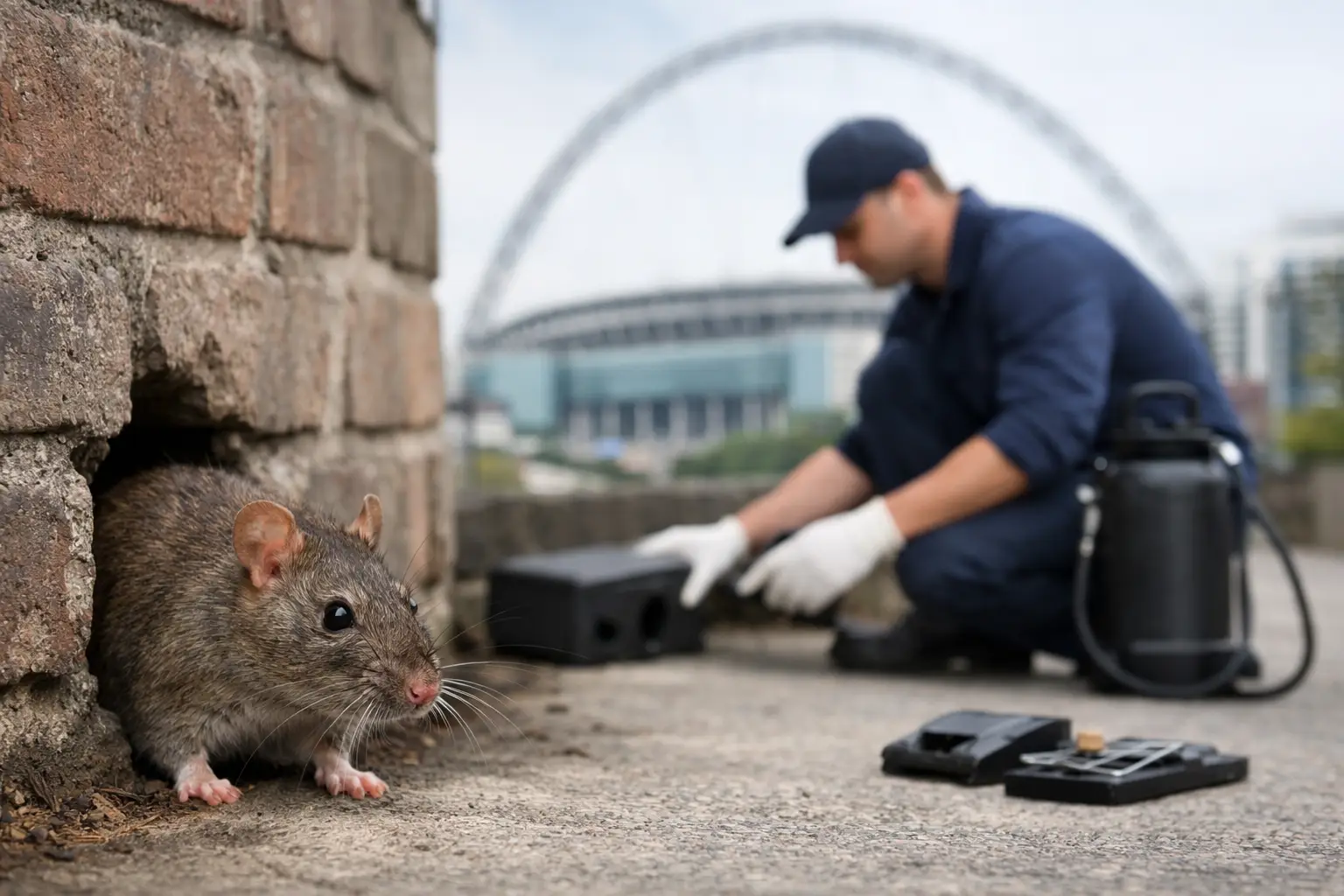
A rat sighting in a Wembley kitchen, stockroom or communal bin area is rarely a one-off. Rats are cautious, largely active at night and skilled at staying out of view. By the time one is seen, there may already be an established route into the property, a nearby food source and more activity than you realise. Fast, professional rat control in Wembley protects your home or business from contamination, damage and a problem that can grow quickly.
Why rats need prompt action
Rats are more than an unpleasant nuisance. They can contaminate food and preparation surfaces with urine and droppings, spread bacteria, carry parasites and damage property as they gnaw. Electrical cables, pipe insulation, stored goods, plasterboard and timber can all be affected. In a commercial setting, especially a food business, rodent activity can also put hygiene standards, customer confidence and day-to-day operations at risk.
Waiting for the problem to disappear is rarely a safe strategy. Rats breed rapidly when warmth, shelter and food are available. A small issue in a loft, void, garden shed or behind kitchen units can become a wider infestation if entry points and harbourage areas are not addressed.
The right response depends on the property and the evidence found. A rat in a garden may be linked to overflowing bins, bird feed or an open drain. Activity inside a flat or house may point to a gap around pipework, a damaged air brick, a broken drain or an access route from a neighbouring property. Effective treatment starts by finding the reason rats are there, not simply placing bait and hoping for the best.
Signs you may have rats at your property
Rats leave clear clues, although they are easy to overlook in busy homes and workplaces. Fresh droppings are usually dark, tapered and commonly found near food sources, under cupboards, in lofts or along walls. You may also notice scratching noises at night, particularly in ceilings, under floorboards or behind walls.
Grease marks can appear along skirting boards, pipes and tight routes where rats repeatedly travel. Look for chewed packaging, gnawed cables, disturbed insulation, small holes around services and a persistent musky smell in enclosed areas. Pets may become unusually interested in a cupboard, wall void or part of the garden.
For businesses, signs can include damaged dry stock, droppings in storage spaces, grease marks near waste areas or evidence around delivery points. A single finding should be investigated quickly. Rodent activity does not need to be widespread before it deserves professional attention.
Rat control in Wembley is more than baiting
A proper rat treatment is a planned process. The first visit should focus on inspection: identifying species, checking the level of activity, tracing likely access points and assessing risks to people, pets, food and the wider property. This allows the technician to choose an approach that is effective and proportionate.
Where treatment products are required, they should be used in secure, tamper-resistant stations and positioned according to the evidence found. This is particularly important in family homes, shared buildings, restaurants, offices and sites with pets. Professional treatment also includes monitoring. Rats may avoid unfamiliar objects at first, so follow-up visits can be essential to assess activity, adjust placements and confirm the infestation is under control.
Exclusion is equally important. Blocking a visible hole before treating an active infestation can sometimes force rats further into the building or make monitoring harder. The sequence matters. Once the main routes have been identified and activity has reduced, suitable proofing can help stop reinfestation.
Common entry points to check
Rats can enter through surprisingly small gaps and often use existing weaknesses rather than creating an obvious hole. Properties should be checked around pipe penetrations, damaged brickwork, air bricks, drain covers, garage doors, vents and gaps below external doors. In older buildings and converted properties, hidden voids and shared service routes can make the source less straightforward.
Drain-related problems need particular attention. Rats are capable of moving through defective drains and emerging where pipes are cracked, displaced or poorly sealed. If signs suggest drainage access, the solution may need to involve further investigation and repair alongside pest treatment.
What to do before help arrives
You do not need to handle rats or attempt to investigate inaccessible voids yourself. Keep children and pets away from droppings, damaged food packaging and any suspected nesting areas. Do not sweep or vacuum droppings while dry, as this can disturb contaminated dust. Avoid moving bait or traps that have been placed as part of a professional treatment plan.
You can reduce immediate attraction by keeping food in sealed containers, clearing crumbs and spillages, securing household waste and avoiding leaving pet food outside overnight. If bird feeders are attracting rodents, pause feeding until the situation has been assessed. In commercial premises, remove accessible waste, rotate stock and make sure staff know not to interfere with monitoring points.
Take note of where and when you have seen activity. Details such as scratching above a particular room, droppings near a bin store or damage behind a fridge can help a technician inspect the right areas promptly.
Why DIY rat control can fall short
Shop-bought traps and baits may appear to offer a quick answer, but they do not solve every rat problem. Rats are intelligent and wary of changes in their environment. Poor trap placement often produces no result, while unsuitable bait use can create safety risks for children, pets and non-target wildlife.
There is also the question of access. If rats are travelling through wall voids, under floors or via drains, dealing with the one you see does not remove the route or the conditions supporting the infestation. A dead rodent in an inaccessible space can also create an unpleasant odour and further disruption.
DIY measures can be useful for improving cleanliness and reducing food sources, but persistent sightings, internal activity, droppings, chewed wiring or a problem at a business should be treated as a professional job. The cost of delay can be far greater than early intervention, particularly where property damage or hygiene compliance is involved.
Protecting homes, landlords and businesses
For homeowners and tenants, the priority is restoring a safe, comfortable living space without uncertainty about what is happening behind the walls. Landlords and managing agents may need a clear record of findings, treatment and recommendations, especially where communal waste areas, shared drains or multiple flats are affected.
Business owners need a response that considers their operating environment. A restaurant, café, warehouse, office or retail unit has different pressure points, from deliveries and external bins to staff kitchens and stock storage. Treatment should be discreet where possible, clearly communicated and supported by practical prevention advice.
Golden Pest Control provides rapid, tailored rat treatment for residential and commercial properties, including urgent cases that cannot wait for standard working hours. The aim is not just to remove the immediate problem, but to give you a clear picture of what caused it and what should happen next.
Prevention that makes a difference
Long-term rat prevention is usually built around three areas: food, shelter and access. Keep bins closed and cleaned regularly, avoid leaving rubbish bags outside, store food securely and clear garden clutter that creates quiet nesting places. Compost heaps, sheds and dense vegetation can be managed without making a garden unusable, but they should not provide easy cover right next to the building.
Small maintenance jobs have a major role too. Repair damaged vents, fit appropriate mesh where needed, seal gaps around pipework and keep external doors closing properly. Do not block ventilation without professional advice, as buildings still need adequate airflow. Where drains are suspected, arrange investigation rather than assuming surface proofing alone will resolve the issue.
If you hear scratching, find fresh droppings or spot a rat indoors, act while the evidence is still clear. A timely inspection can turn an anxious, escalating problem into a controlled one, helping keep your Wembley property clean, protected and ready to use with confidence.