
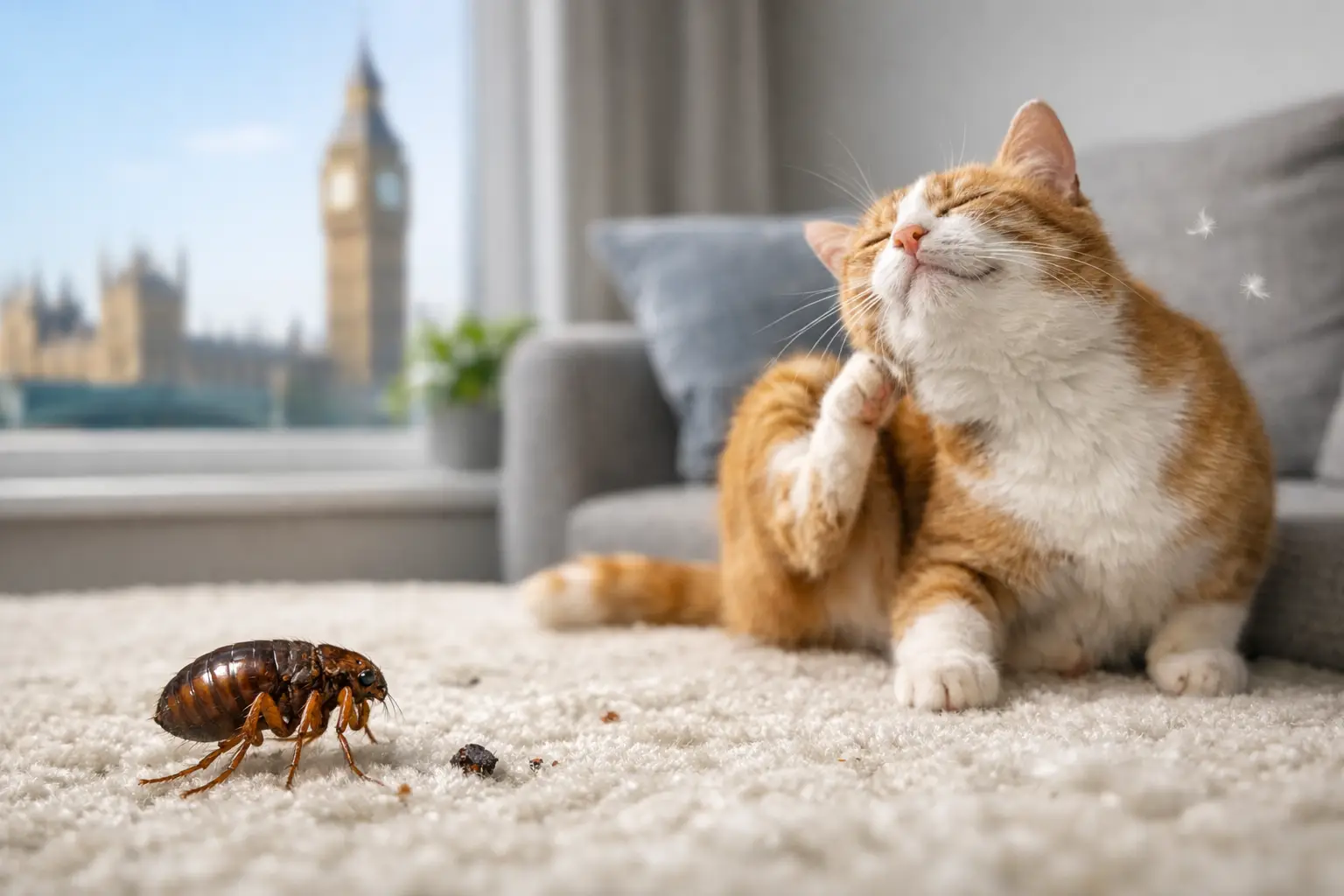
A flea problem rarely begins with a clear sighting. You may first notice your dog scratching after resting on the rug, or wake with small, intensely itchy bites around your ankles. These are common signs of flea infestation, and acting early can prevent a small issue becoming a persistent problem across carpets, upholstery and pet bedding.
Fleas are tiny, fast-moving parasites that feed on blood. In London properties, they are often brought indoors by cats, dogs, visiting animals or, less commonly, wildlife nesting close to the building. They can affect clean homes as readily as neglected ones, so an infestation is not a reflection on your housekeeping. It is a pest problem that needs a thorough response.
The most common signs of flea infestation
Adult fleas are difficult to spot because they are only a few millimetres long, dark brown and able to jump quickly into carpet fibres, soft furnishings or an animal’s coat. Usually, the evidence around them is easier to recognise.
Repeated bites around the feet and lower legs
Flea bites often appear as small red bumps with a central point. They are usually very itchy and may occur in clusters or short lines, especially around the ankles, feet and lower legs. Bites can happen after sitting on a sofa, walking over a carpet or getting out of bed.
However, bites alone do not confirm fleas. Bed bugs, mosquitoes, mites and skin irritation can produce similar marks. Flea bites are more likely where there is also a scratching pet, flea dirt, or activity concentrated around areas where animals sleep and rest.
Pets scratching, biting or grooming more than usual
Cats and dogs can be very sensitive to flea saliva. A small number of bites may lead to frequent scratching, nibbling at the coat, licking the hindquarters or rubbing against furniture. Look particularly around the neck, lower back, base of the tail, belly and inner legs.
Part the fur and inspect the skin under good light. You may see adult fleas moving through the coat, although they can disappear quickly. Even if you cannot find one, sudden persistent scratching is worth taking seriously. Contact a vet if your pet has broken skin, signs of infection, hair loss or seems unwell.
Flea dirt in pet bedding or fur
Flea dirt is the name used for flea droppings. It resembles tiny black or reddish-brown specks, often found in a pet’s coat, favourite blanket, basket, carpet or sofa cushion. A useful check is to place the specks on damp white kitchen paper. If they spread into a reddish-brown stain, this can indicate digested blood and strongly suggests fleas.
Do not confuse flea dirt with ordinary soil or crumbs. The damp-paper test is not perfect, but it is a practical first indication when combined with other evidence.
Tiny jumping insects near resting areas
Adult fleas may be seen hopping on carpets, rugs, upholstered furniture or pet bedding. Their jump is often the giveaway. They do not fly, and they can be mistaken for small beetles or debris until they move.
A simple monitoring method is to place white socks on your feet and walk slowly through suspected areas. Fleas may show up more clearly against the light fabric. This is not a treatment method, but it can help establish whether there is active flea activity.
Bites after a property has been empty
A vacant flat or house can still have a flea problem. Flea pupae can remain protected in their cocoons for some time, then emerge when they detect vibration, warmth and carbon dioxide from people or animals returning. This is why occupants sometimes report being bitten shortly after moving in or returning from a holiday.
Where fleas hide in a home or business
Only a small proportion of a flea population is likely to be visible as adult fleas. Eggs, larvae and pupae can be hidden nearby, which is why treating only the pet or only the obvious room often fails.
In homes, the main risk areas are pet beds, carpets, rugs, fabric sofas, cushions, gaps along skirting boards and beneath furniture. Fleas and their developing stages may also be present in car interiors if pets regularly travel there.
Commercial premises can face the same problem. Offices with pet-friendly policies, rental properties, care settings, communal spaces and hospitality businesses may experience flea activity after an animal visit, a tenant move-out or wildlife activity near the premises. In these settings, a prompt assessment matters not only for comfort but also for hygiene standards and customer confidence.
Why flea activity can continue after treatment begins
It is understandably frustrating to see fleas after cleaning or applying a treatment. Their life cycle explains why this can happen. Adult fleas lay eggs that fall from the host into the environment. The eggs develop into larvae, then pupae, which sit inside protective cocoons before emerging as adults.
Many household products kill exposed adults but have limited effect on every developing stage. Vacuuming and washing bedding can reduce the numbers, but a single clean rarely reaches all harbourage points. Newly emerged fleas may appear days or weeks later, depending on warmth, humidity and the treatment used.
Professional flea control is designed around this cycle. The aim is to treat active fleas and disrupt future emergence, while giving clear preparation and aftercare instructions. Follow-up work may be required in heavier infestations or where pets, multiple rooms or shared residential areas are involved.
What to do when you suspect fleas
Start by treating all pets in the property with a vet-approved flea control product suitable for their species, age and health. Do not use a dog treatment on a cat, as some ingredients can be dangerous to cats. Your vet can advise on the most appropriate option and whether other animals also need treatment.
At the same time, wash pet bedding, throws and washable soft furnishings on the hottest safe setting. Vacuum carpets, rugs, upholstery, under furniture and along edges of rooms carefully. Empty the vacuum contents outside the property immediately, rather than leaving them in an indoor bin.
Avoid moving untreated bedding, rugs or cushions between rooms, as this can spread eggs and larvae. Do not rely on foggers or strong household chemicals as a substitute for a planned treatment. They may not reach concealed stages, can be used incorrectly, and may create risks for people and pets.
If bites continue, fleas are visible, several rooms are affected, or the property has a significant pet or wildlife history, arrange a professional inspection. A qualified technician can identify likely harbourage areas, distinguish fleas from other biting pests and set out a treatment plan that fits the property.
When fast professional help is the right choice
A rapid response is particularly valuable if fleas are affecting children, vulnerable residents, guests, tenants or customers. Landlords and facilities managers should also act promptly where a report of bites could be linked to a shared corridor, furnished letting or recently vacated unit.
Before treatment, you may be asked to vacuum, clear floor areas, wash pet bedding and ensure pets are treated. During the visit, the technician will assess the affected spaces and apply a suitable professional product to targeted areas. You will receive practical guidance on re-entry, ventilation, cleaning and the activity that may occur while remaining pupae emerge.
Golden Pest Control provides professional flea treatment for homes and businesses across Greater London, with clear advice from inspection through to prevention. The right approach depends on the size of the affected area, whether pets are present, and how long the activity has been established.
Do not wait for the problem to become visible in every room. If the signs point to fleas, deal with the pet, the environment and the source together. That gives your household, tenants or customers the best chance of returning quickly to a comfortable, pest-free space.